Sacramento International Airport
Facts on SMF
When it opened in 1967 as Sacramento Metropolitan Airport, SMF was the first purpose-built public-use airport constructed west of the Mississippi River.
Source: Wikipedia
The airport didn't gain its current international traffic until 2002, when Mexicana began nonstop flights to Guadalajara -- more than three decades after the "Sacramento International" name was adopted alongside the 1998 opening of Terminal A.
Source: Wikipedia
SMF's consolidated rental car facility, opened alongside Terminal A in 1998, was the first of its kind in the nation, giving every rental company's customers a single shuttle stop instead of competing lots.
Source: Wikipedia
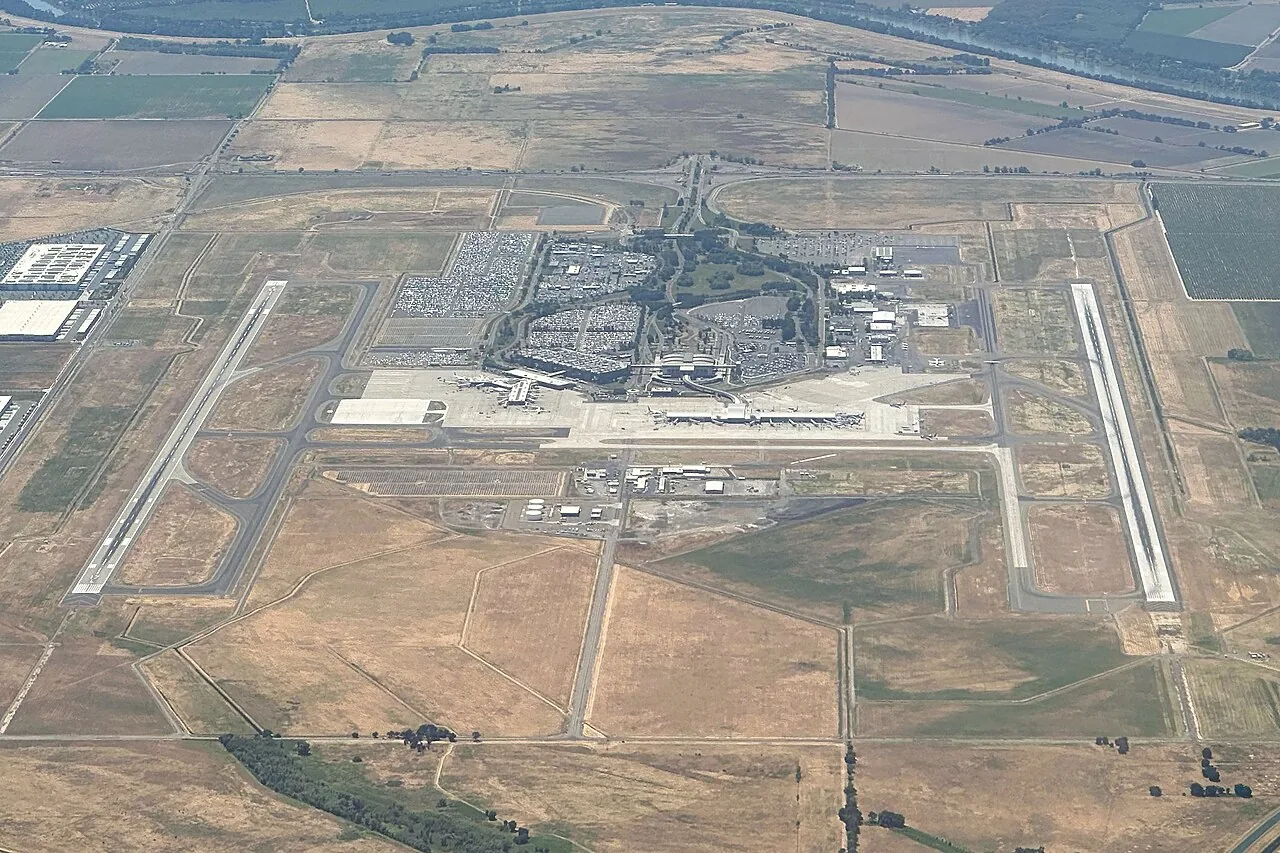
At 6,000 acres, Sacramento International is the largest commercial or public airport by land area in the entire state of California, excluding military, cargo-only and general-aviation fields.
Source: Wikipedia
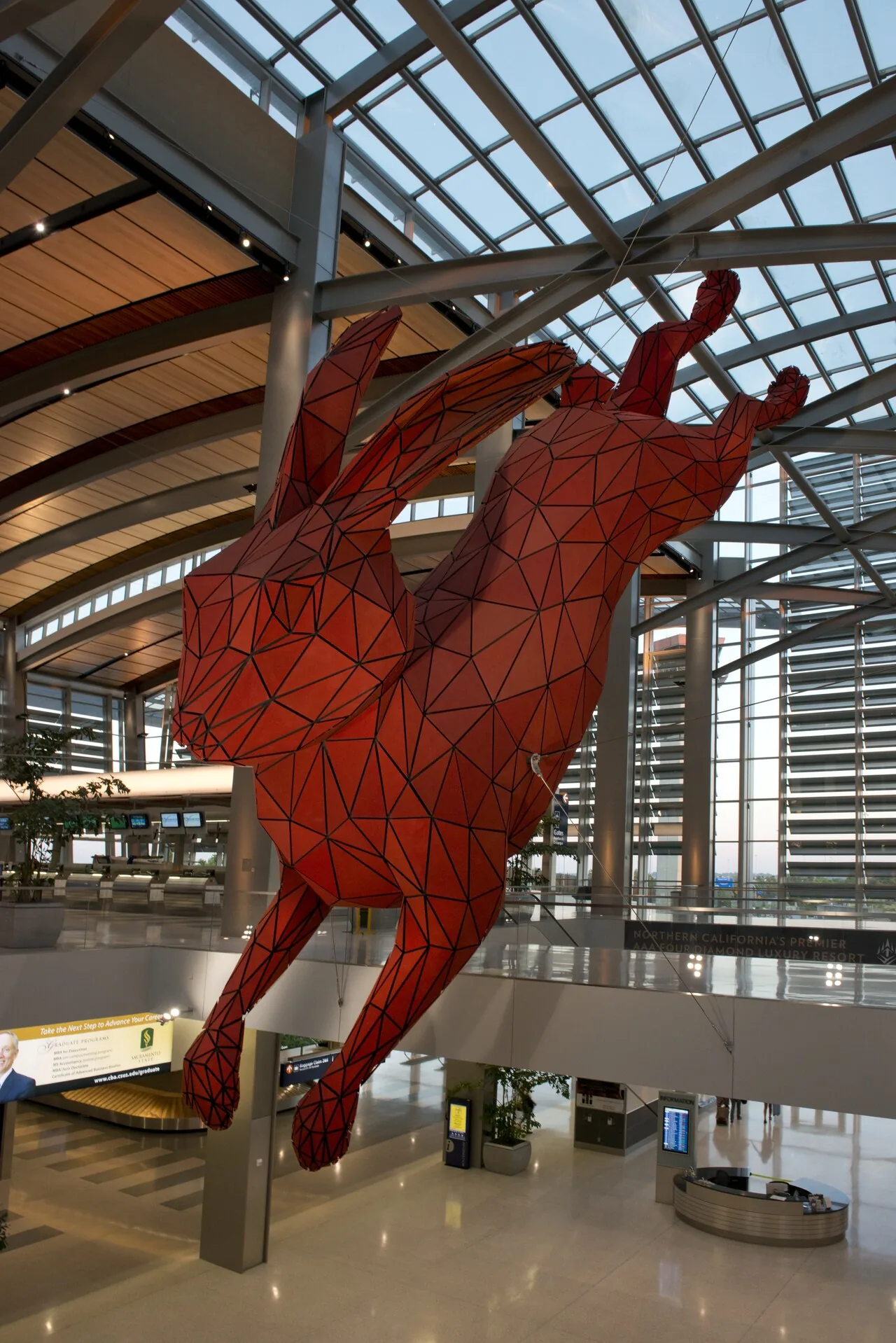
Terminal B's rebuild, completed in 2011 at a cost of $1.03 billion, was the largest airport terminal in the United States to earn LEED Silver certification, and it centers on a 56-foot red aluminum rabbit sculpture, "Leap," leaping into a granite suitcase -- which gave the building its unofficial nickname, "the Hare-port."
Source: Wikipedia
SMF's flight paths flip with the seasons: about 70% of the year winds come from the south and traffic runs in "South Flow" on runways 17L/17R, while the rest of the year it switches to "North Flow" on 35L/35R, timed at night to route planes over farmland rather than nearby homes.
Source: Wikipedia
A 7.9-megawatt solar array commissioned at SMF in January 2018 supplies around 30% of the airport's electricity, generating power at roughly 7 cents per kilowatt-hour versus the 9 cents the airport paid before -- a saving of nearly $1 million a year.
Source: Wikipedia
In 1987 the opening of SMF's east runway was celebrated with the landing of a Concorde supersonic jet, a rare stop for the aircraft at a mid-sized American airport.
Source: Wikipedia