Salt Lake City International Airport
Facts on SLC
The airport's site, Basque Flats, was named for the Spanish and French sheep herders who had worked the fields in that then-desolate part of the Salt Lake Valley before a cinder-covered landing strip was built there in 1911.
Source: Wikipedia
In 1911 aviator Glenn Curtiss flew a newly invented seaplane off the nearby Great Salt Lake as part of the Great International Aviation Carnival, a first public demonstration that drew 20,000 spectators and international headlines.
Source: Wikipedia
The field was first named Woodward Field in 1920, after local aviator John P. Woodward, and hosted the first transcontinental air mail flight to land there that September; it wasn't renamed Salt Lake City Municipal Airport until 1930.
Source: Wikipedia
Charles Lindbergh visited the airfield in 1927, drawing crowds to see the Spirit of St. Louis, years before the airport gained its current "International" name in 1968 when Western Airlines was awarded a nonstop route to Calgary.
Source: Wikipedia
Salt Lake City has been a Delta Air Lines hub since Delta merged with Western Airlines in 1987; in June 2008, Delta launched the airport's first transatlantic route, to Paris Charles de Gaulle, aboard a Boeing 767.
Source: Wikipedia
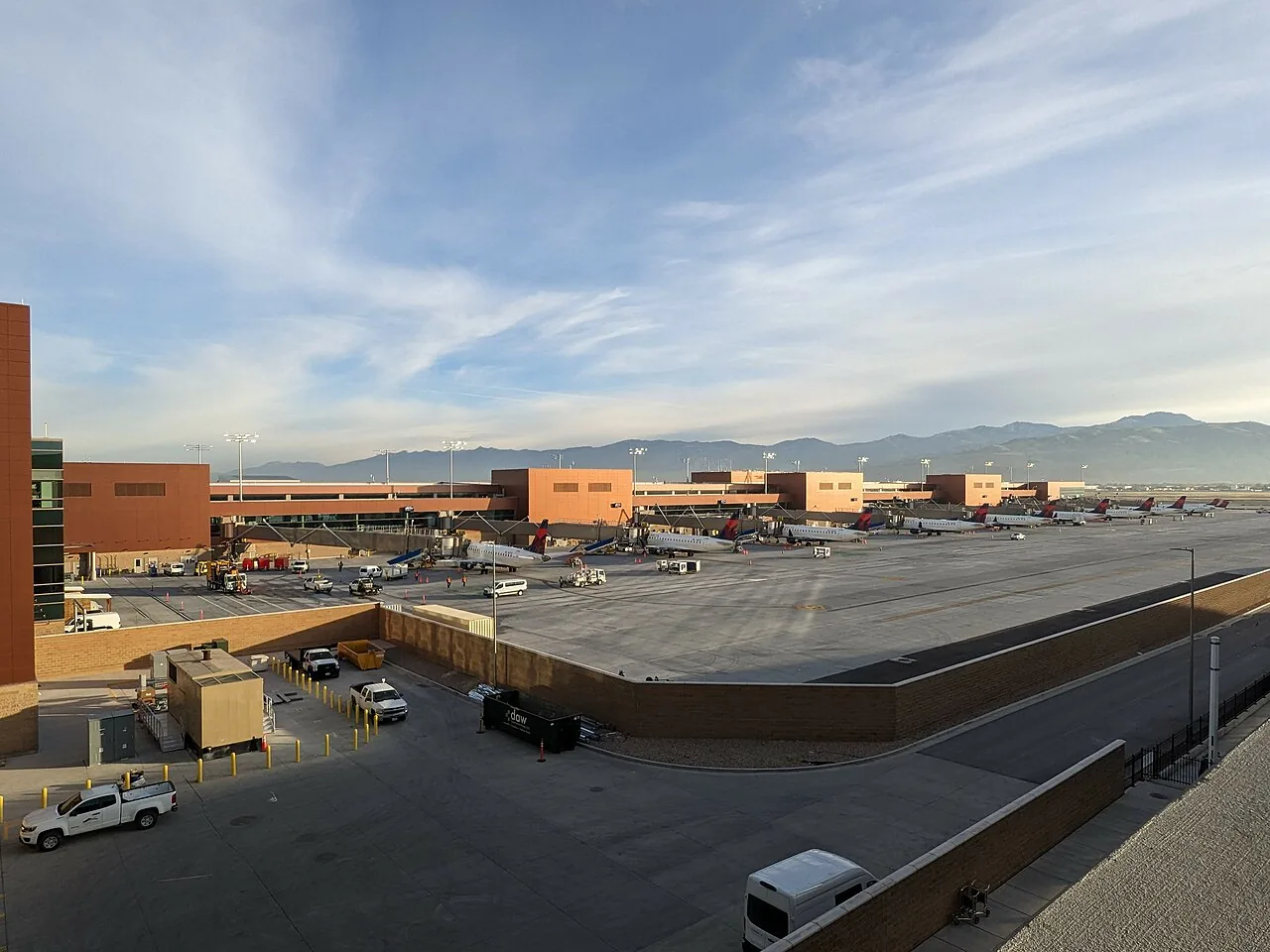
The airport's new terminal, opened in phases starting 2020, uses two linear concourses linked by underground tunnels -- a layout modeled on hubs like Atlanta, Denver and Washington-Dulles -- and is planned to reach 94 gates once construction finishes.
Source: Wikipedia
Despite ranking as the 28th busiest airport in the world by aircraft operations, SLC still handles a large share of general aviation traffic -- about 19% of movements in 2008 -- because its layout keeps small aircraft on the airfield's east side, away from commercial flights.
Source: Wikipedia
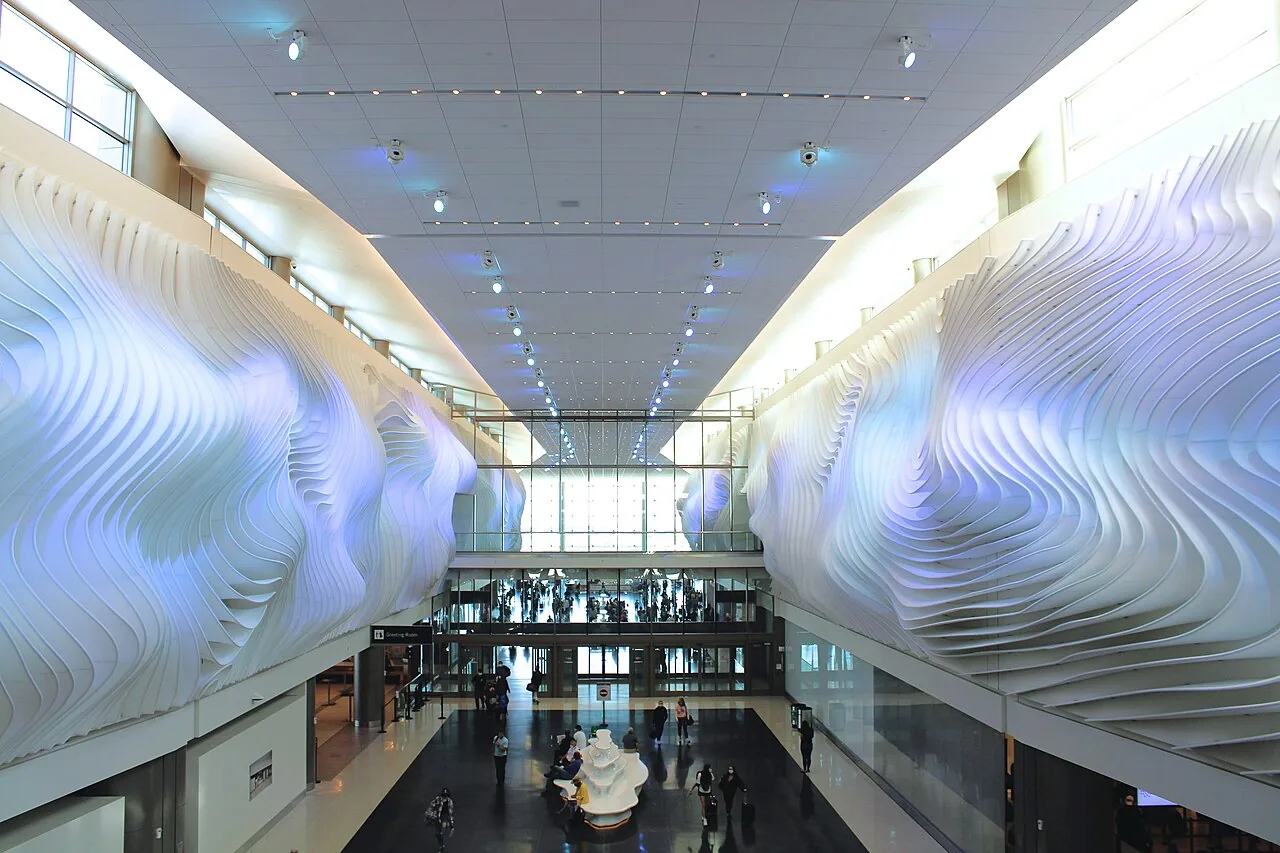
In 2002 Salt Lake City International saw heavy crowds as the city hosted more than one million visitors for the Winter Olympics.
Source: Wikipedia