Seattle–Tacoma International Airport
Facts on SEA
The airport's IATA code SEA comes from its long-used nickname 'Sea-Tac' -- and the relationship even runs in reverse, since the city the airport sits in, SeaTac, Washington, was itself named after the airport's nickname.
Source: Wikipedia
In 1983 Seattle's Port Commission voted to rename the airport after Senator Henry M. Jackson, but a public referendum found Tacoma voters preferred the original name by a 4-to-1 margin, so the Seattle-Tacoma name was restored in 1984.
Source: Wikipedia
During runway construction in 1961, workers at Sea-Tac unearthed the fossilized skeleton of a Megalonyx jeffersonii, a species of giant ground sloth.
Source: Wikipedia
Sea-Tac's site was chosen in 1942 next to Bow Lake, on U.S. Route 99 south of Seattle, over a rival site near Lake Sammamish that planners rejected for sitting too close to the Cascade Range.
Source: Wikipedia
The airport's sandy soil conditions drove construction costs from an estimated $1.7 million to more than $4.2 million, and the plateau it sits on was formed from 6.5 million cubic yards of excavated earth.
Source: Wikipedia
Shortly after Boeing president Philip G. Johnson died in September 1944, Port of Seattle commissioners considered naming the new airport after him instead -- but rejected the proposal because Tacoma objected to losing its place in the name.
Source: Wikipedia
On July 1, 1973, Sea-Tac opened an underground automated shuttle train linking new satellite terminals to the main building -- among the first fully automatic passenger trains of its kind in the United States.
Source: Wikipedia
The Port of Seattle's 12,100-space parking garage at Sea-Tac is North America's largest parking structure built under a single roof.
Source: Wikipedia
In 2007 Sea-Tac became the first airport to run a 24-hour avian radar system to monitor wildlife on the airfield, developed with the University of Illinois to cut down on bird-strike collisions.
Source: Wikipedia
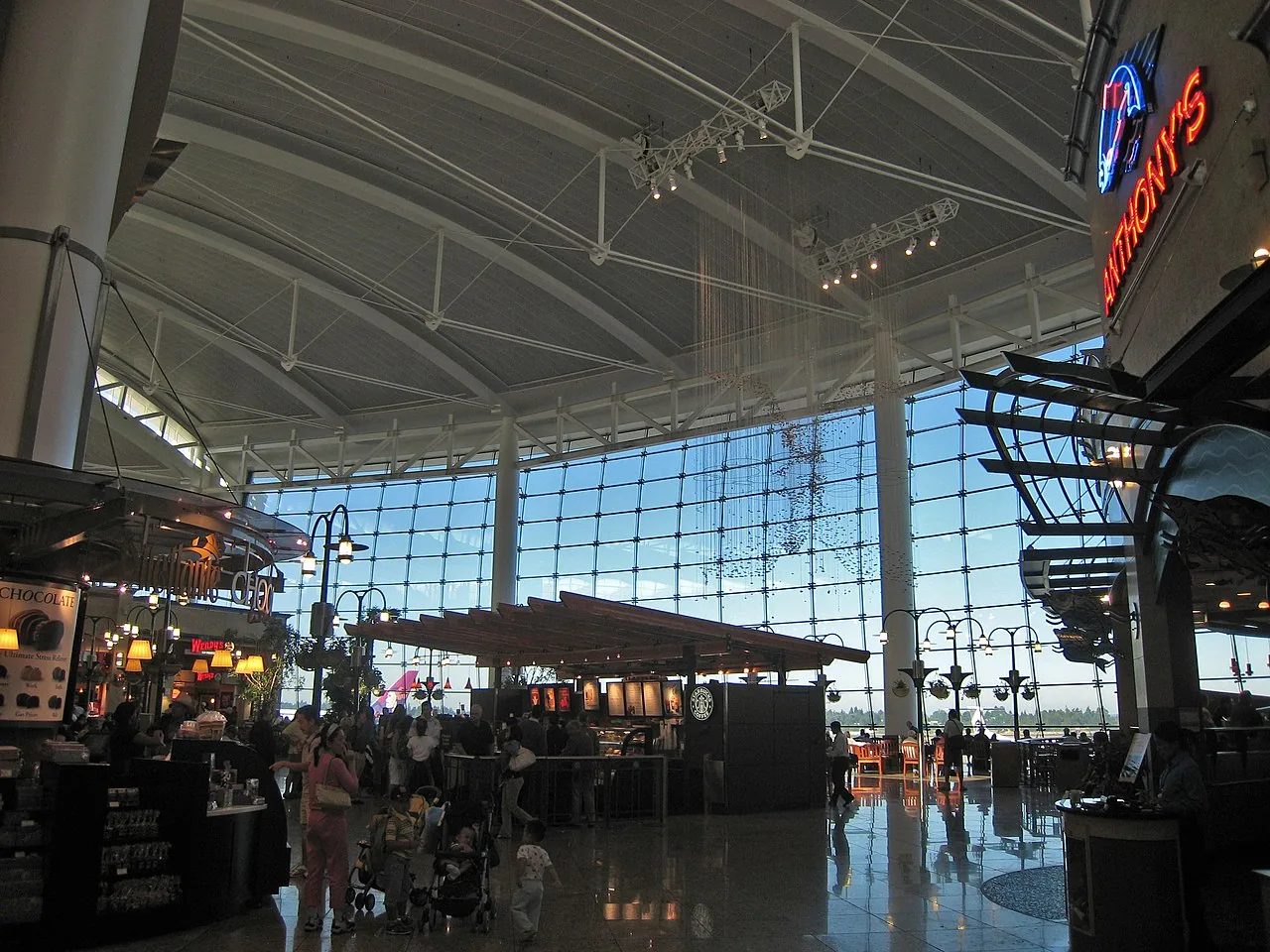
On November 24, 1971, a man calling himself Dan Cooper -- later misreported as D. B. Cooper -- hijacked a Boeing 727 bound for Sea-Tac, collected $200,000 and four parachutes after it landed, then jumped from the plane over southwest Washington; neither Cooper nor most of the money was ever found.
Source: Wikipedia
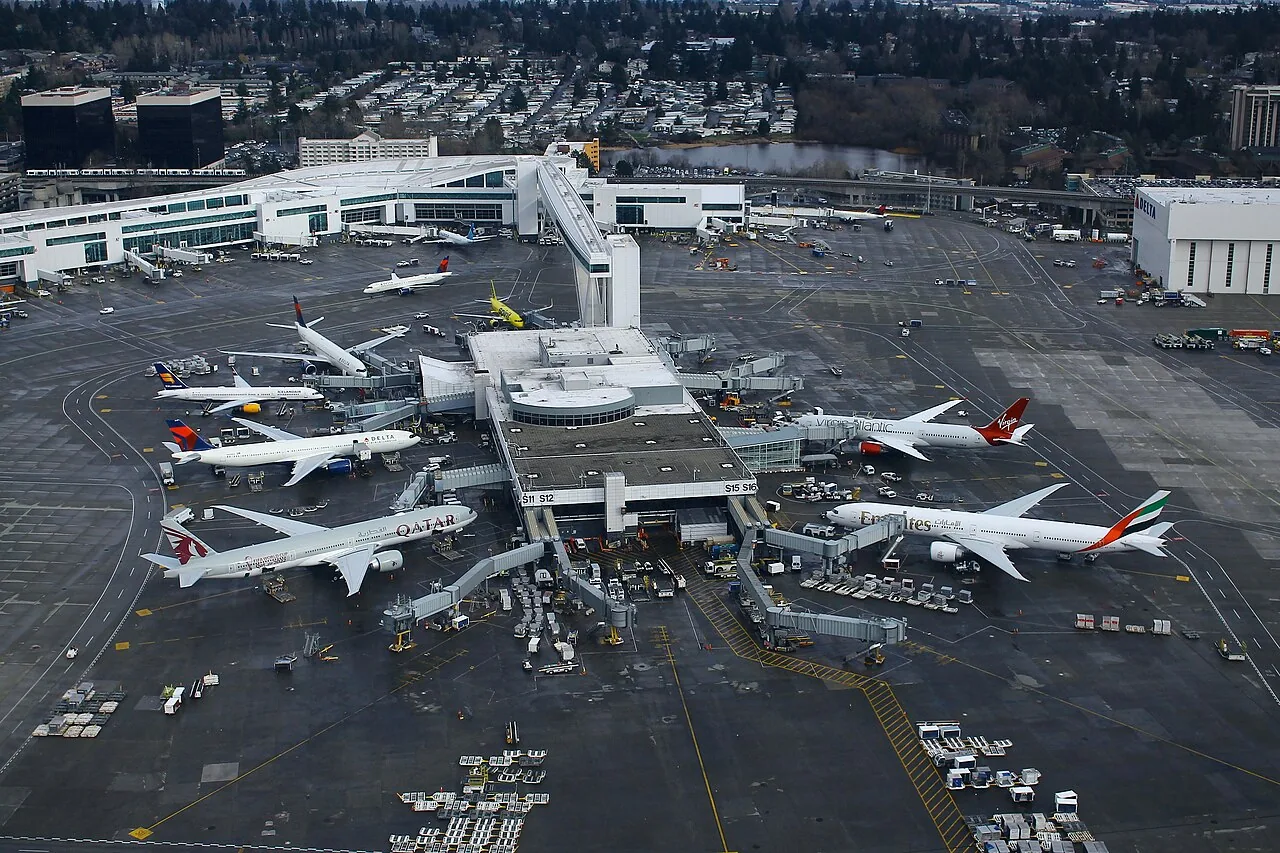
The Port of Seattle's public art collection at Sea-Tac, begun in 1968 and formalized by a percent-for-art ordinance in 2000, now comprises 289 works valued at $40 million, including a suspended replica of the Rutan Voyager above baggage claim.
Source: Wikipedia