San Diego International Airport
Facts on SAN
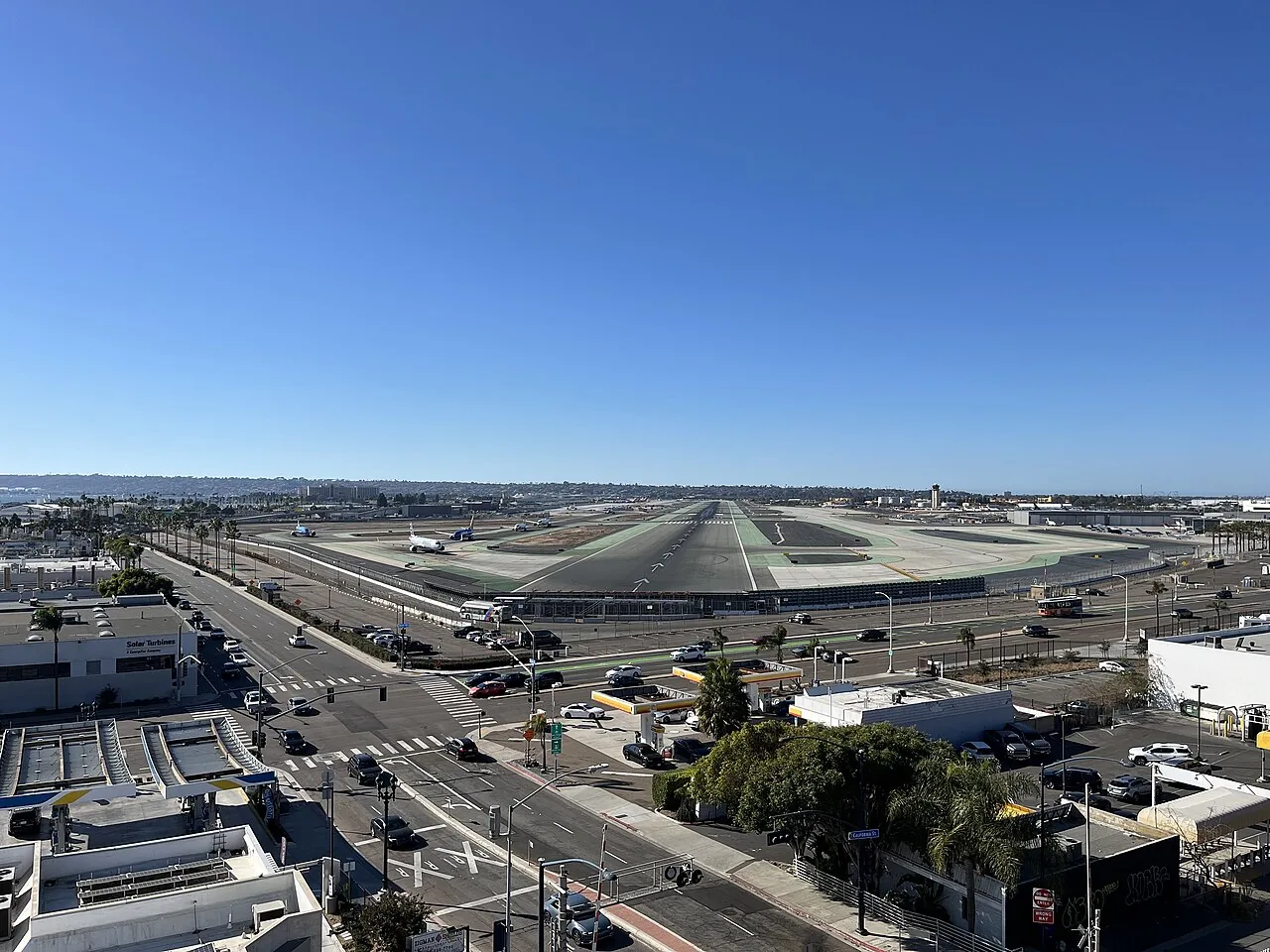
SAN is the busiest single-runway airport in the United States, funneling all its traffic through one 9,401-by-200-foot runway despite its relatively small 663-acre footprint.
Source: Wikipedia
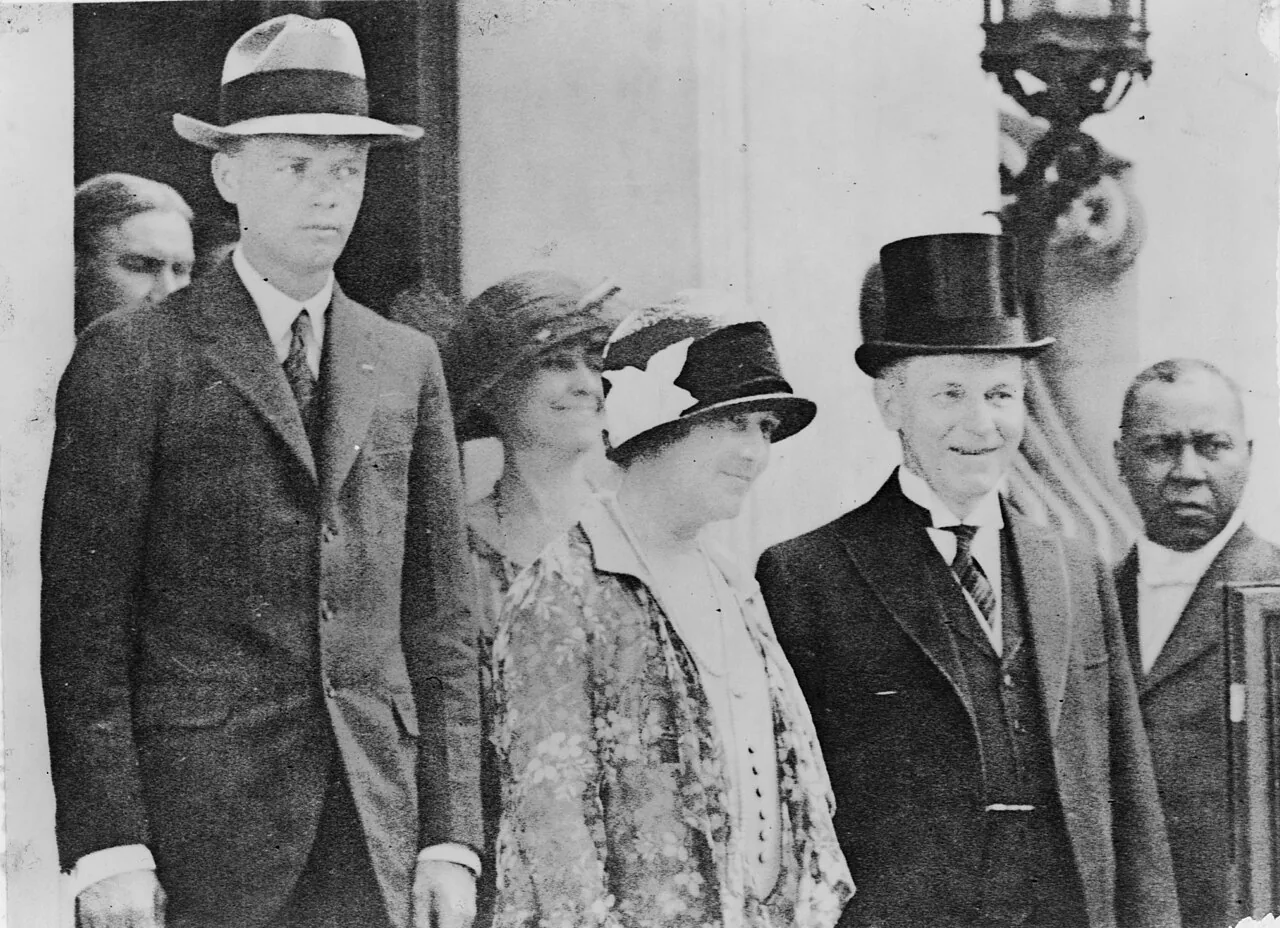
The airport's other name, Lindbergh Field, belongs to Charles Lindbergh, who made the first solo nonstop transatlantic flight in 1927 aboard the Spirit of St. Louis, an aircraft built by San Diego's Ryan Aeronautical Company. His achievement, and civic pride in having built his plane, inspired the city's bond issue to build its own airport the following year.
Source: Wikipedia
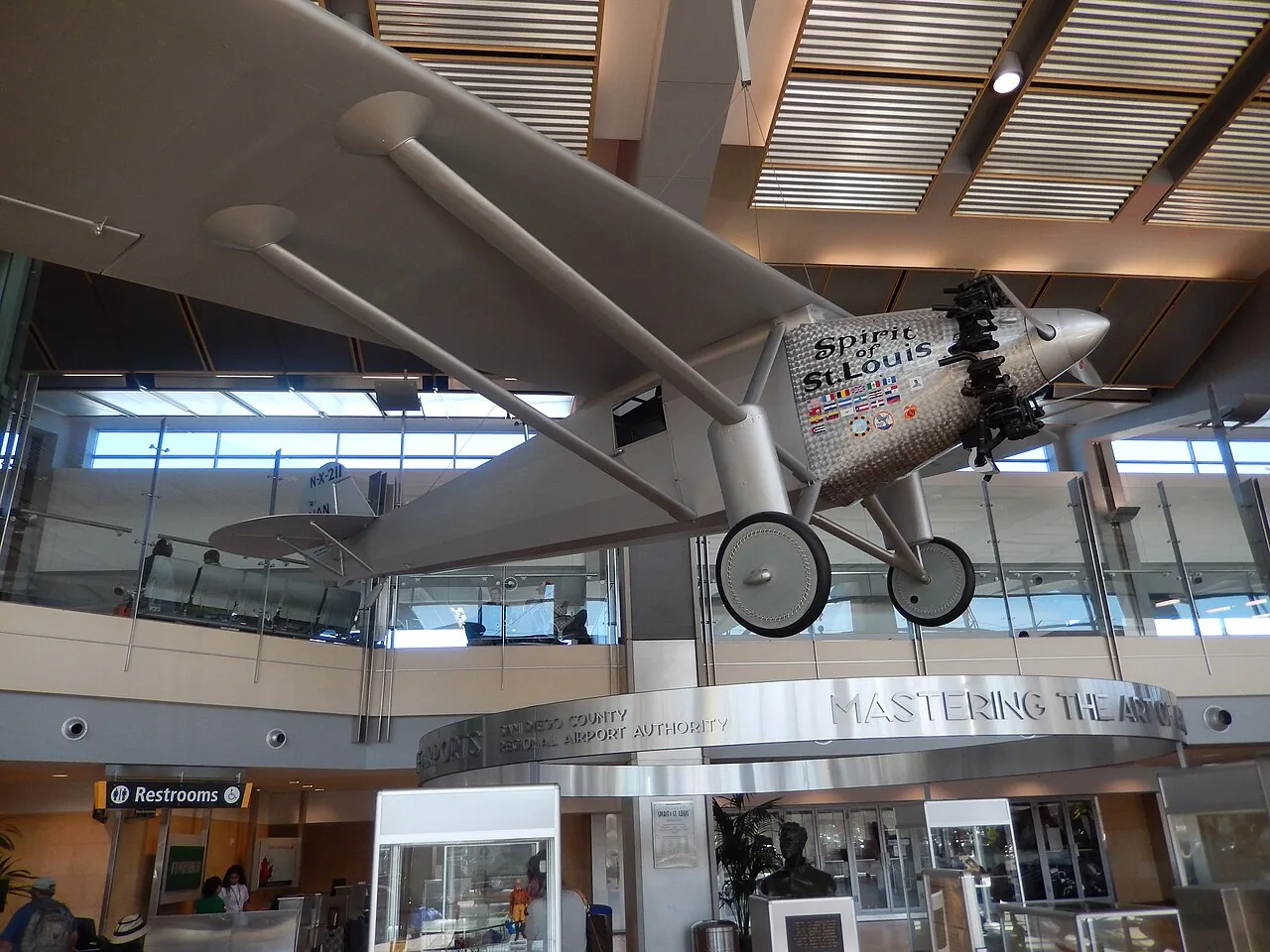
The city dedicated its new airport on August 16, 1928, as "San Diego Municipal Airport -- Lindbergh Field," with a flyover of 140 Navy and 82 Army aircraft; Lindbergh himself encouraged the project and agreed to lend it his name. The San Diego County Regional Airport Authority renamed it San Diego International Airport only in 2003.
Source: Wikipedia
The approach to SAN's Runway 27 is unusually steep because of utility poles and buildings over 200 feet tall within two miles of the threshold -- steep terrain that has drawn comparisons to Kansas City's Charles B. Wheeler Downtown Airport and Hong Kong's former Kai Tak Airport, and makes an instrument landing system infeasible there.
Source: Wikipedia
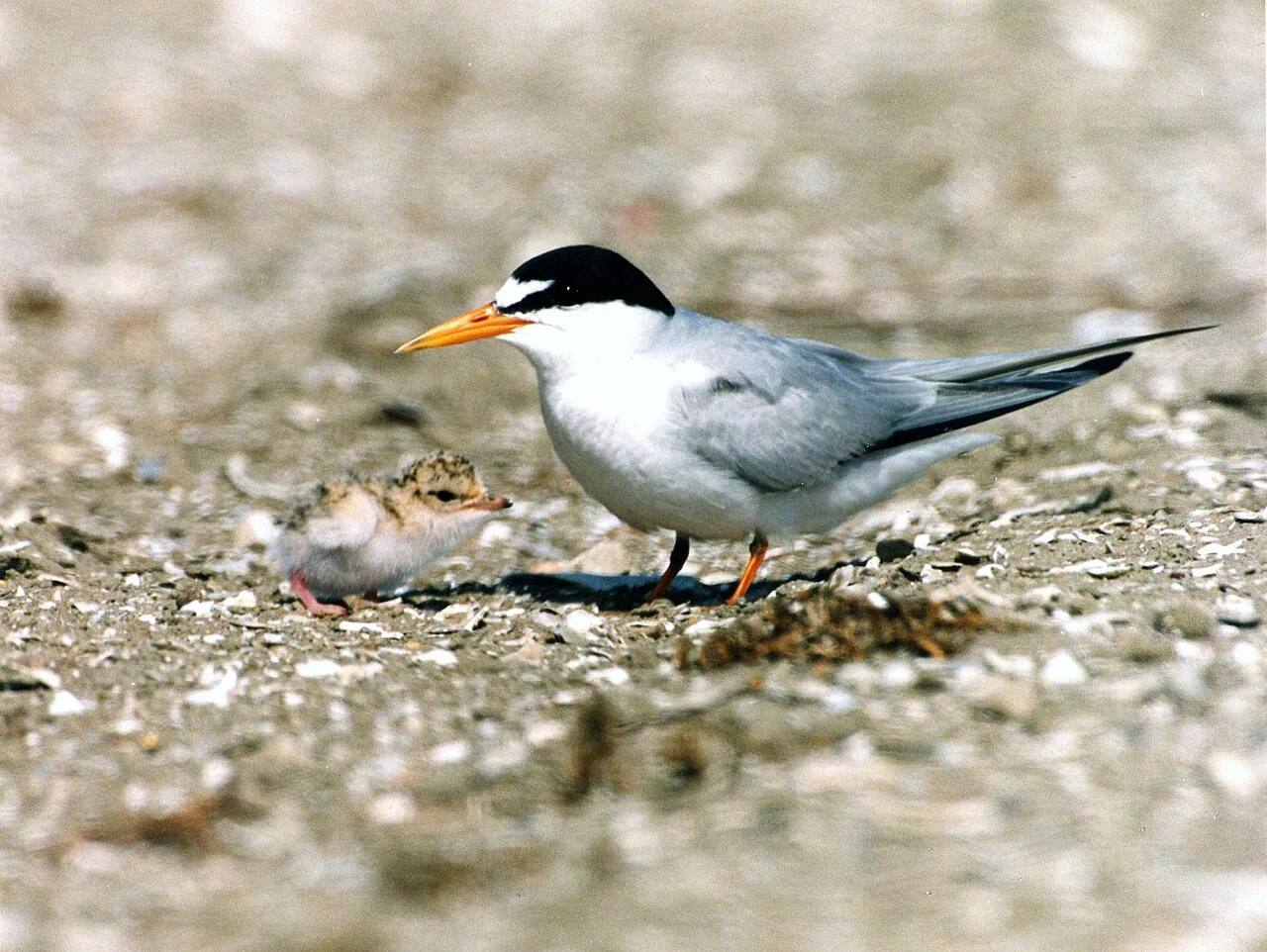
Since 1970, a stretch of sand and gravel in the airport's southeast infield between the runway and taxiway has served as a nesting site for the endangered California least tern, with roughly 135 nests recorded there in 2007.
Source: Wikipedia
On September 25, 1978, PSA Flight 182 collided in midair with a Cessna 172 while landing at Lindbergh Field, killing all 135 people on the airliner, both occupants of the Cessna, and seven people on the ground in San Diego's North Park neighborhood.
Source: Wikipedia
To manage noise complaints from neighbors, SAN has enforced a curfew since 1979 restricting takeoffs to between 6:30 a.m. and 11:30 p.m., with heavy fines for violations outside that window; arrivals, by contrast, are permitted around the clock.
Source: Wikipedia
In its early years the airport doubled as an aviation proving ground: it hosted the Bowlus Glider School from 1929 to 1930, saw aviator Ruth Alexander set women's world altitude records in 1930, and was the starting point of the first transcontinental glider tow, which departed for New York on March 30, 1930.
Source: Wikipedia