King Khalid International Airport
Facts on RUH
King Khalid International Airport opened in 1983 to replace the original Riyadh International Airport, which had reached maximum capacity as the surrounding city grew up around it.
Source: Wikipedia
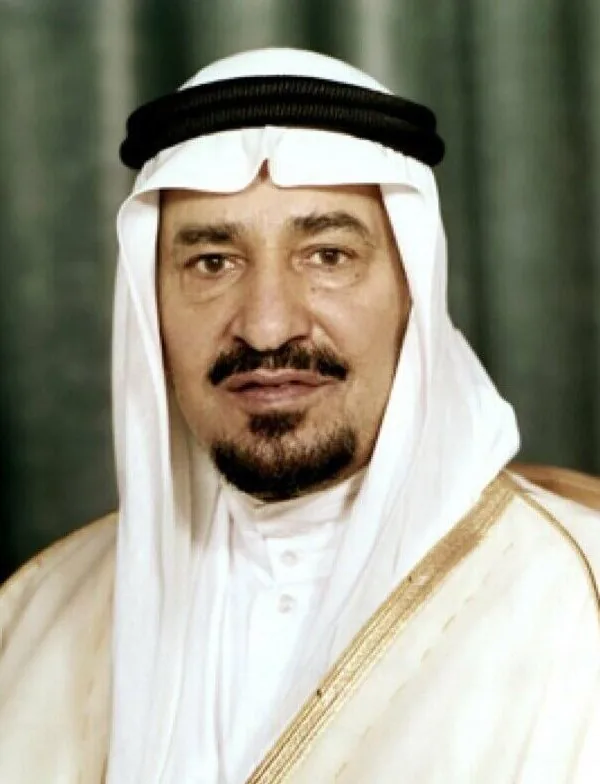
The airport is named for Khalid bin Abdulaziz Al Saud (1913-1982), the sixth son of Saudi Arabia's founding king, served as crown prince before becoming king in 1975; in 1943 he traveled to the United States with his brother Faisal on a trip that helped establish diplomatic relations between the two countries.
Source: Wikipedia
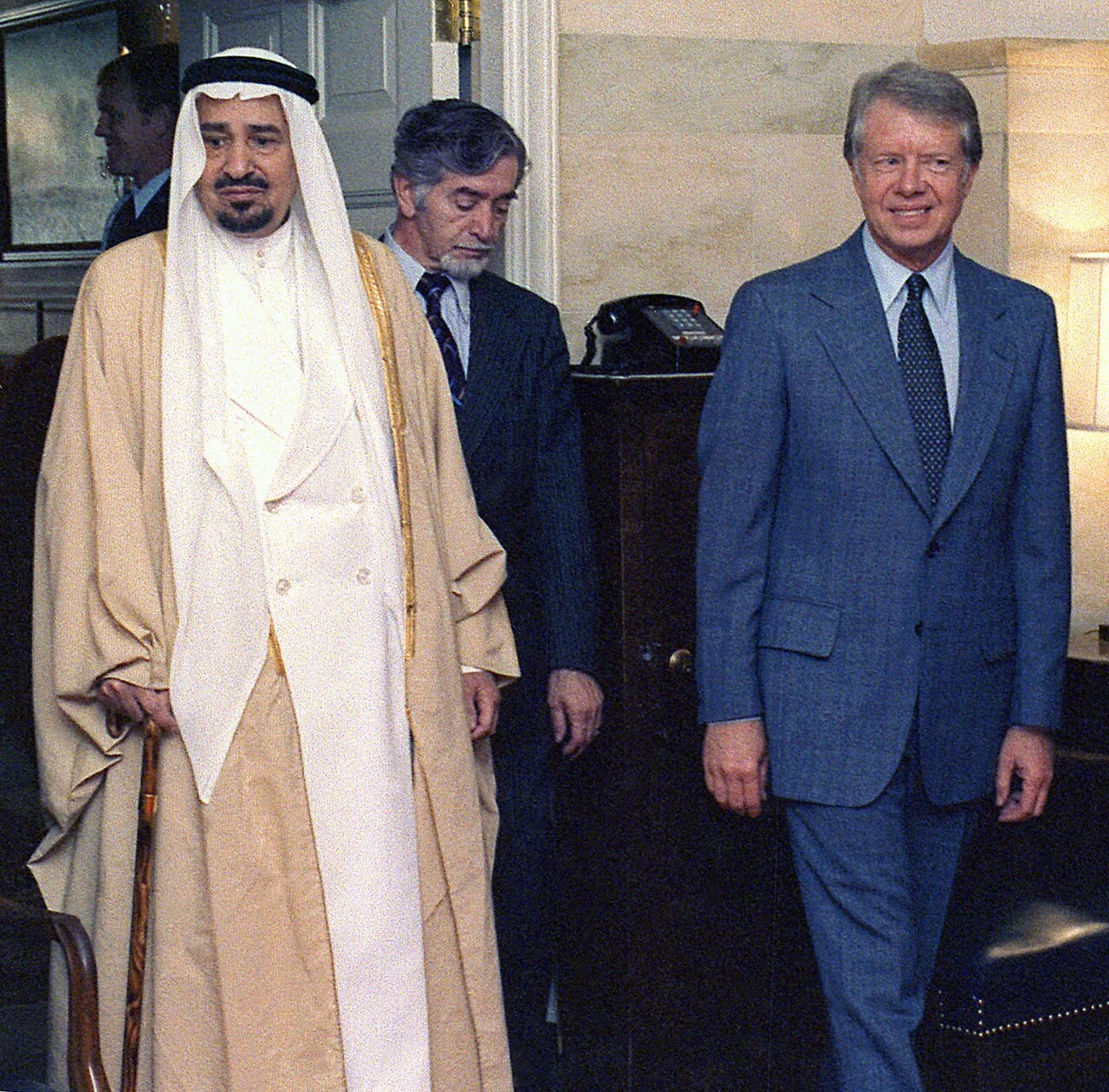
King Khalid died in June 1982, a year before the Riyadh airport built to bear his name was completed; it was his half-brother and successor, King Fahd, who presided over its opening on 16 November 1983.
Source: Wikipedia
The airport's central mosque, which can hold around 9,000 worshippers, features stained glass by British artist Brian Clarke considered one of the largest and most technically advanced stained-glass projects of the modern era.
Source: Wikipedia
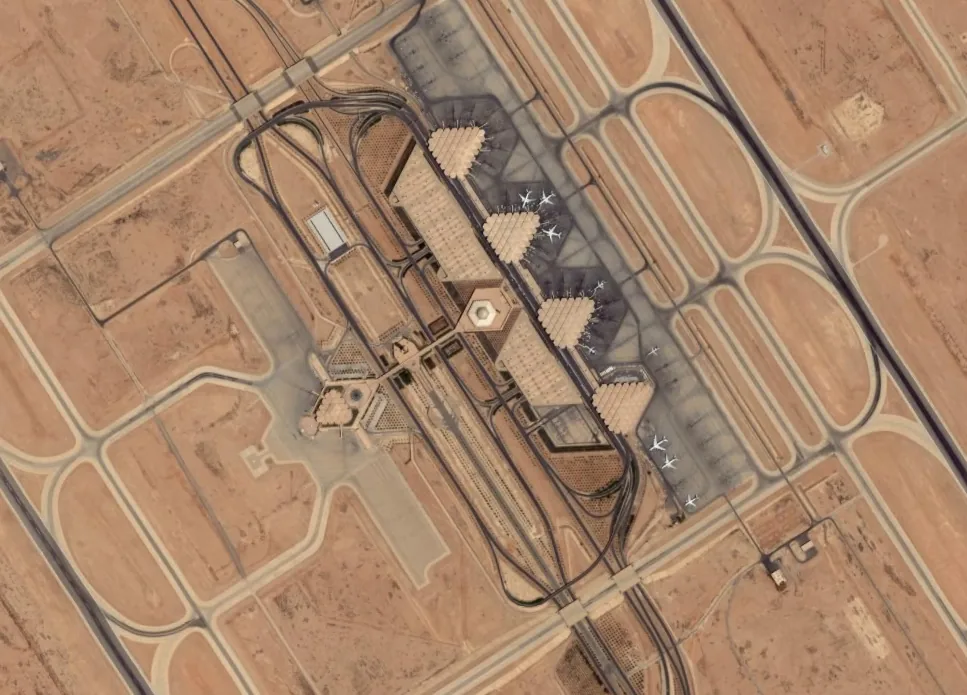
Terminals 1 through 4, built for the airport's 1983 opening, are each triangular in plan with a base area of 47,500 square meters, linked to one another by three connecting buildings each 168 meters long.
Source: Wikipedia
The airport's two parallel runways each measure 4,260 meters (13,980 feet), and its control tower — one of the world's tallest — rises 81 meters across 19 separate floor levels.
Source: Wikipedia
The old Riyadh International Airport had reached capacity and been hemmed in by growing neighborhoods by the 1970s, prompting site selection for a replacement in 1974 and construction from 1976; the vacated airfield was closed in 2021 and is being redeveloped into King Salman Park.
Source: Wikipedia
NASA once designated King Khalid International Airport as an alternative landing site for the Space Shuttle.
Source: Wikipedia
Visiting heads of state are received in the Royal Pavilion's Royal Terminal, connected to the airport mosque by a 390-meter ceremonial hall used for formal welcomes with honor guards and bands.
Source: Wikipedia
A planned successor, King Salman International Airport, is intended to be built over the current site with at least six parallel runways and capacity for up to 100 million passengers a year.
Source: Wikipedia