Raleigh-Durham International Airport
Facts on RDU
RDU was chartered by the North Carolina General Assembly in 1939 to serve both Raleigh and Durham after the region's original 1929 airport was outgrown; the project was championed by Eastern Air Lines chairman Eddie Rickenbacker, and the new airport opened on May 1, 1943.
Source: Wikipedia
Like many airports in the South, RDU operated for decades as a segregated facility with separate waiting areas for "White" and "Colored" passengers, before it was desegregated in the 1960s following protests by students at local universities.
Source: Wikipedia
American Airlines built a hub at RDU in 1987 that grew to 211 daily departures to 64 cities by 1992, but it operated at a loss and closed in 1995; Midway Airlines then ran the hub from RDU's sublet gates until it went bankrupt in 2003.
Source: Wikipedia
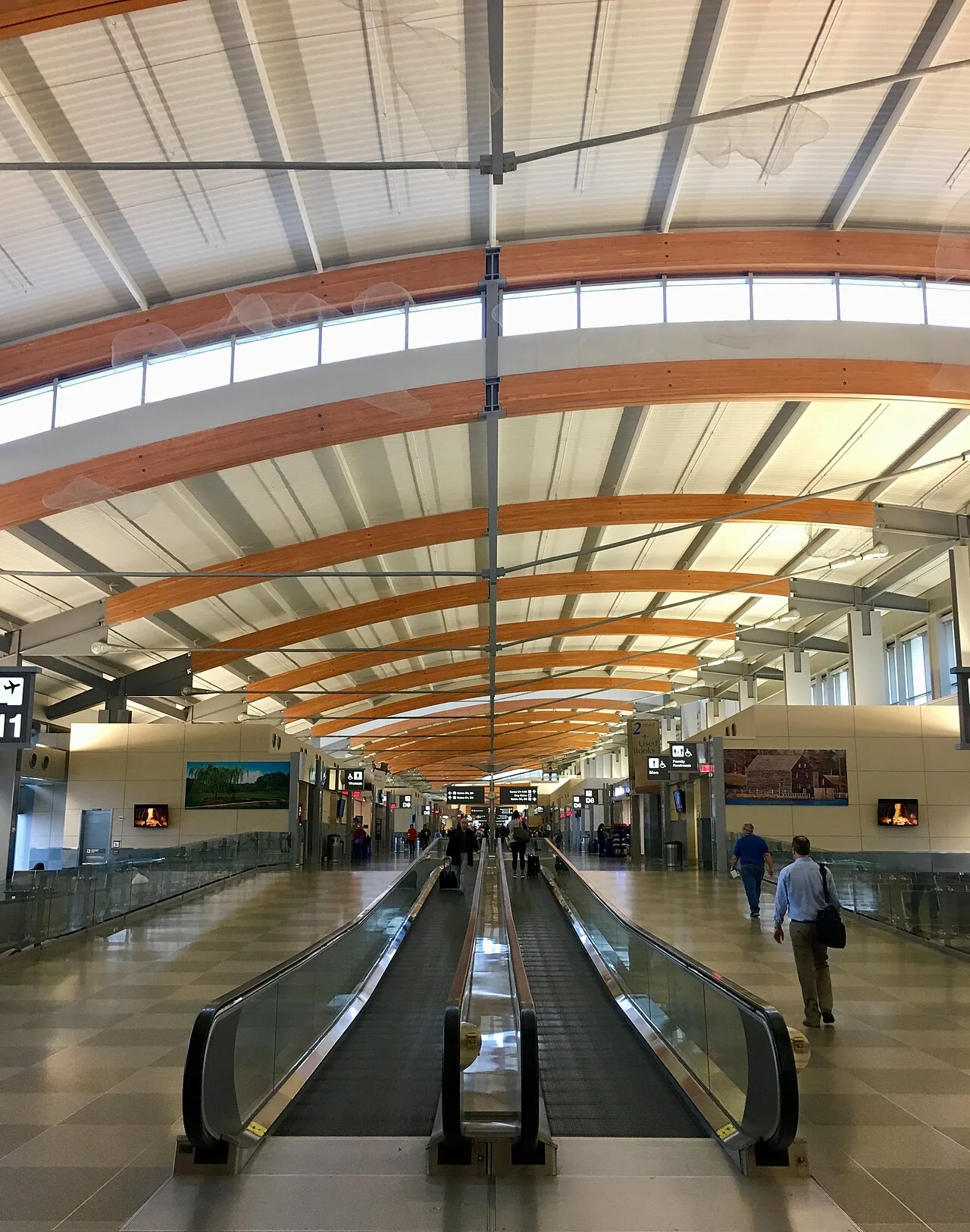
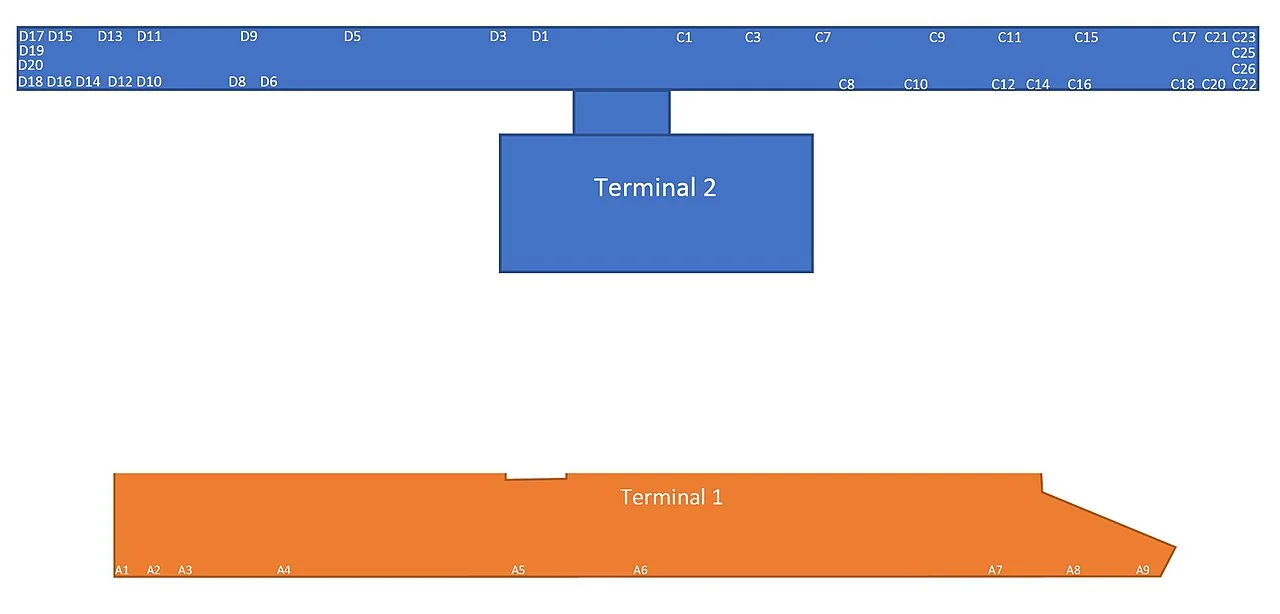
RDU's Terminal 2 was rebuilt on the site of the old 1987 Terminal C and designed by Fentress Architects, with the project completed in 2011.
Source: Wikipedia
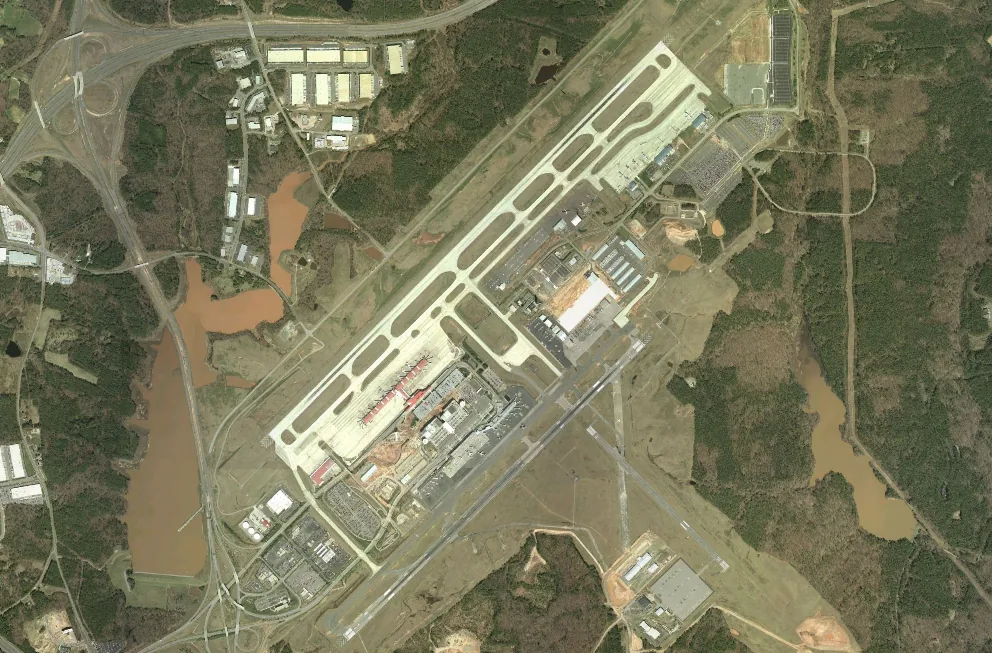
RDU set a passenger record of 15.6 million travelers in 2025, breaking the prior year's record of 15.5 million. A new runway to replace 5L/23R, planned at 10,639 feet long, began construction in October 2023 and is expected to finish paving by 2029.
Source: Wikipedia
Delta Air Lines named RDU a focus city in 2018 and kept that designation through the COVID-19 pandemic, citing the Research Triangle's strong economy and the absence of a single dominant airline at the airport.
Source: Wikipedia
RDU sits on 5,000 acres of unincorporated Wake County, wedged between the city of Raleigh and the towns of Cary and Morrisville, serving the Research Triangle region shared by Raleigh, Durham and the surrounding area.
Source: Wikipedia
Regional carrier Breeze Airways opened an operating base at RDU in March 2026 with plans for 200 pilots and flight attendants, while Delta's regional partner Endeavor Air opened a crew base there in spring 2025 supporting more than 140 aircraft.
Source: Wikipedia