Shanghai Pudong International Airport
Facts on PVG
Shanghai Pudong's code PVG comes from 'Pudong,' the district east of the Huangpu River where the airport was built, with a filler 'V' swapped in for the 'U' to make a distinct three-letter code.
Source: Air-Port-Codes
Pudong means, literally, 'the east bank of the Huangpu'. It named the ground directly opposite Puxi — 'west bank' — the historic city centre. For most of Shanghai's history it was farmland with warehouses and wharves along the shore, administered from the districts across the river.
Source: Wikipedia
Pudong's transformation has a birthday: 18 April 1990, when Premier Li Peng announced that Special Economic Zone policies would be extended to the area. The Pudong New Area was formally established on 1 October 1992 — so the district was under a decade old when its airport opened.
Source: Wikipedia
Pudong Airport is linked to the city by the Shanghai Maglev, the world's first commercial high-speed magnetic levitation line, which covers the 30 km trip in about 8 minutes and hits 431 km/h during its fastest daily runs.
Source: China Highlights
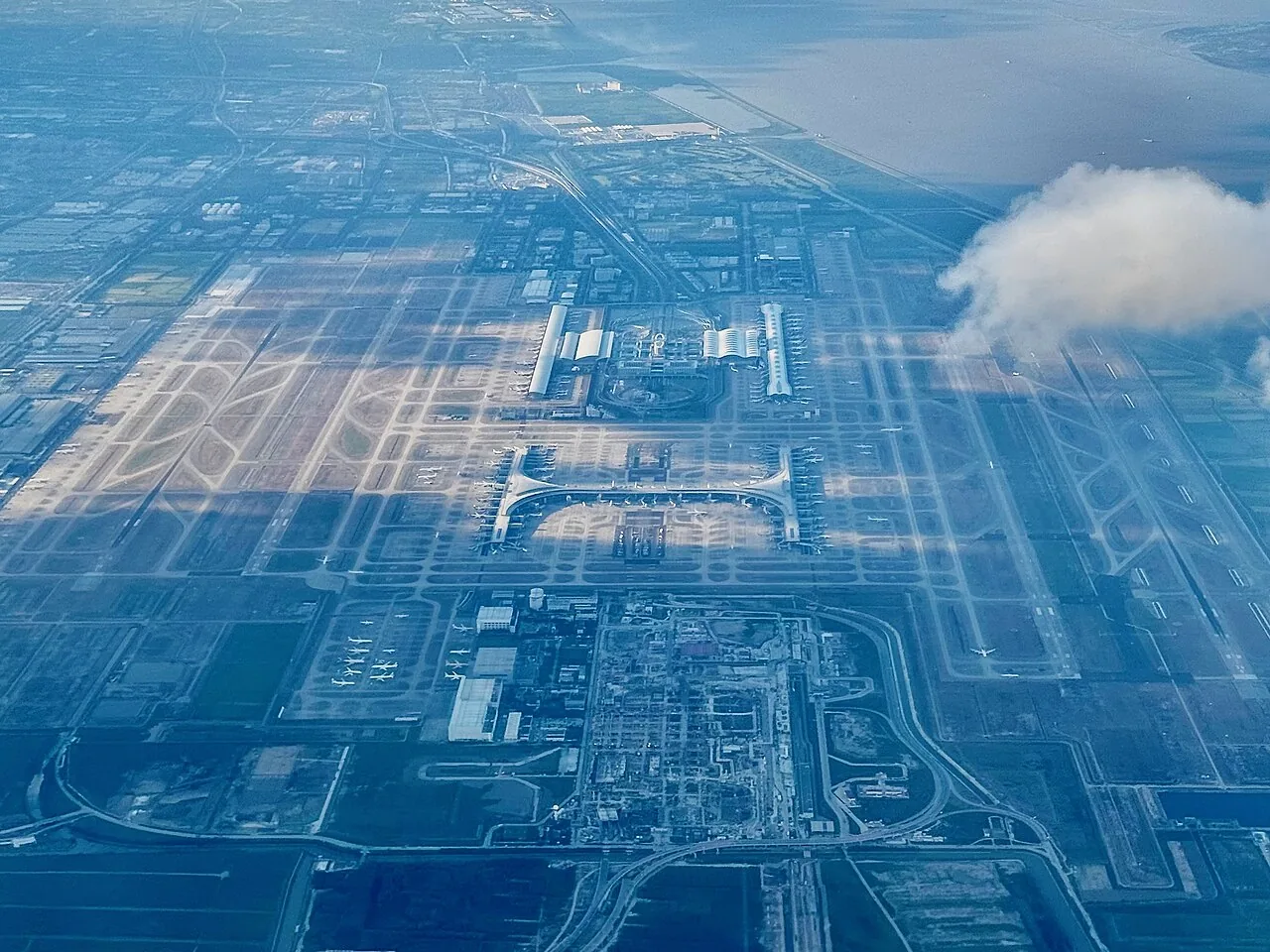
Construction started in October 1997 and took two years, at a cost of RMB 12 billion (US$1.67 billion). The airport opened on 16 September 1999 and took over from Hongqiao, until then Shanghai's only commercial airport, as the city's main gateway.
Source: Wikipedia
The layout is a sandwich: two main passenger terminals in the middle, flanked on both sides by four parallel runways. The whole thing occupies a 40-square-kilometre (10,000-acre) site right on the coastline of eastern Pudong, about 30 km from the city centre.
Source: Wikipedia
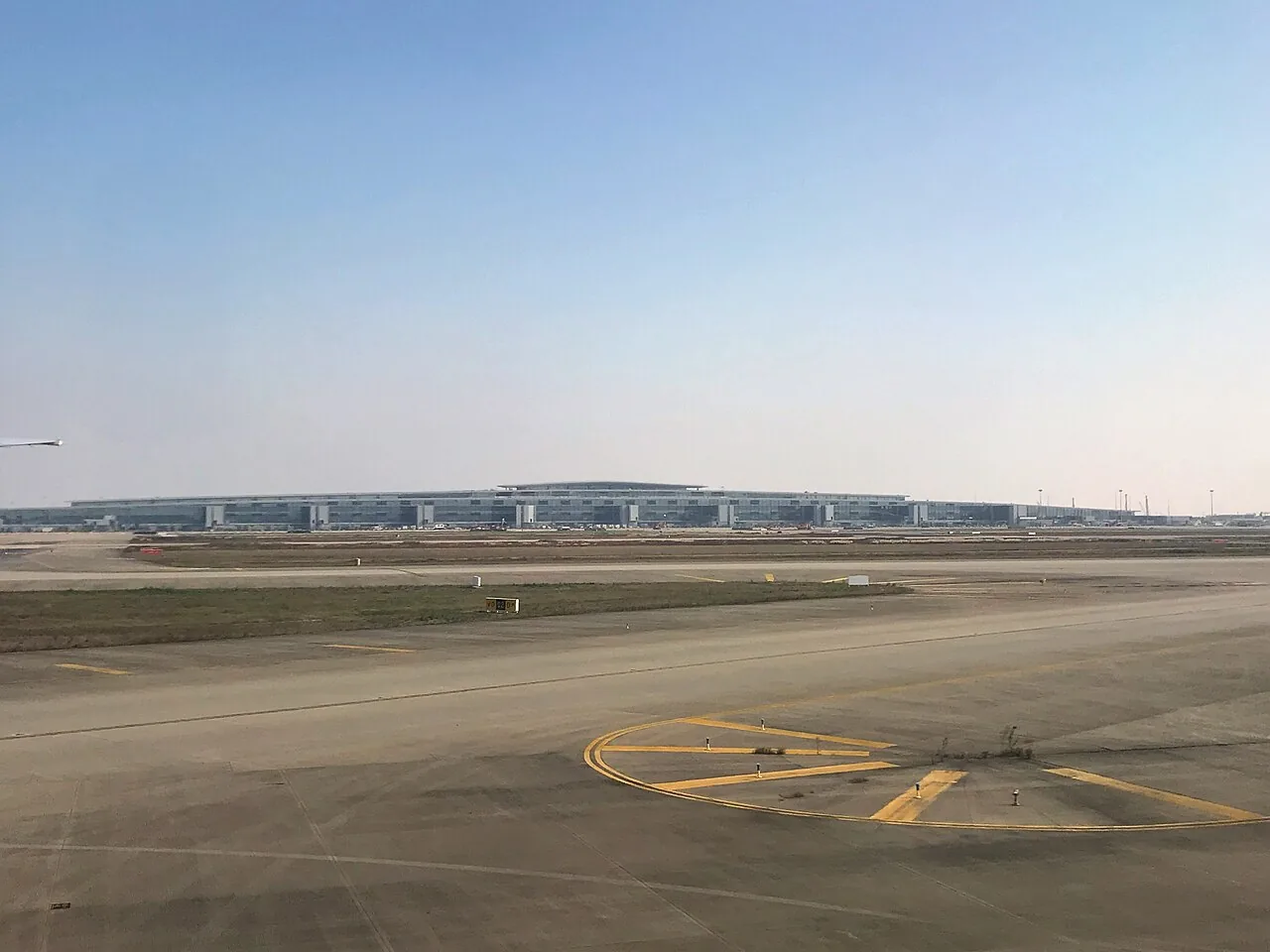
The satellite terminal that opened in September 2019 is the largest stand-alone satellite terminal in the world: 622,000 square metres in an H-shape of two halls, S1 and S2, with 83 gates, built for about 20.6 billion yuan and reached from the main terminals by underground people movers.
Source: Wikipedia
Pudong is a freight monster as much as a passenger airport. It handled 3,778,331 metric tons of cargo in 2024, second in the world, and is the Asia-Pacific hub for FedEx, UPS and DHL — the DHL express hub, opened in July 2012, is reported to be the largest in Asia.
Source: Wikipedia
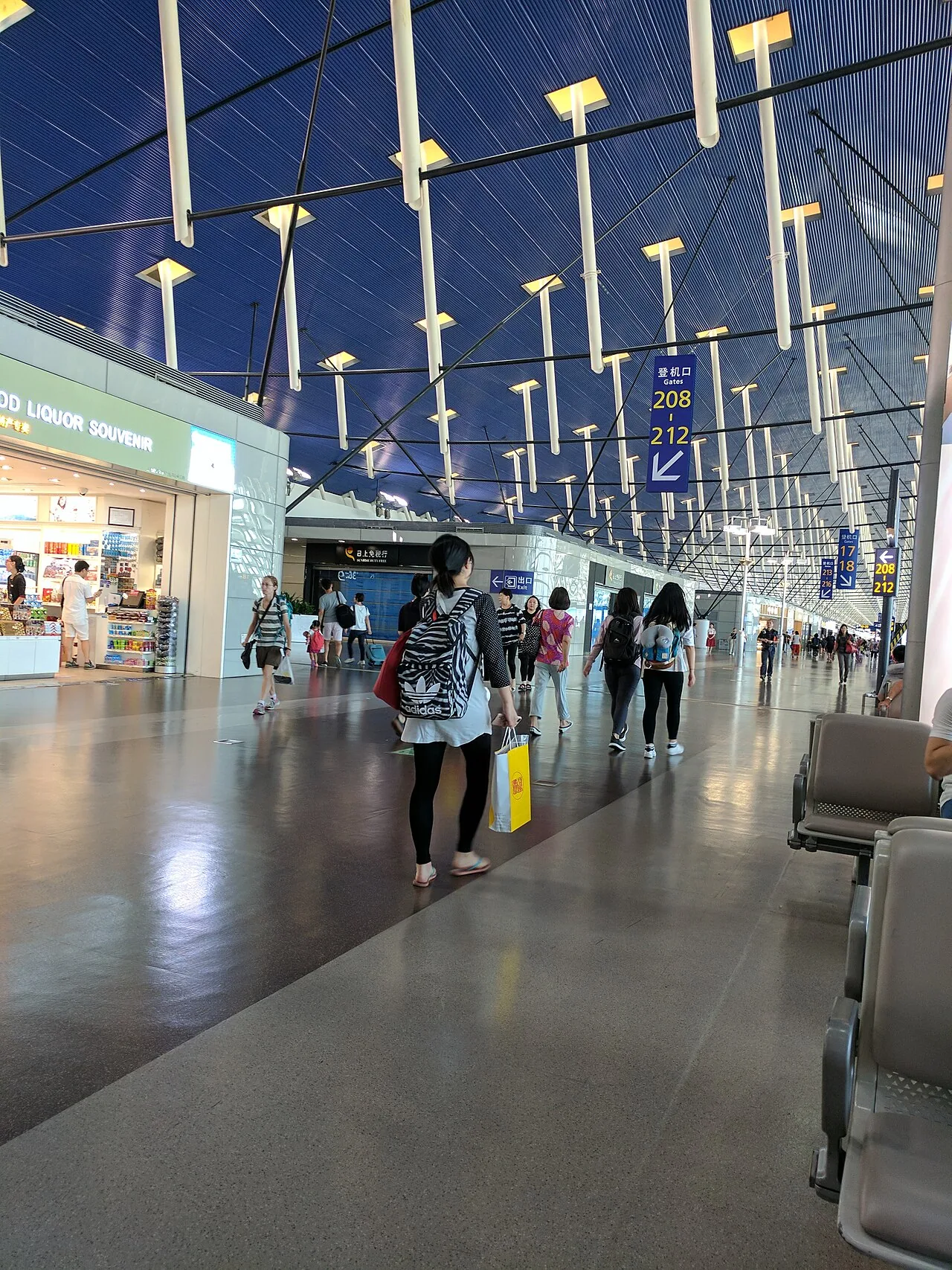
In 2025 the airport handled 84,994,548 passengers, the most of any airport in China. About half its traffic is international — 35.25 million passengers — which makes it mainland China's busiest international gateway rather than merely its busiest airport.
Source: Wikipedia
On 22 July 2020 an Ethiopian Airlines Boeing 777 freighter caught fire on the ground at Pudong before takeoff and was destroyed; all five crew got out safely. Investigators traced the fire to chlorine dioxide pills in the cargo hold igniting spontaneously.
Source: Wikipedia