Beijing Capital International Airport
Facts on PEK
The 'Peking' spelling behind PEK reached English through a popular atlas published in Amsterdam in 1655 by the Jesuit missionary Martino Martini. Pinyin 'Beijing' became the official romanization in the 1980s, but PEK and Peking University kept the older form.
Source: Wikipedia
Beijing means 'Northern Capital' — 北 běi for north, 京 jīng for capital. The name was applied to the city in 1403 under the Ming dynasty to distinguish it from Nanjing, the 'Southern Capital' downriver.
Source: Wikipedia
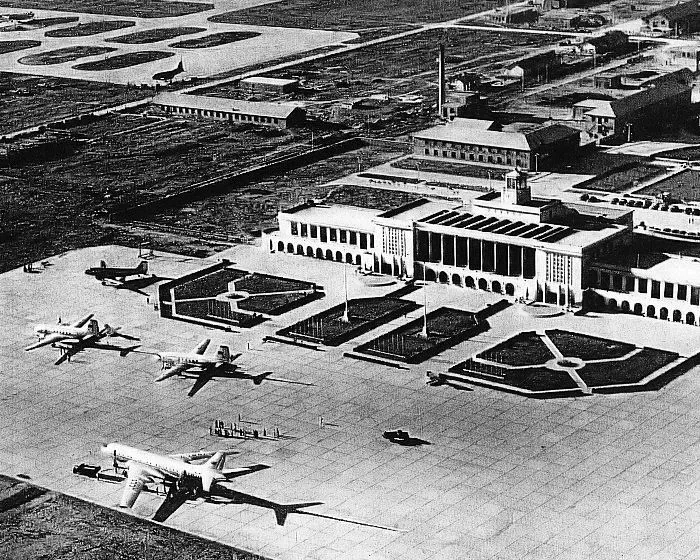
The 'Capital' half of the name is literal: in Chinese the airport is 北京首都国际机场, with 首都 (shǒudū) meaning the national capital. It opened on 1 March 1958 with a single small terminal — which still stands, used for VIPs and charter flights — and one 2,500 m runway.
Source: Wikipedia
Beijing's airport code PEK is a holdover from 'Peking,' the old Western romanization of the city's name used before China adopted pinyin — even though the city itself has been spelled Beijing internationally for decades.
Built for the 2008 Olympics, Beijing Capital's Terminal 3 was the largest airport terminal complex ever built in a single phase (986,000 m2) — a record it held for barely six months before Dubai opened its own Terminal 3.
The airport grew a runway at a time. The original 2,500 m (8,200 ft) strip of 1958 was stretched to 3,200 m in 1966 and to 3,800 m in 1982; a third runway only opened on 29 October 2007, to take pressure off the other two before the Olympics.
Source: Wikipedia
Terminal 2 was timed to the politics: it opened on 1 November 1999, marking the 50th anniversary of the People's Republic, while Terminal 1 — which had opened on 1 January 1980 — was shut for a renovation that lasted until 20 September 2004.
Source: Wikipedia
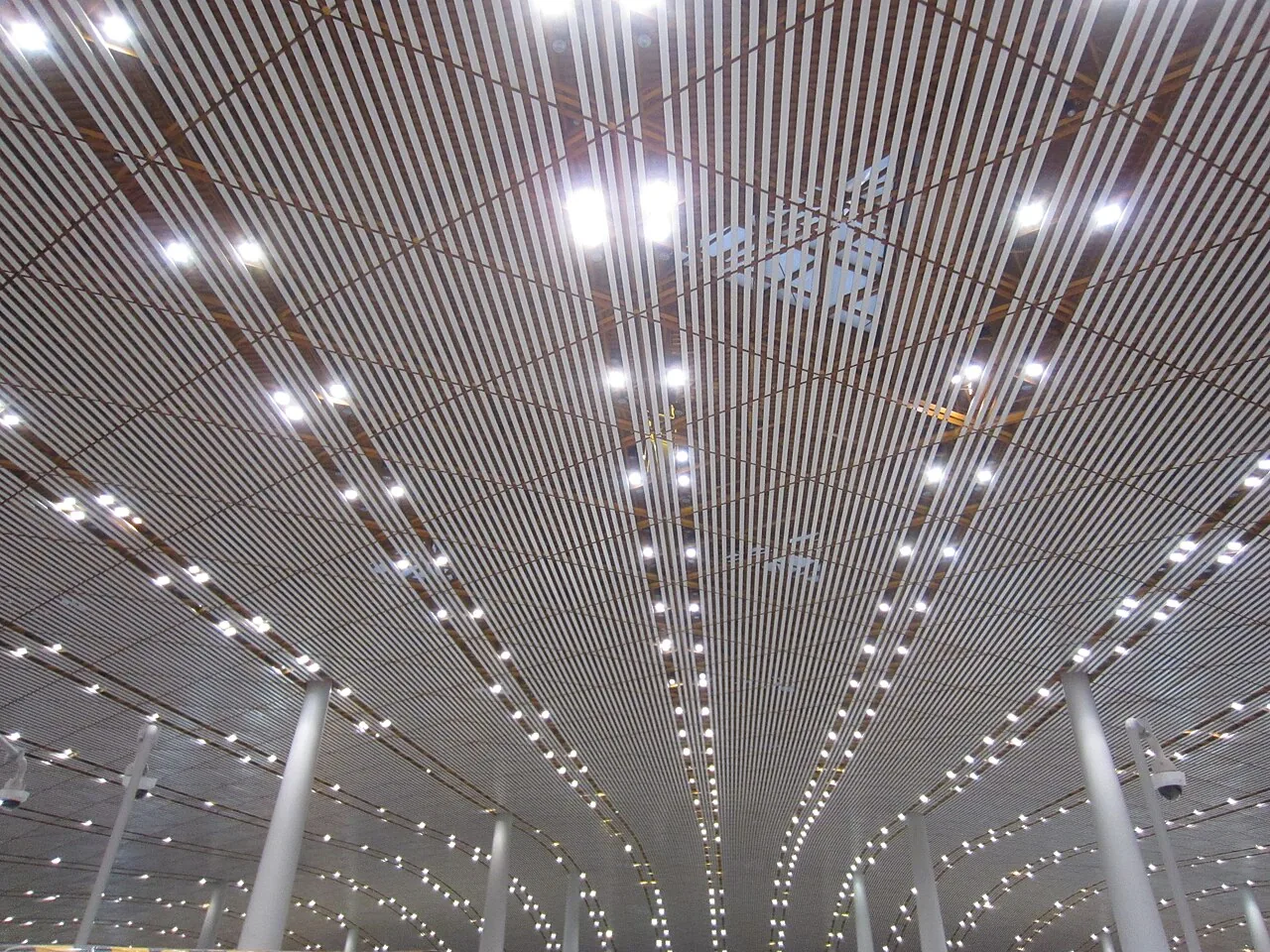
Terminal 3 was designed by a consortium of Foster + Partners, Netherlands Airport Consultants, Arup and the Beijing Institute of Architectural Design, on a US$3.5 billion budget. Its roof is red — the Chinese colour of good luck — and the ceiling's orange tones darken toward the edges so you can read your position in the building.
Source: Wikipedia
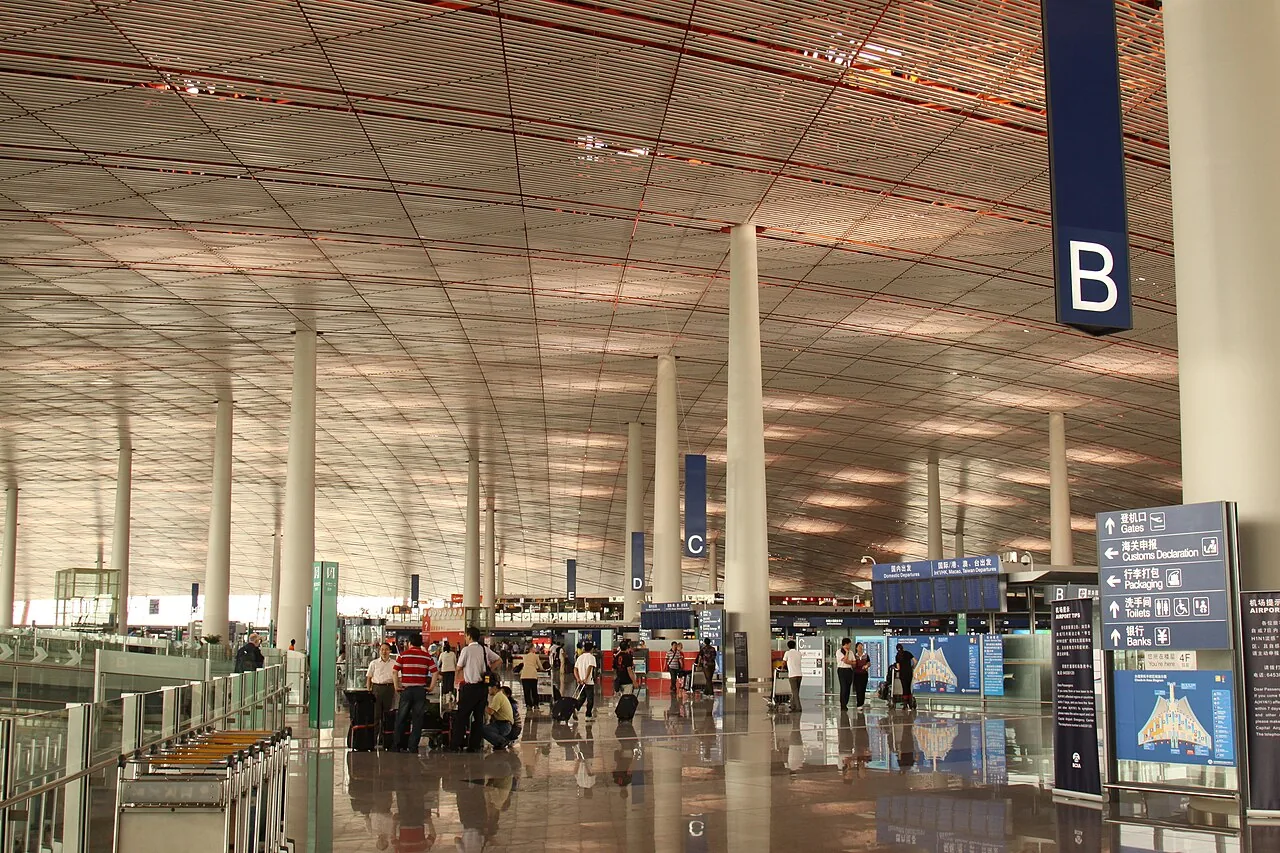
Terminal 3 quotes the imperial city throughout: a 'Menhai', the big copper vat once used to store firefighting water in the Forbidden City, carvings imitating the Nine-Dragon Wall, and an indoor garden in the T3E waiting area built in the style of the Summer Palace.
Source: Wikipedia
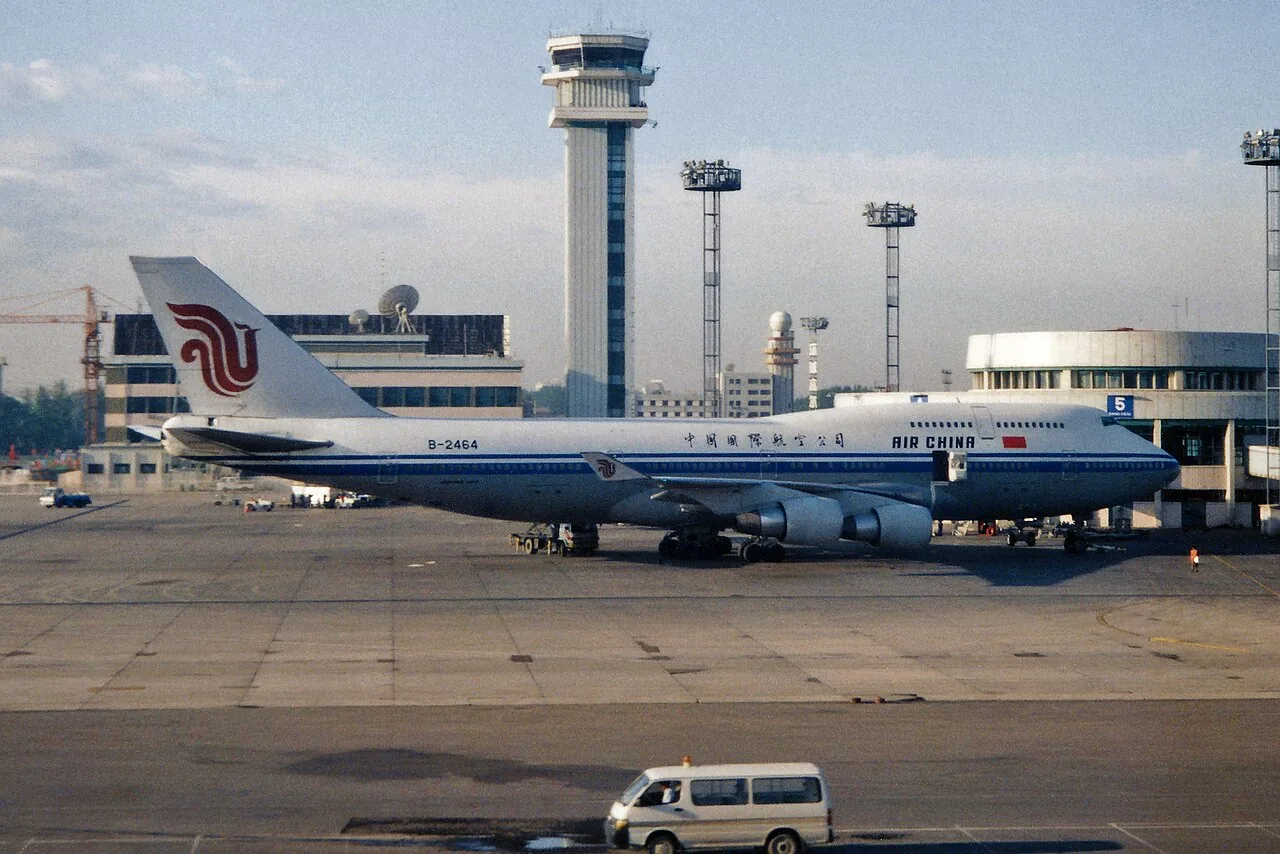
Beijing now shares its traffic. When Daxing International Airport opened in 2019, China Eastern, China Southern and China United moved their Beijing operations there, while Air China and Hainan Airlines stayed at Capital — which had been running well beyond comfortable capacity.
Source: Wikipedia