Narita International Airport
Facts on NRT
Narita's official name was 'New Tokyo International Airport' until 2004, but it has never actually been in Tokyo — it sits in the city of Narita, Chiba Prefecture, about 60 km east of central Tokyo.
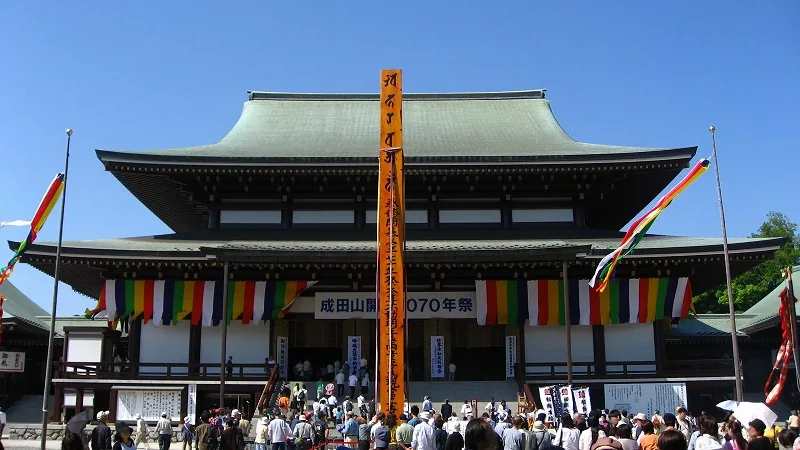
The airport borrows the name of Narita city, a pilgrimage town that grew up around the Buddhist temple Shinshō-ji, founded in 940 AD. The place name 'Narita' does not appear in written records until 1408 — the temple made the town famous long before the runways did.
Source: Wikipedia
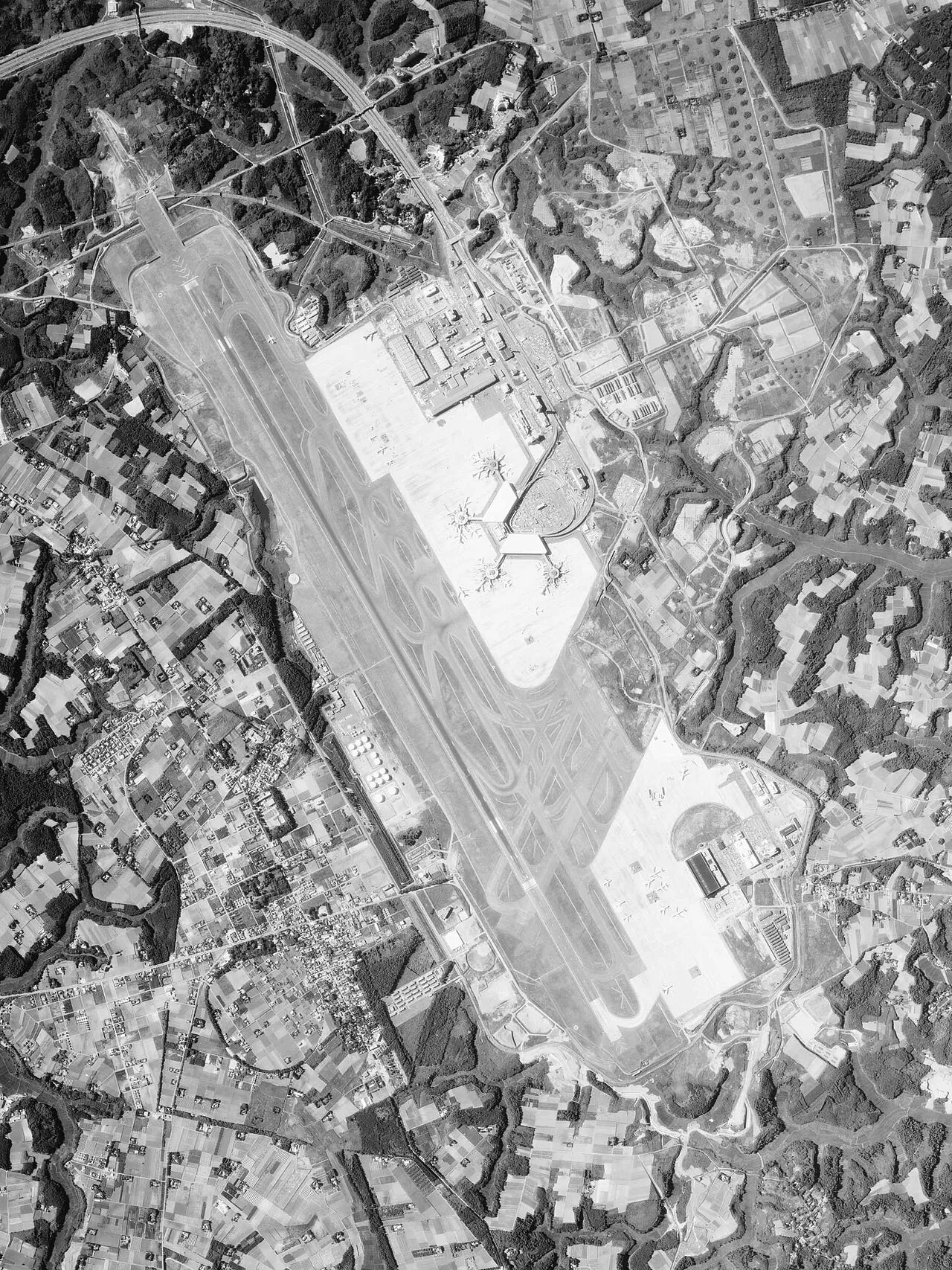
The runways are not in Narita town at all but in Sanrizuka and Shibayama, farmland where the Imperial Household kept a large estate. Planners picked the village of Tomisato in 1965, then shifted the site 5 km northeast — partly because land there looked easy to expropriate.
Source: Wikipedia
Building Narita triggered years of violent land disputes known as the Sanrizuka Struggle, and when the airport finally opened in 1978, 14,000 police faced off against 6,000 protesters throwing rocks and firebombs.
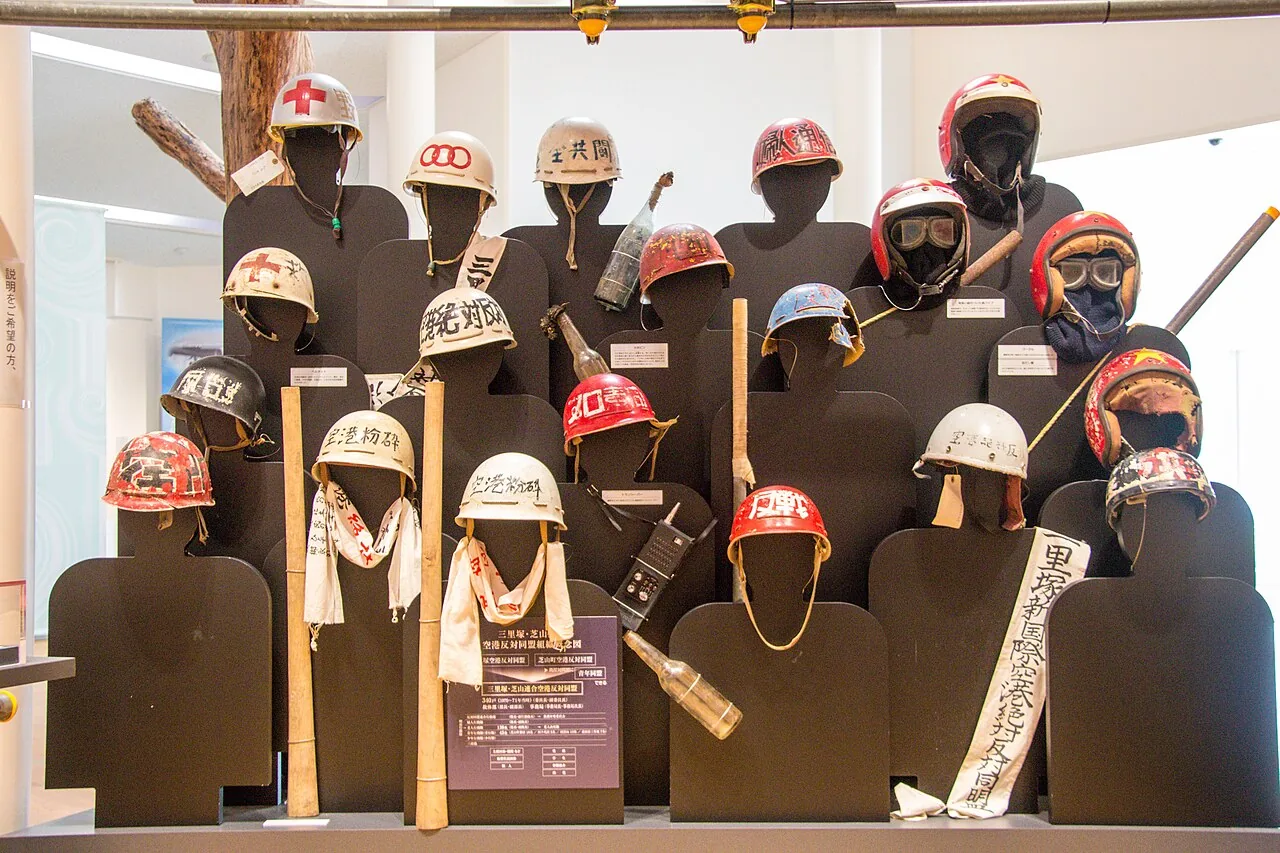
Narita was meant to open on 30 March 1978. Four days earlier a group of protesters broke into the control tower and destroyed much of its equipment, causing about $500,000 in damage and pushing the opening back to 20 May.
Source: Wikipedia
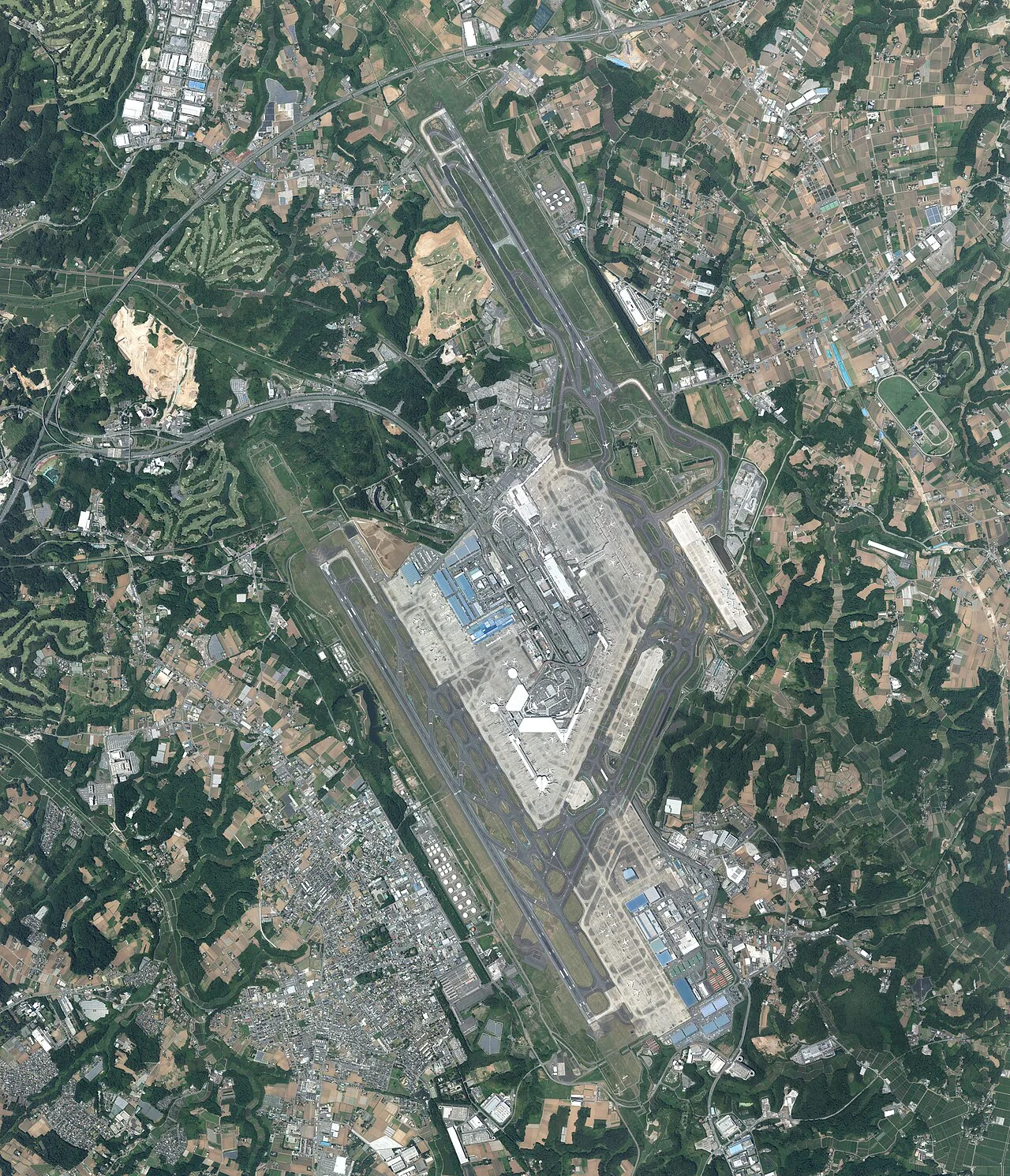
Because the runways sit hard against neighbourhoods — one house and its farm are still wedged between them — Narita operates under a mandatory curfew from midnight to 06:00 to limit noise. Aircraft movements have been constrained by noise rules of one kind or another since the airport opened.
Source: Wikipedia
Narita's main runway is 4,000 m (2.5 mi) long and shares the record for the longest in Japan with the second runway at Kansai International Airport. The airport covered 1,137 hectares (2,810 acres) as of July 2019, with work under way to expand it toward nearly 2,300 hectares.
Source: Wikipedia
From 1978 until March 2015, Narita was the only airport in Japan where visitors had to show identification simply to enter the terminal — a hangover from the violence around its construction. Cameras, explosive detectors and dogs replaced the ID checks after a two-month trial in 2013.
Source: Wikipedia
Jet fuel arrives at Narita down a 47 km (29 mi) pipeline from the port of Chiba City and a fuel terminal at Yotsukaido. The line opened in 1983, and by its thirtieth anniversary in 2013 it had pumped 130 billion litres of fuel to the airport.
Source: Wikipedia
Terminal 3, opened on 8 April 2015 for low-cost carriers, saves money by design: floor decals instead of lit signs, and outdoor stands with airstairs instead of jet bridges. It cost ¥15 billion, covers 66,000 m2, and holds Japan's largest airport food court.
Source: Wikipedia