Ninoy Aquino International Airport
Facts on MNL
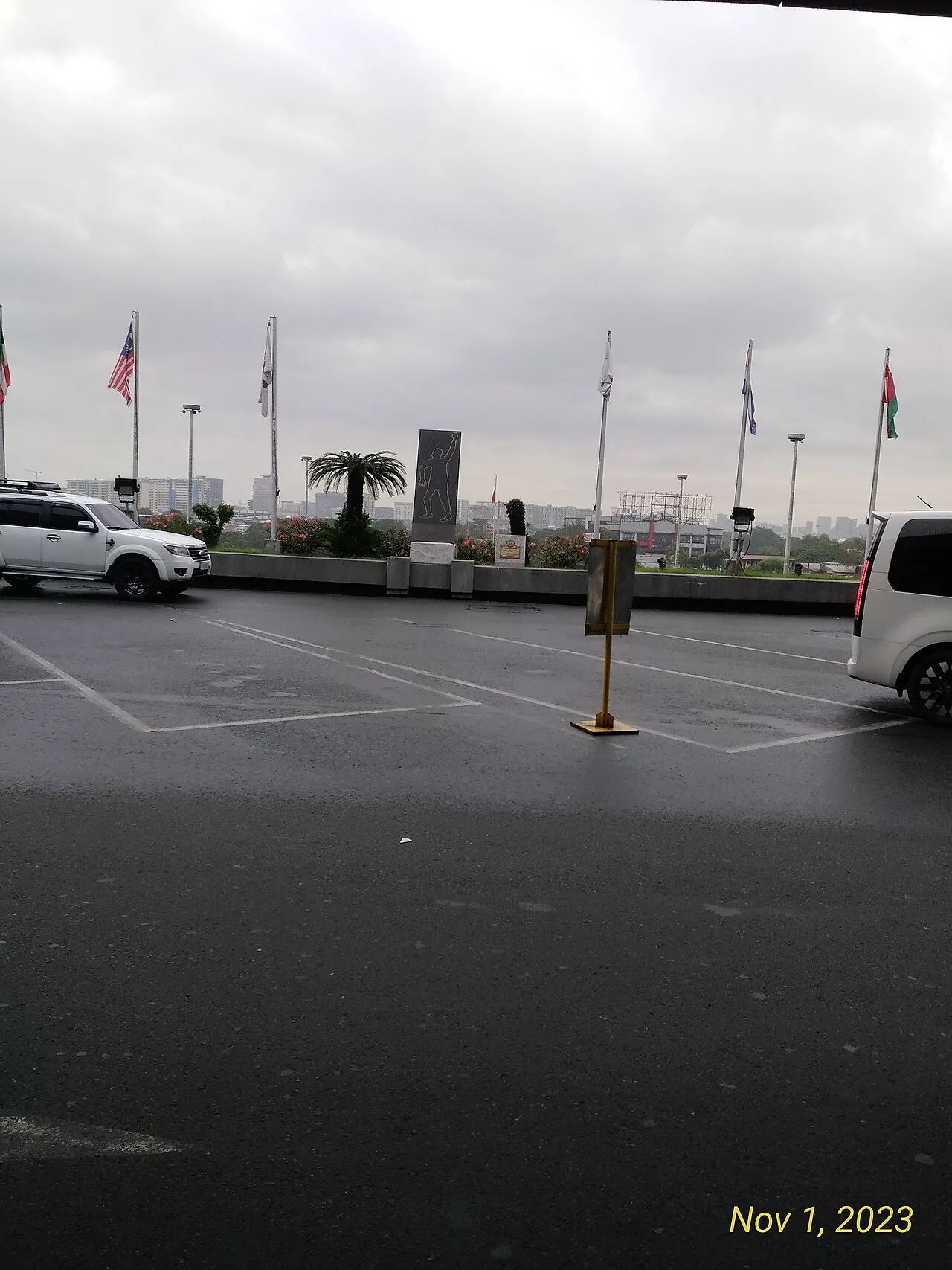
The spot is still marked. A memorial plaque sits at the gate where Aquino was killed — Gate 8 then, Gate 11 now — and a body mark from the assassination is displayed in Terminal 1's departures area.
Source: Wikipedia
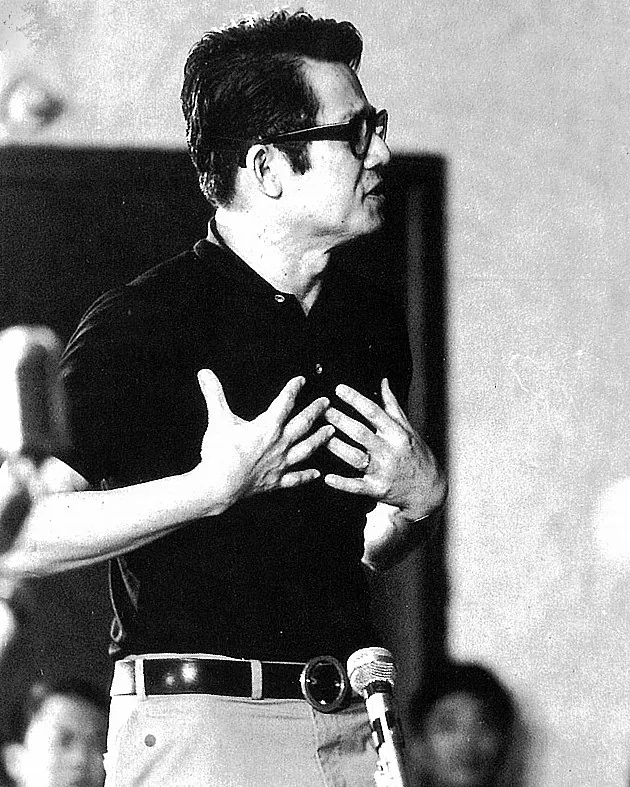
The airport is named for Benigno 'Ninoy' Aquino Jr., who covered the Korean War as a correspondent at 17, became governor of Tarlac, and was elected senator in 1967. After Marcos declared martial law in 1972 he was jailed for seven years, kept a 40-day hunger strike, and was sentenced to death by a military commission in 1977.
Source: Wikipedia
Aquino, the airport's namesake, was shot in the head on 21 August 1983, moments after stepping off China Airlines Flight 811 from Taipei at Terminal 1's Gate 8. Four years later, under the presidency of his widow Corazon, Republic Act No. 6639 renamed Manila International Airport in his honour.
Source: Wikipedia
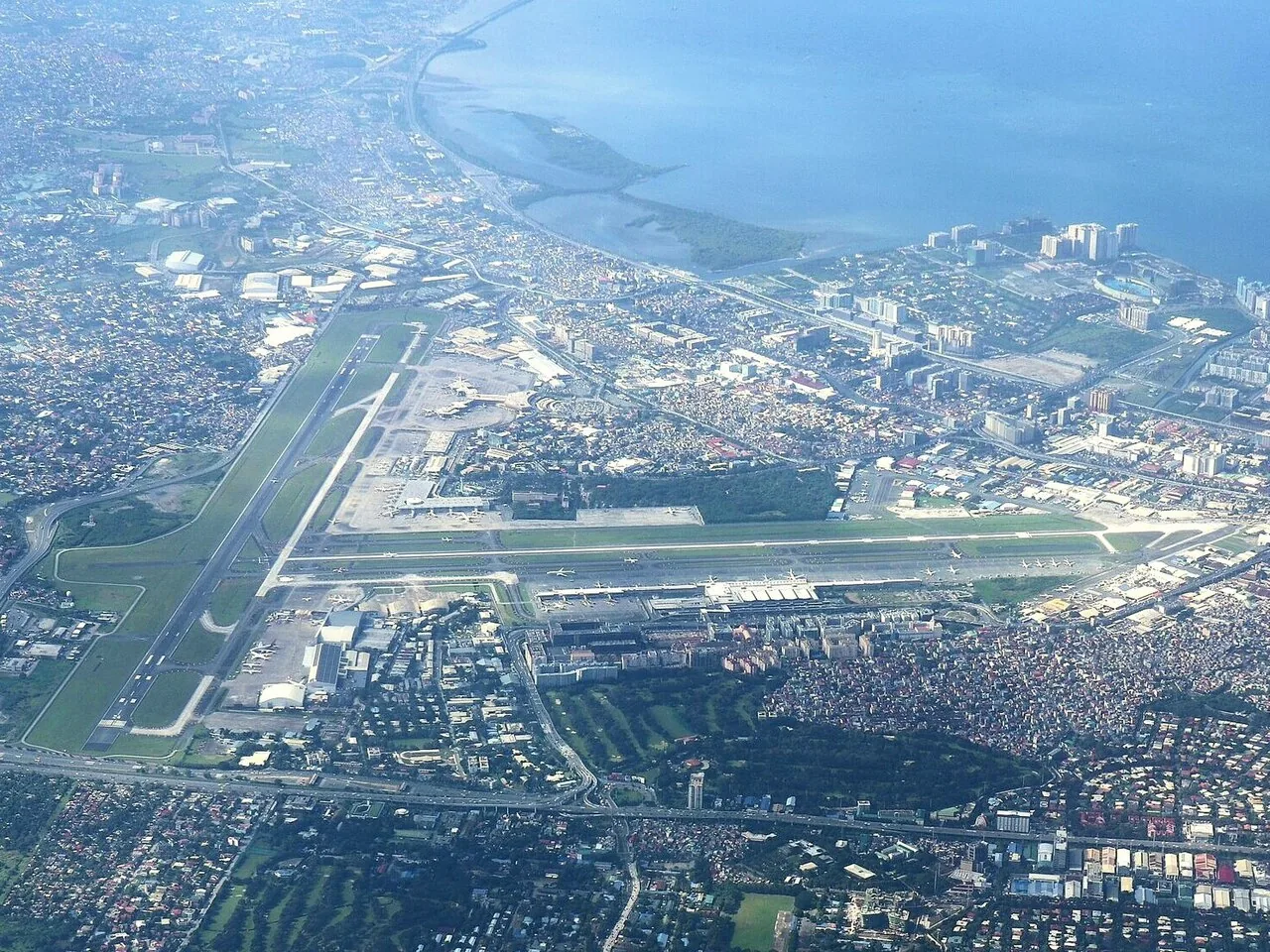
Despite the code, the airport is not in Manila. It lies between the cities of Pasay and Parañaque, about 7 km south of Manila proper, on the former Nichols Field — chosen in 1948 for its flat greenfield land and an existing USAF runway, 13/31, that could be reused.
Source: Wikipedia
The main runway's odd angle is monsoon engineering. Runway 06/24, 3,514 m long and 60 m wide, is aligned to use both the northeast amihan winds of November to April and the southwest habagat of May to October. Of about 550 daily flights, 100 use the shorter crossing runway.
Source: Wikipedia
NAIA runs chronically over its own limits: it served more than 50 million passengers in 2024 against a design capacity of 35 million, and Terminal 1 hit its ceiling as far back as 1991, when 4.53 million passengers passed through a building meant for fewer.
Source: Wikipedia
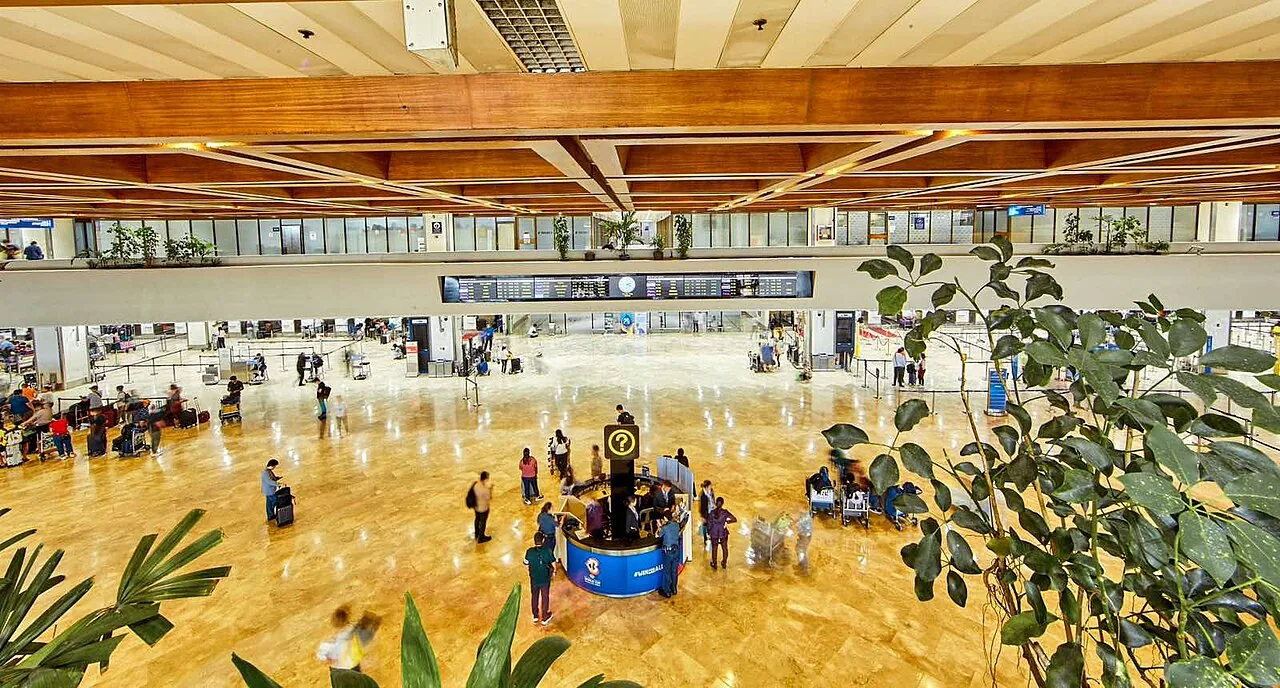
Terminal 1's architecture came from L.V. Locsin and Associates, the practice of Leandro Locsin, one of the Philippines' defining modernists. The building covers 73,000 square metres and opened in 1982, designed for six million passengers a year.
Source: Wikipedia
Terminal 3 took seventeen years. Designed by SOM at a cost of US$640 million, covering 182,500 square metres and stretching 1.2 km, construction began in 1997 but ran into voided contracts, international arbitration and collapsed ceilings; it only became fully operational on 31 July 2014.
Source: Wikipedia
Attempts to strip Aquino's name off the airport keep failing. Bills have proposed reverting to Manila International Airport, adopting Paliparang Pandaigdig ng Pilipinas, and even naming it for Ferdinand Marcos; in September 2020 the Supreme Court unanimously threw out a petition to void the renaming law.
Source: Wikipedia
Since April 2017 a 220-metre indoor footbridge called Runway Manila has linked Terminal 3 to Newport City across the road, letting passengers walk to hotels, restaurants and a casino complex without touching Manila traffic.
Source: Wikipedia