Muscat International Airport
Facts on MCT
Muscat's first airport, Bayt al-Falaj, opened in 1929 and became known for its sharp turns and steep, mountain-ringed descents — approaches considered dangerous even before the field outgrew its capacity.
Source: Wikipedia
Even the city's own name is an open question: scholars dispute where 'Muscat' comes from, with proposed origins including Arabic words for an 'inflated hide or skin' or for an 'anchorage' (the place of letting fall the anchor), and an Old Persian word meaning 'strong-scented'; some also connect it to 'Moscha', a port named on Ptolemy's ancient map of Arabia.
Source: Wikipedia — Muscat
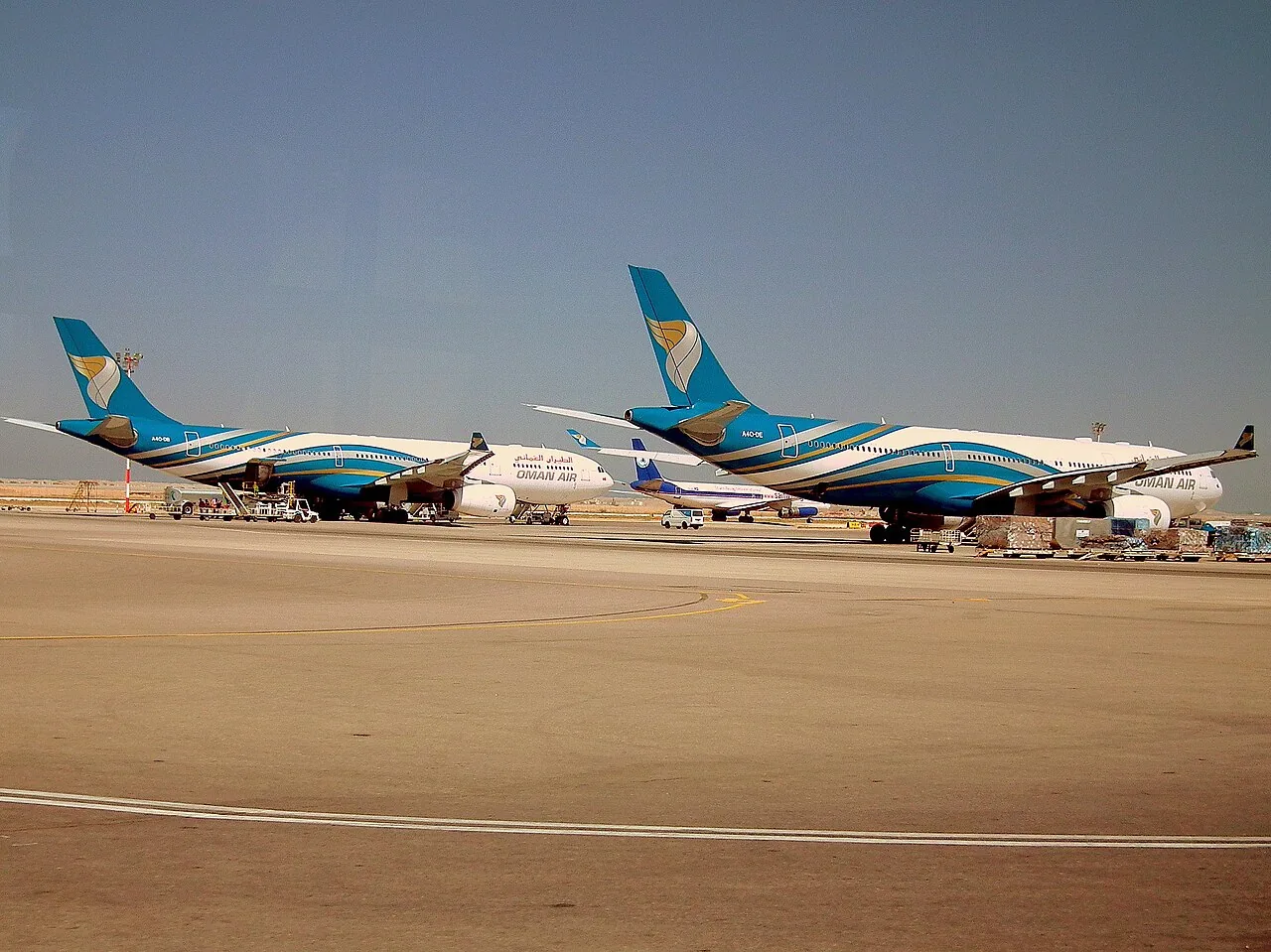
The replacement airport, sited at Seeb village and designed by the Dutch firm Netherlands Airport Consultancy with runway work by Greek contractor Joannou & Paraskevaides, opened ceremonially as Seeb International Airport on 1 January 1973 with a single terminal and just two check-in desks.
Source: Wikipedia
The airport lies in Seeb, about 32 kilometers (20 miles) from Muscat's old city center, within the wider Muscat metropolitan area.
Source: Wikipedia
Seeb International Airport was renamed Muscat International Airport on 1 February 2008, 35 years after it first opened under its original name.
Source: Wikipedia
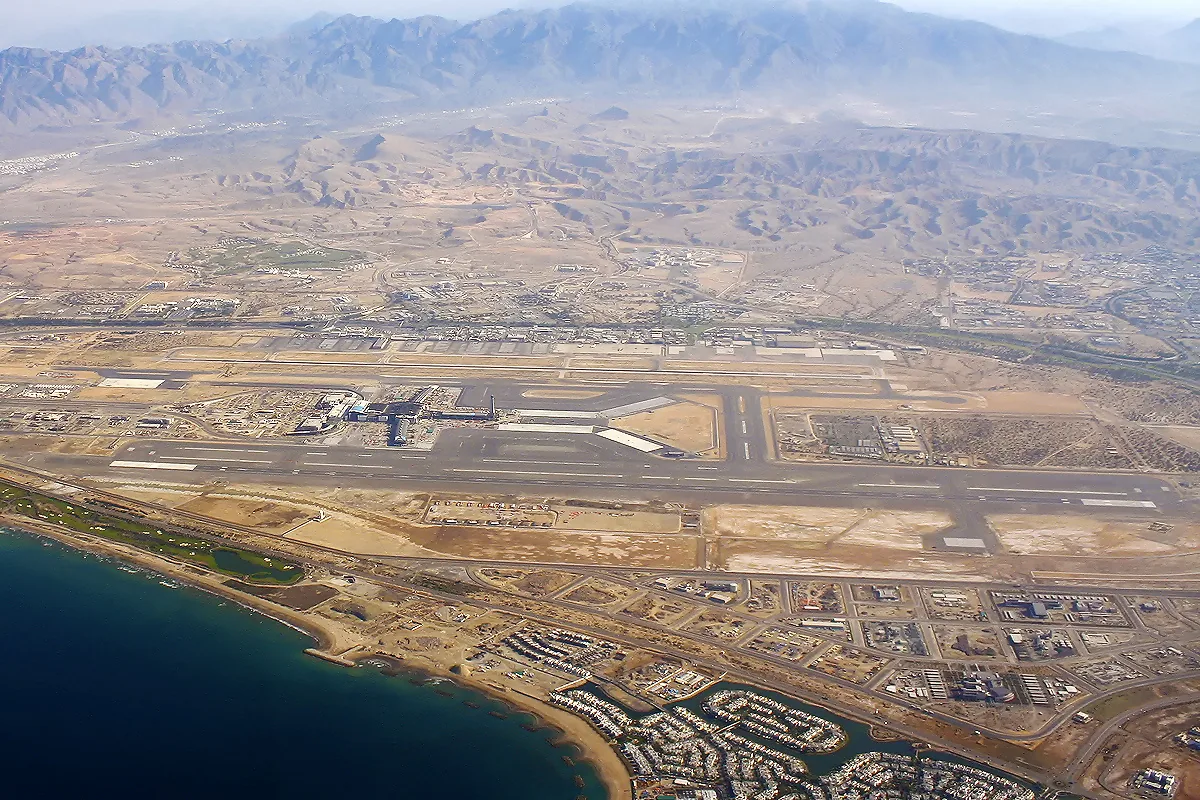
A vastly larger new terminal, under construction from 2007, opened in 2018 covering 580,000 square meters with 118 check-in counters, 45 gates and a 97-meter-high control tower, able to handle up to 20 million passengers a year in its first phase.
Source: Wikipedia
In 2019, Muscat became the first international airport in the world to install an operational drone detection system, the Aaronia AARTOS C-UAS.
Source: Wikipedia
The airport is a joint civil-military facility, serving as the base for both the Royal Flight of Oman and the Royal Air Force of Oman, with a dedicated Royal Terminal and hangars beside the old terminal building.
Source: Wikipedia
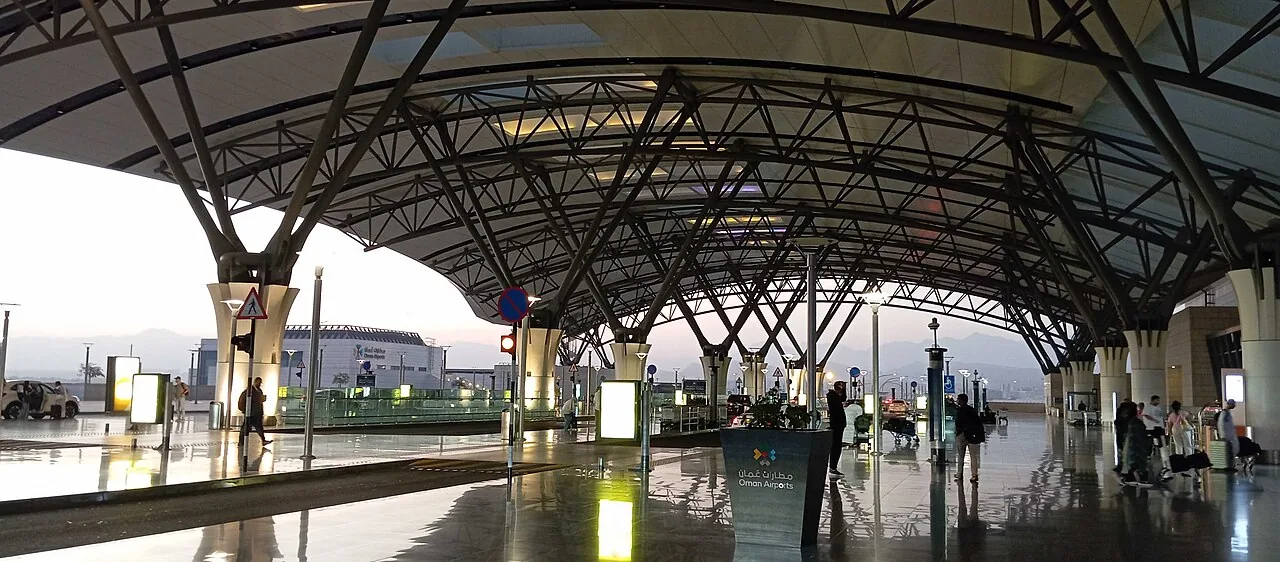
The old Terminal 2, built in 1970, had 58 check-in counters and 23 gates but no jet bridges — passengers boarded via shuttle buses right up until it closed, after which it was converted into a field hospital and COVID-19 vaccination site.
Source: Wikipedia