Los Angeles International Airport
Facts on LAX
LAX's code is a leftover of a simpler era: before the 1930s the airport was just "LA," but when the aviation industry expanded identifiers to three letters in 1947, "LA" simply had an X tacked on -- the X itself doesn't stand for anything.
Source: Wikipedia
LAX's iconic flying-saucer-shaped Theme Building was built in 1961 in the futuristic Googie architectural style and was formally dedicated by Vice President Lyndon B. Johnson; it was later designated a Los Angeles Historic-Cultural Monument in 1992.
Source: Wikipedia
In 2023, LAX handled just over 75 million passengers, making it the world's 11th-busiest airport that year, and it holds the distinction of being the world's busiest origin-and-destination airport (as opposed to a connecting hub).
Source: Wikipedia
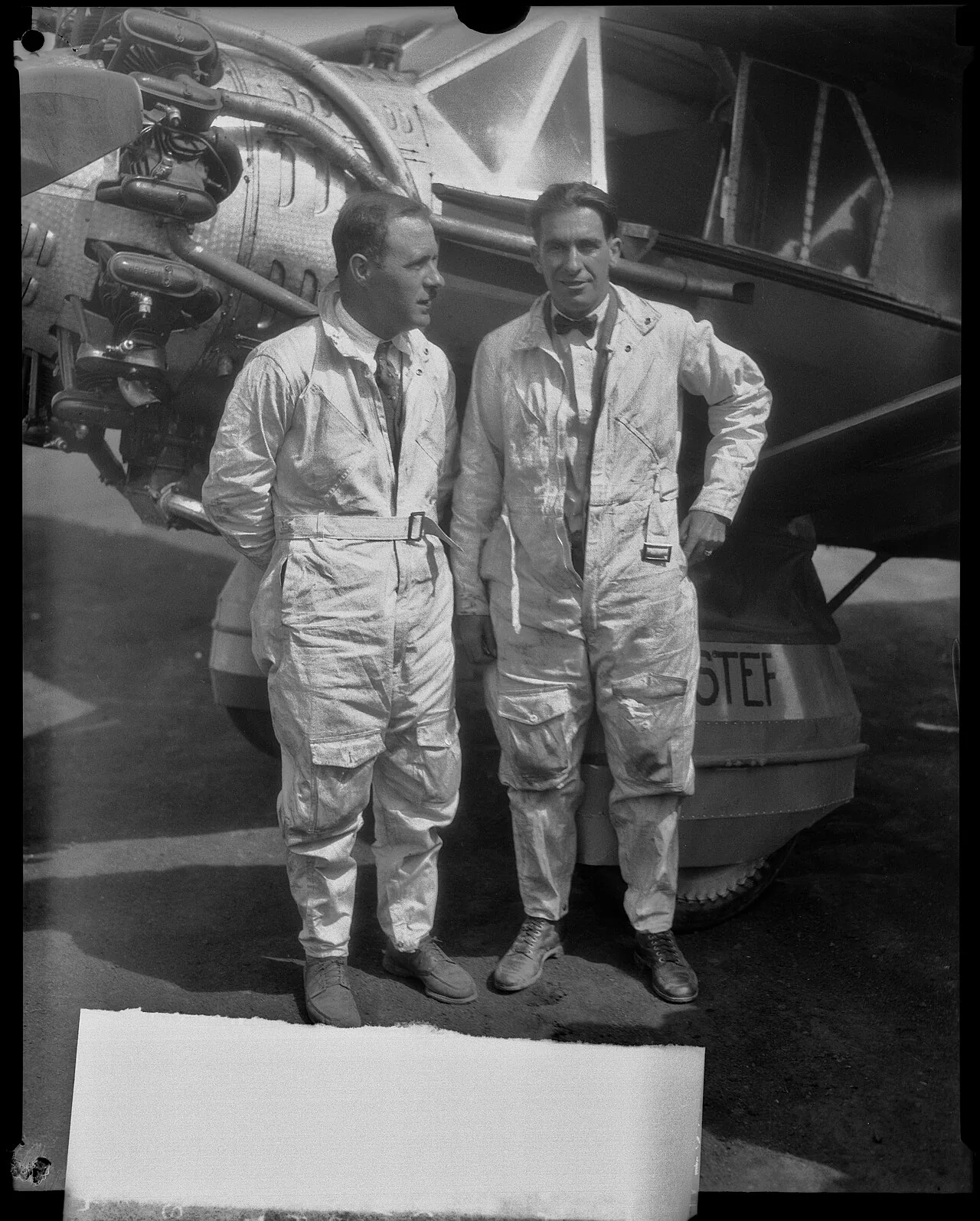
LAX began in 1928 as Mines Field, a 640-acre former grain field named for the real estate agent, William W. Mines, who promoted the site; it hosted the 1928 National Air Races before being dedicated and renamed Los Angeles Municipal Airport in 1930.
Source: Wikipedia
The 1958 master plan that still shapes LAX's central terminal area arranged the buildings in a U around a central plaza; the plan's centerpiece, a huge steel-and-glass dome, was never built, though the smaller Theme Building went up in its place.
Source: Wikipedia
To limit noise, LAX has followed a 'Preferential Runway Use Policy' since 1972: by day, planes usually depart to the west over the ocean on the inboard runways and land from the east on the outboard ones, a pattern that shifts overnight into 'Over-Ocean Operations.'
Source: Wikipedia
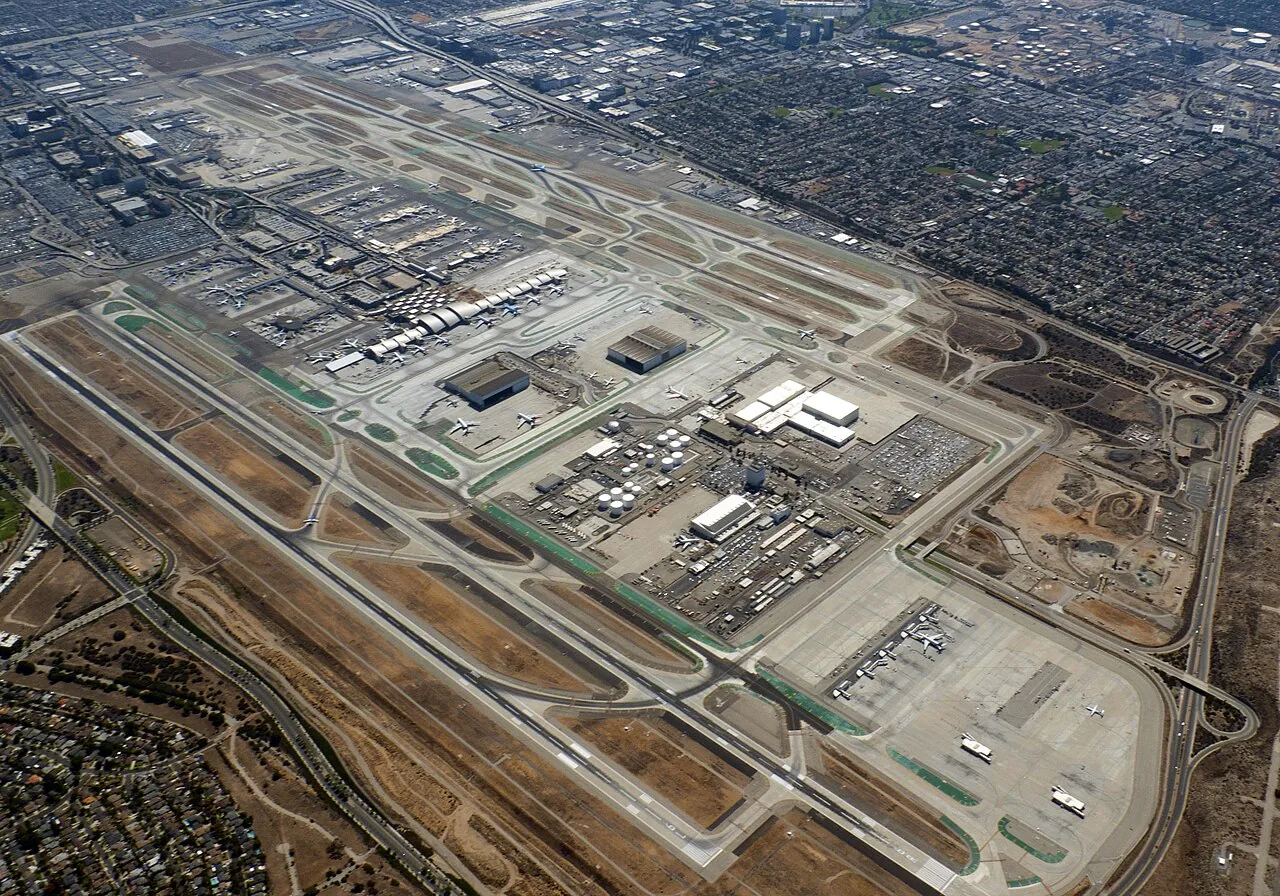
LAX served 76,587,980 passengers in 2024, a 2.04% rise over 2023, and remains the only U.S. airport ranked among the top five for both passenger and cargo traffic.
Source: Wikipedia
A memorial on LAX's grounds honors the victims of September 11, 2001 — a reminder that three of the four hijacked planes that day had originally been bound for LAX before being diverted.
Source: Wikipedia