Kuala Lumpur International Airport
Facts on KUL
KUL is simply short for Kuala Lumpur, but the code itself was inherited: it was transferred from the city's older Subang Airport when the new Kuala Lumpur International Airport opened in 1998, and Subang was given a new code instead.
Source: Wikipedia
Kuala Lumpur means 'muddy confluence' in Malay — kuala is the point where two rivers meet, lumpur is mud. The town began around 1857 as a few houses at the junction of the Gombak and Klang rivers, the furthest point upriver that supplies could reach the tin mines by boat.
Source: Wikipedia
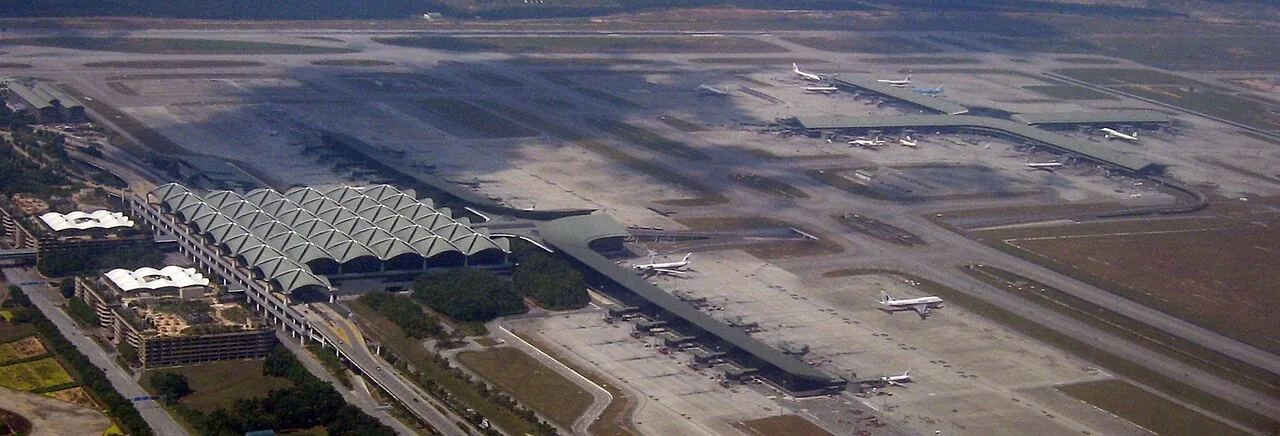
For all the name, the airport is not in Kuala Lumpur. It stands in the Sepang district of Selangor, about 45 km south of the city, on 100 square kilometres of former agricultural land — one of the largest airport sites in the world.
Source: Wikipedia
KLIA's Satellite Terminal contains an actual patch of tropical rainforest inside the building, complete with a walking boardwalk showcasing Malaysian flora — believed to be the first feature of its kind at any airport in the world.
Source: Wikipedia

Ground was broken on 1 June 1993 after Mahathir Mohamad's government decided Subang could not carry future demand, and the airport was inaugurated on 27 June 1998 by the Yang di-Pertuan Agong, Tuanku Ja'afar of Negeri Sembilan, days before the Commonwealth Games.
Source: Wikipedia
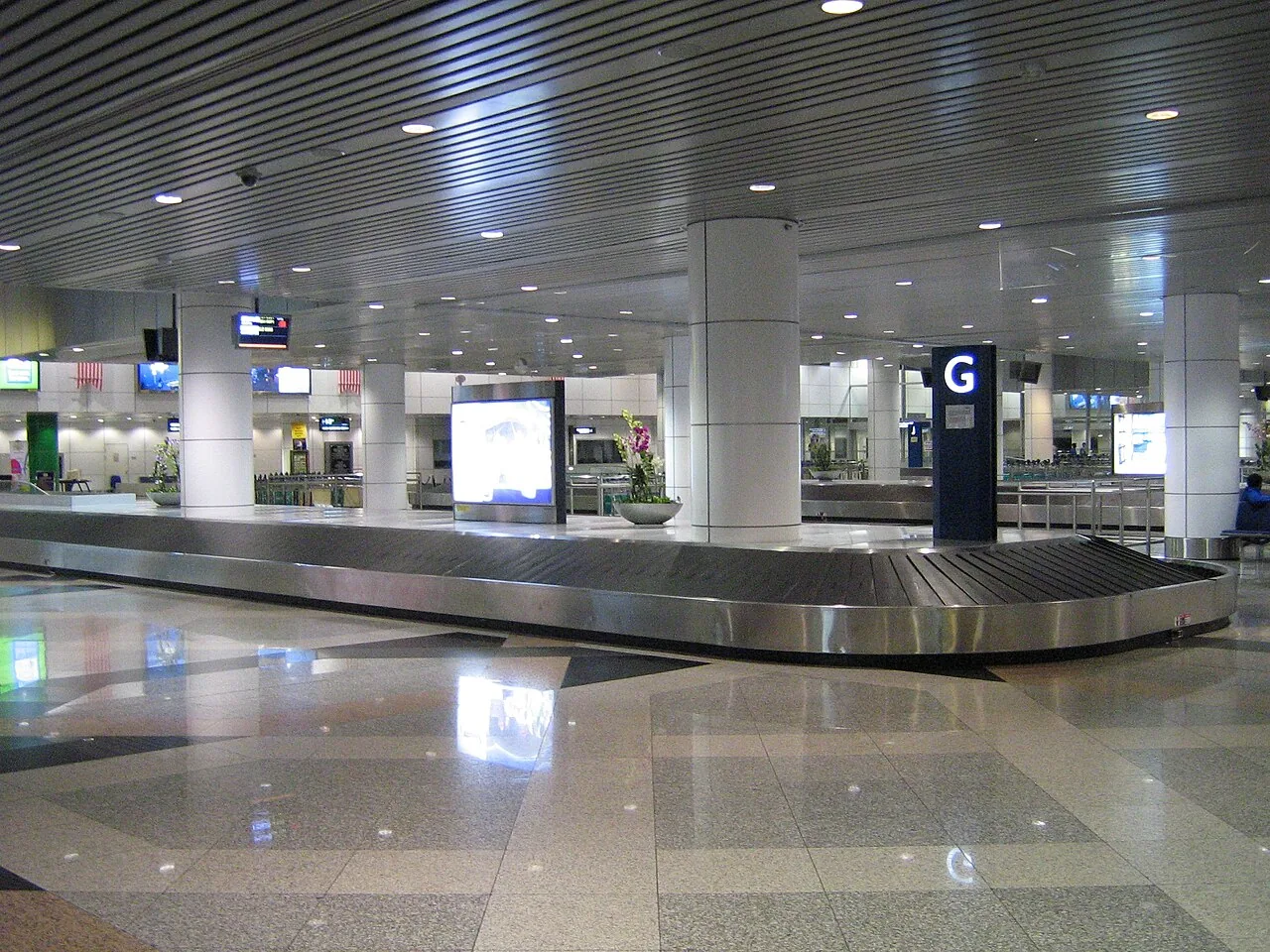
Opening day went badly. The aerobridge and bay allocation systems failed, queues built up across the terminal and baggage handling broke down — bags were lost and some passengers waited five to seven hours. The baggage system stayed troublesome until a full replacement was tendered in 2007.
Source: Wikipedia
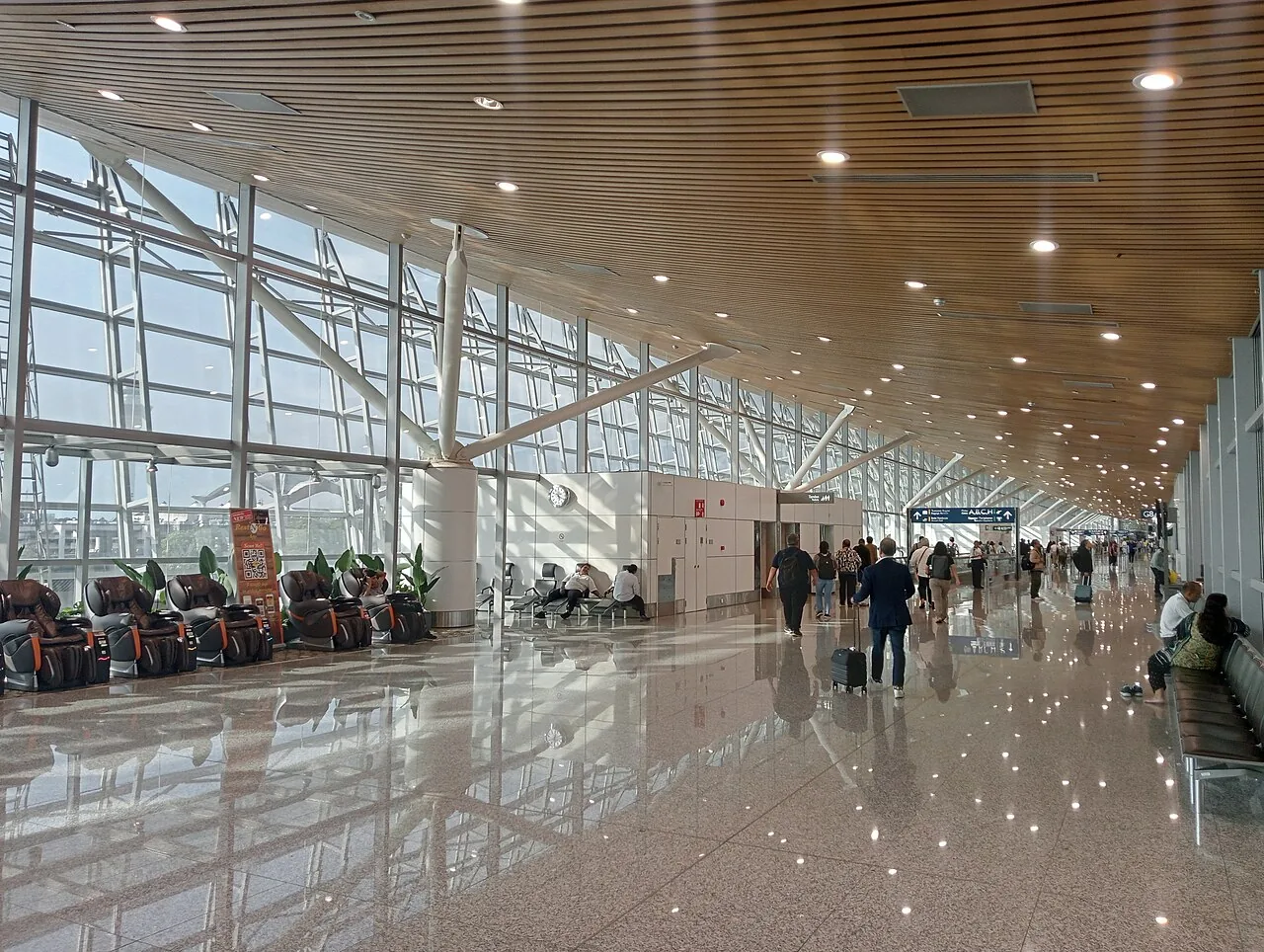
Terminal 1 is the work of Japanese architect Kisho Kurokawa, who built it on a 38.4-metre grid so it could be extended without redesign. The main building's roof is made of 39 square units, and the vocabulary mixes Islamic geometry with the tropical rainforest.
Source: Wikipedia
Two control towers shaped like Olympic torches watch over the field. Tower West, at 133.8 metres, is the tallest air traffic control tower in the world, ahead of the ones at Suvarnabhumi and King Abdulaziz; the original Tower East stands 130 metres.
Source: Wikipedia
KLIA has three parallel runways, all more than 3,800 m long and 60 m wide: 14L/32R at 4,019 m, 14R/32L at 4,000 m and 15/33 at 3,960 m. Together they can absorb 78 landings an hour.
Source: Wikipedia
Passengers can check in 57 km before they reach the airport. The KL City Air Terminal at KL Sentral station offers city check-in and is recognised by IATA in its own right, carrying the designation XKL, with the Express Rail Link running out to both KLIA terminals.
Source: Wikipedia
The names shuffled in 2023: on 9 February transport minister Anthony Loke announced that KLIA and klia2 would be rebranded KLIA Terminal 1 and KLIA Terminal 2, with Malaysia Airports bearing the cost of the change.
Source: Wikipedia