Kansai International Airport
Facts on KIX
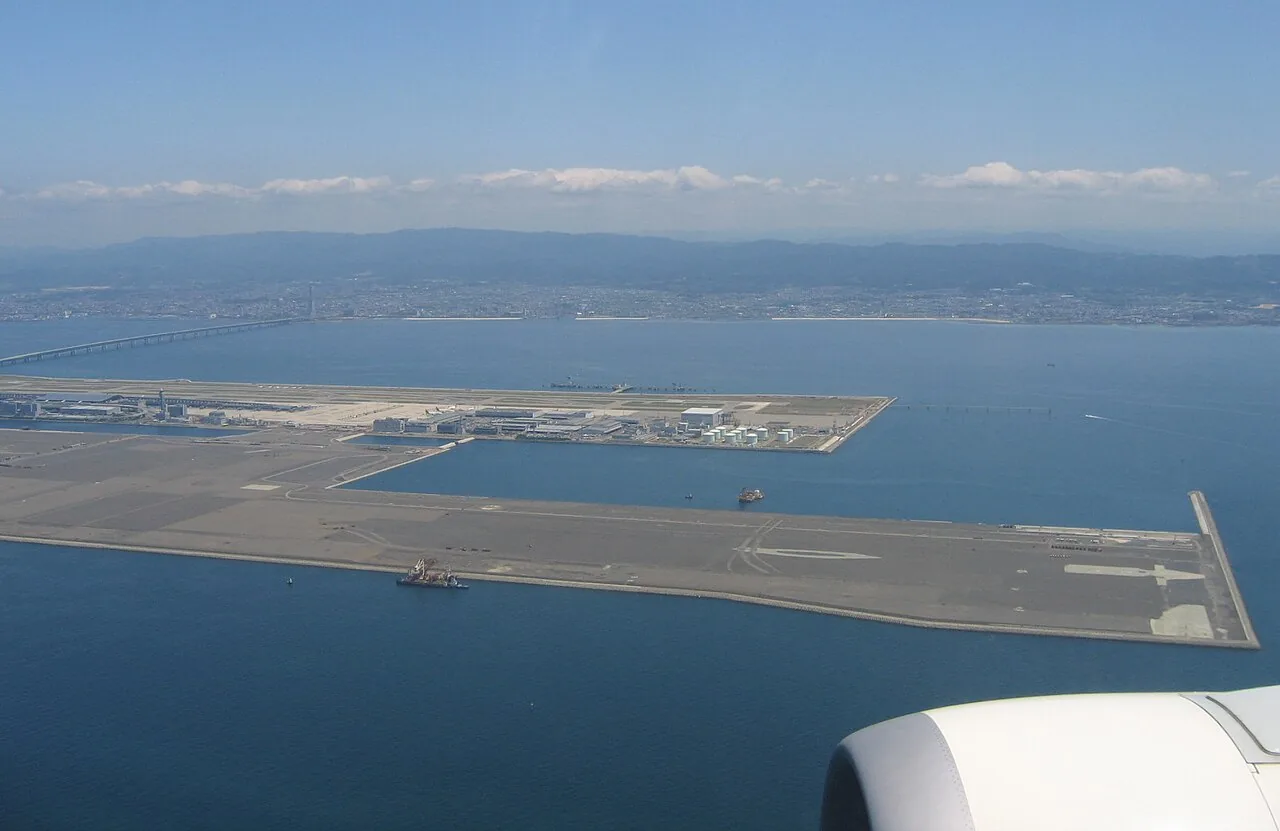
The island had to be built in 18 metres of water on top of 20 metres of soft Holocene clay that is 70% water. Engineers drove a million sand drains into the clay to squeeze the water out, then ringed the site with a sea wall of rock and 48,000 tetrapods.
Source: Wikipedia
Kansai literally means 'west of the tollgate'. The tollgate was the Osaka barrier on the old boundary between Yamashiro and Ōmi provinces — today's Kyoto and Shiga — and the land west of it took the name.
Source: Wikipedia
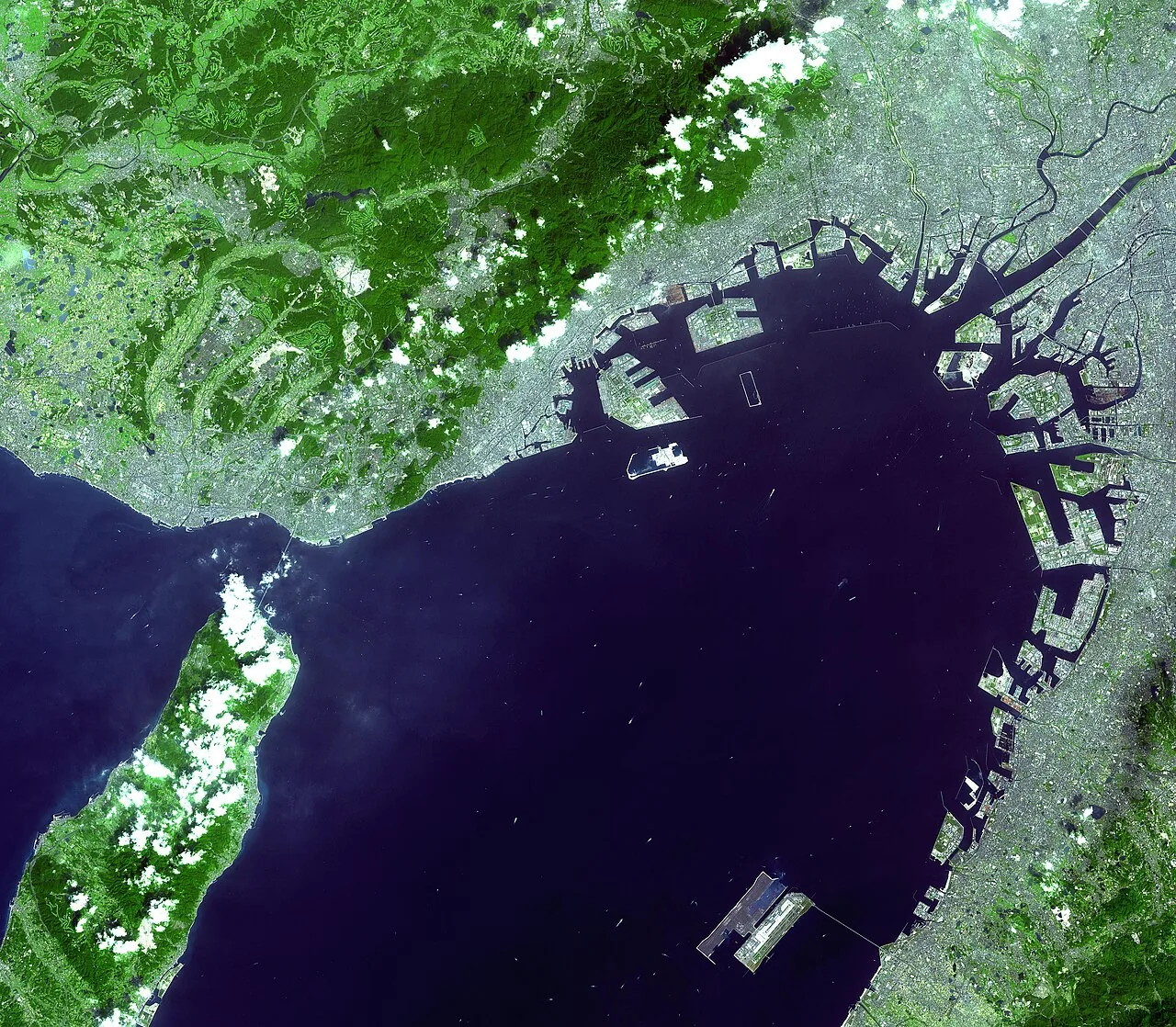
The airport carries a region's name rather than a city's because it was built for the whole of Kansai — Osaka, Kyoto and Kobe. Kobe rejected the original plan, so the site shifted south into Osaka Bay, where an offshore airport could also run around the clock.
Source: Wikipedia
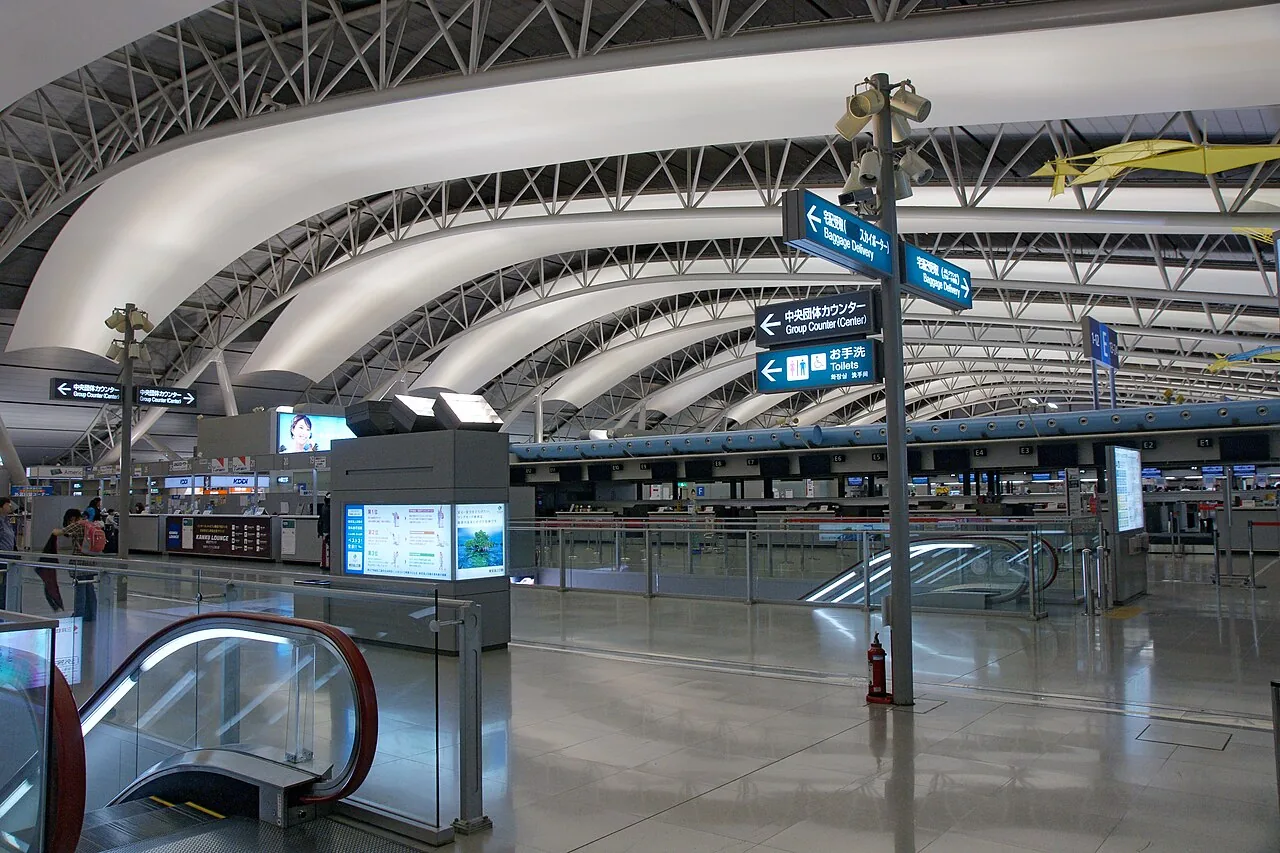
The most optimistic estimate had the island settling 5.7 metres under the weight of fill. By 1999 it had sunk 8.2 metres. The terminal stands on adjustable columns that can be shimmed with thick metal plates; the sink rate fell from 50 cm a year in 1994 to 7 cm in 2008.
Source: Wikipedia
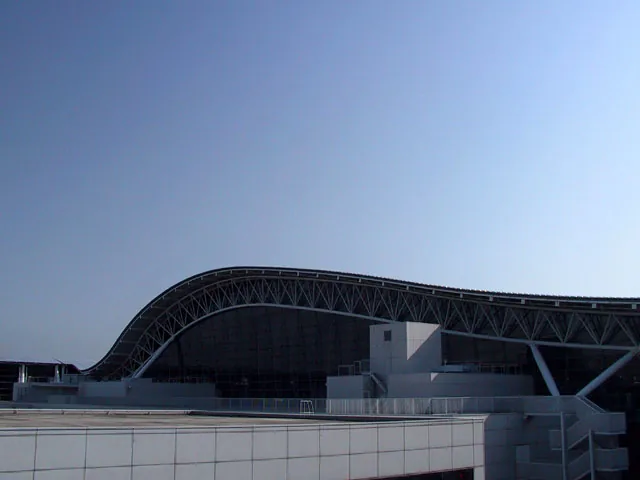
Renzo Piano's Terminal 1 runs 1.7 kilometres end to end, the longest airport terminal in the world as of 2018. Its roof is shaped like an airfoil so ducts can blow air up one side and let it ride the curve of the ceiling; mobiles hang in the ticketing hall to make the flow visible.
Source: Wikipedia
The Great Hanshin earthquake struck on 17 January 1995, its epicentre about 20 kilometres away, killing 6,434 people. Kansai's sliding joints let the airport ride it out unscathed — even the window glass stayed intact. In 2001 the American Society of Civil Engineers named it a Civil Engineering Monument of the Millennium.
Source: Wikipedia
Kansai opened on 4 September 1994 as the first airport in Japan to operate 24 hours a day — the whole point of going offshore, since noise complaints had hemmed in its predecessor at Itami. A second runway, 4,000 by 60 metres, opened on 2 August 2007.
Source: Wikipedia
Typhoon Jebi hit on 4 September 2018, exactly 24 years after the airport opened. Seawater surges swamped the island, and a tanker crashed into the bridge to the mainland, stranding the people still inside. Flights stopped until 6 September, and the bridge was not fully repaired until April 2019.
Source: Wikipedia
Reclaiming the airport's two islands — 510 hectares and 545 hectares, 1,055 in total — enlarged Osaka Prefecture just enough that it lost its old title as Japan's smallest prefecture. That distinction passed to Kagawa.
Source: Wikipedia
Terminal 1 has had a 'Nintendo Check In' area since 23 June 2017, where arriving passengers can play Nintendo Switch games free of charge next to a statue of Mario. Nintendo characters also decorate the northern and southern arrival routes.
Source: Wikipedia