Istanbul Airport
Facts on IST
When Istanbul's new mega-airport took over all scheduled flights on 6 April 2019, IATA simply swapped codes with the old Atatürk Airport: the historic code IST moved to the new airport, while Atatürk was reassigned the code ISL.
Source: Wikipedia
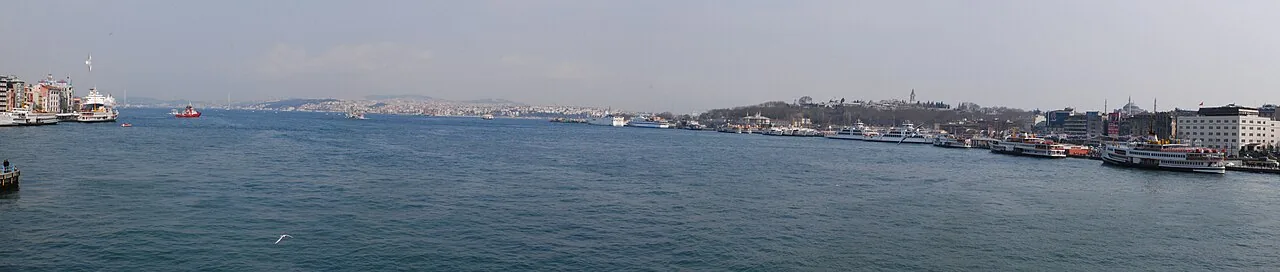
The name Istanbul is Greek in origin: it comes from the colloquial Middle Greek phrase stin Poli(n), roughly "in the City" — Byzantines simply called Constantinople hē Polis, "the City". It is attested from the 10th century, long before the Ottoman conquest of 1453.
Source: Wikipedia
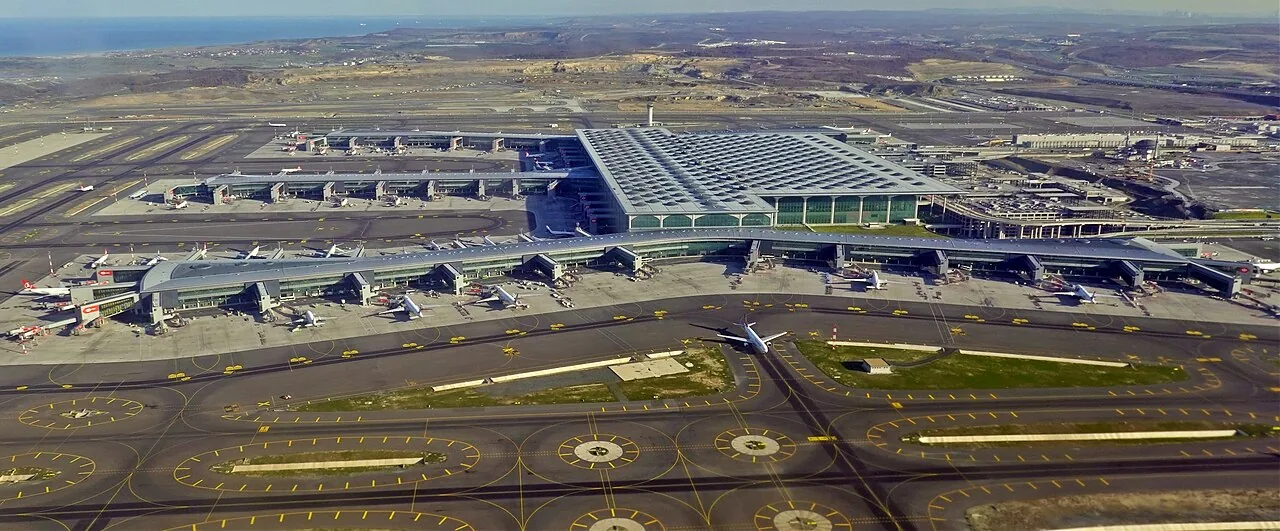
Through construction the project was known only as Istanbul New Airport. The name Istanbul Airport was announced at the opening ceremony on 29 October 2018 — a date chosen to fall on the 95th anniversary of the proclamation of the Turkish Republic.
Source: Wikipedia
Istanbul Airport's main terminal covers about 1.44 million square meters, making it the world's third-largest airport terminal building when it opened in 2018.
Source: Wikipedia
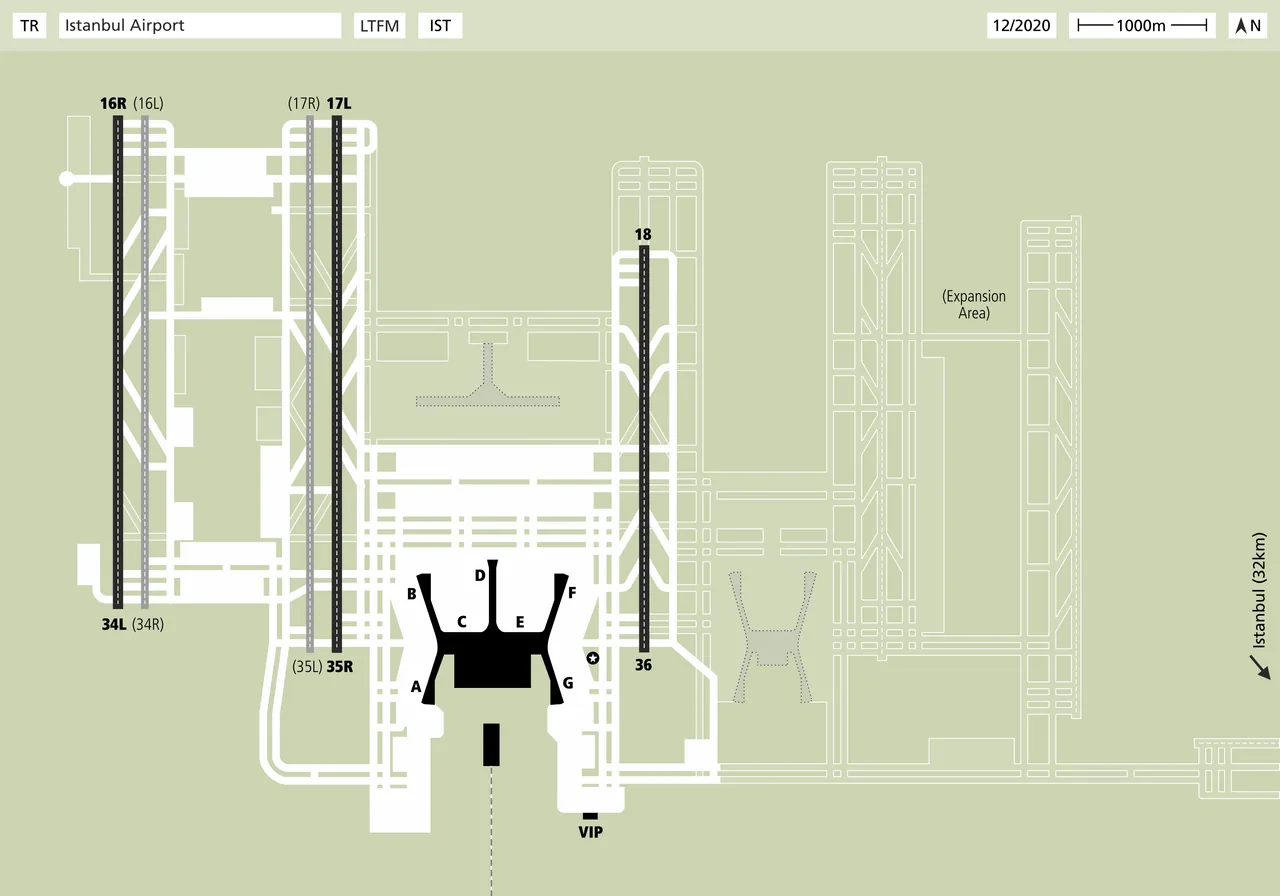
The airport went up on 7,600 hectares (19,000 acres) near Lake Terkos, on land that included old open-pit coal mines later filled with soil. The 2013 environmental assessment counted 2,513,341 trees on the site, of which 657,950 were to be felled and 1,855,391 transplanted.
Source: Wikipedia
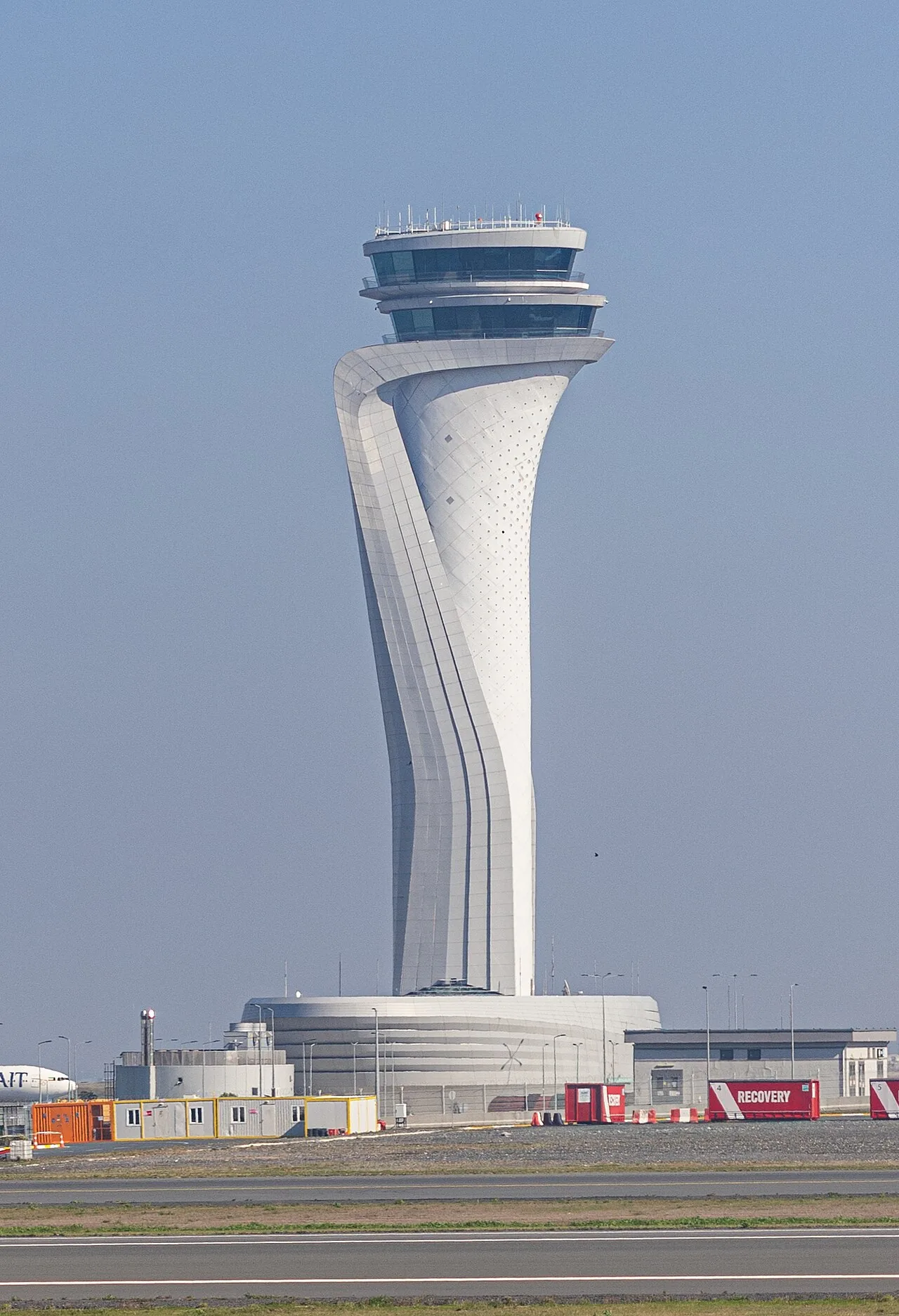
The control tower is shaped like a tulip, Turkey's national flower. The concept design came from Grimshaw Architects with the Nordic Office of Architecture and Haptic Architects, with Scott Brownrigg as lead delivery architect.
Source: Wikipedia
Moving in was a logistics operation in its own right. Between 02:00 and 14:00 on 6 April 2019 all scheduled flights switched over from Atatürk Airport, and over 41 hours hundreds of trucks shifted more than 10,000 pieces of equipment weighing roughly 44 tonnes each.
Source: Wikipedia
Five runways are in use. The two 17/35 runways are each 4,100 m (13,500 ft) long, the two 16/34 runways are 3,750 m, and runway 18/36 is 3,060 m. The widest, 17L/35R and 16R/34L, are 60 m across; all surfaces are asphalt.
Source: Wikipedia
Passengers reach the gates through five concourses — A, B, D, F and G — served by 143 passenger boarding bridges. Concourse G handles domestic flights alone; the rest are international. Security runs to 3,500 guards and 1,850 police, with up to 9,000 CCTV cameras in the terminal.
Source: Wikipedia
The Ali Kuşçu Mosque, in the Airport City area south of the airport, holds up to 6,000 worshippers and is the first mosque registered with the U.S. Green Building Council to earn LEED Gold certification.
Source: Wikipedia
For four years the only way in from the city was by road. The M11 metro line opened on 22 January 2023, and its extension to Gayrettepe followed on 29 January 2024, finally giving the airport a rail link toward central Istanbul.
Source: Wikipedia
Istanbul Airport served more than 84 million passengers in 2025, second in Europe only to Heathrow, with regular flights to as many as 122 countries. More than 66 million of those were international travellers — sixth-highest in the world by that measure.
Source: Wikipedia