Phuket International Airport
Facts on HKT
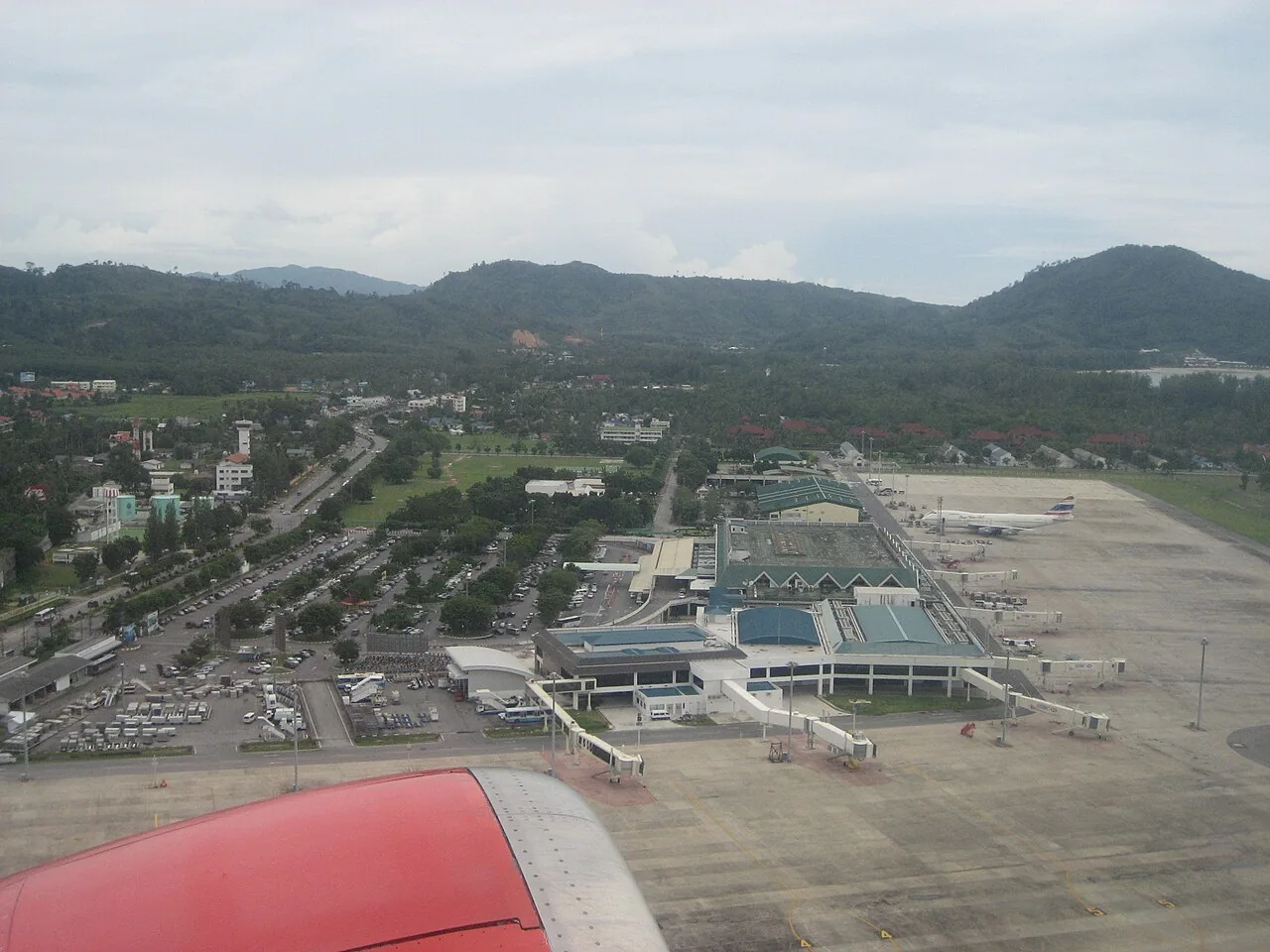
The airport is nowhere near Phuket town. It sits 32 kilometres north of the city, in the Mai Khao subdistrict of Thalang district, at the island's far northern end.
Source: Wikipedia
Phuket takes its name from bukit, the Malay word for 'hill' — which is what the island looks like from a distance at sea. It was inhabited by Austronesian Malays long before Siamese kingdoms expanded south and settled it.
Source: Wikipedia
Before 'Phuket' stuck, the island was called Thalang, from the old Malay telong, meaning 'cape'. Western navigation charts knew it as Junk Ceylon, a corruption of the Malay Tanjung Salang. The old capital's name survives as the province's northern district — the one that contains the airport.
Source: Wikipedia
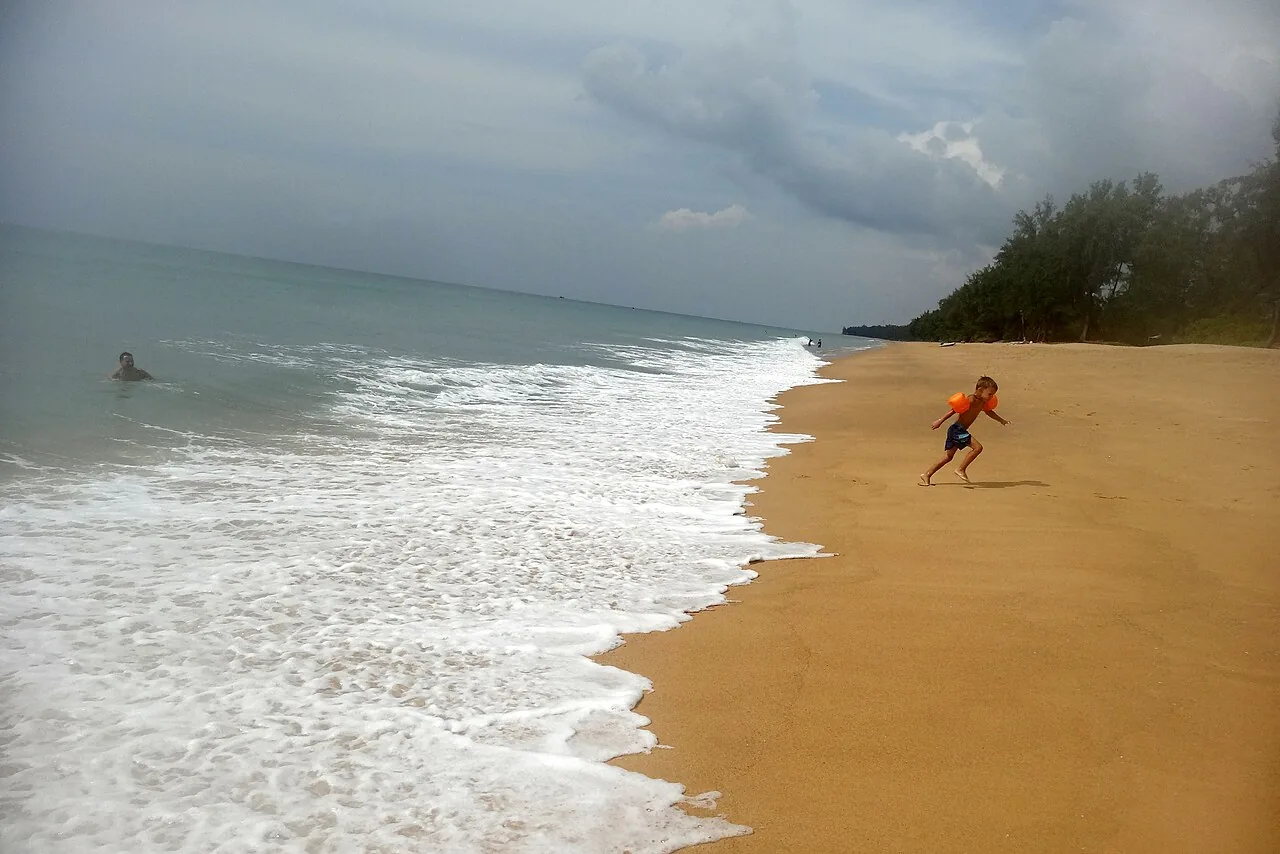
Sirinat National Park, gazetted in 1981 as Thailand's 32nd national park, wraps around the airport on Phuket's northwest coast. Its beaches include Hat Mai Khao, the island's longest, where sea turtles come ashore to lay eggs between November and February.
Source: Wikipedia
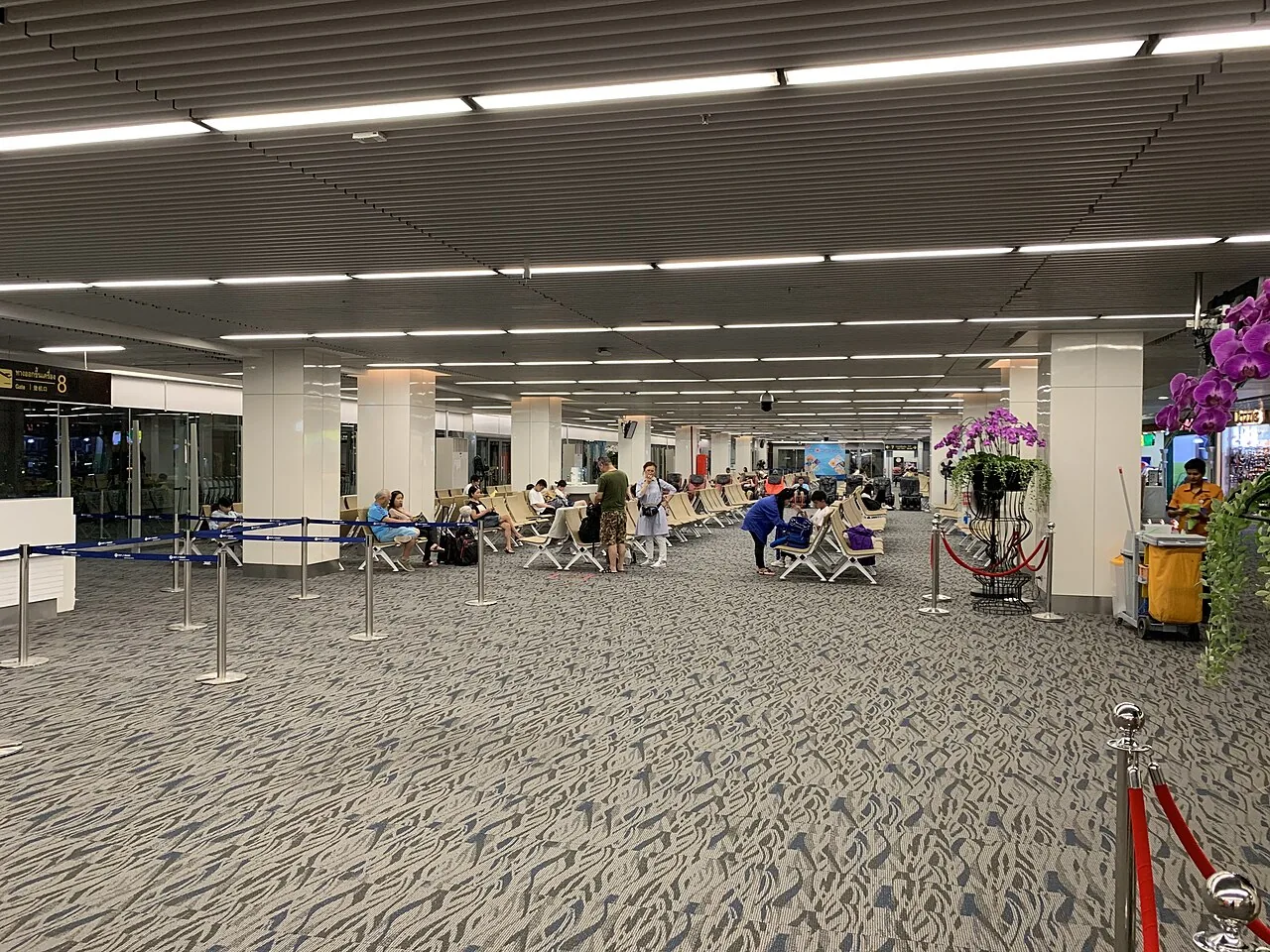
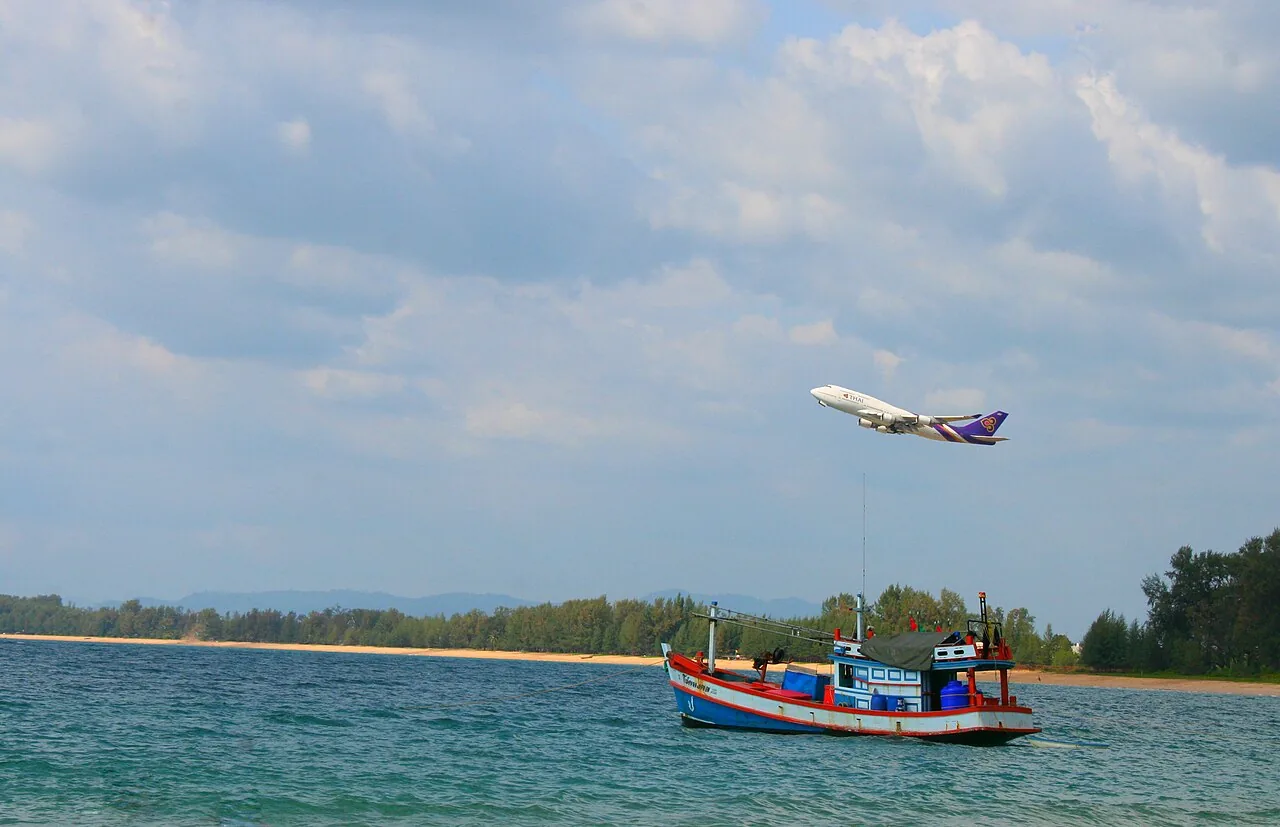
Everything moves through a single runway, 09/27, 3,000 metres of asphalt concrete at an elevation of 82 feet. Traffic is split across three terminals: Terminal 2 for international flights, Terminal 3 for domestic, and Terminal X, opened in February 2014, for charters.
Source: Wikipedia
The airport occupies 2,238,800 square metres and operates 24 hours a day, with 38 parking bays split between 11 contact gates and 27 remote stands. Its international building covers 73,103 square metres and the domestic one 30,339 square metres.
A 5.14-billion-baht expansion completed in 2016 gave the airport a new international terminal built for 12.5 million passengers a year, and lifted its overall capacity from 6.5 million to 20 million.
Source: Wikipedia
Phuket set a record of 15.1 million arrivals and departures in 2016, up 17.8 percent on 2015. It ranks third in Thailand for passengers, behind Bangkok's two airports, Suvarnabhumi and Don Mueang.
Source: Wikipedia
Tourism is a recent arrival. Phuket's wealth came from tin, mined from the 16th century until the trade faded in the 20th, and from rubber. Many islanders descend from the Chinese miners who came in the 19th century — the Peranakan community known locally as the 'Phuket Babas'.
Source: Wikipedia