Rio de Janeiro–Galeão International Airport
Facts on GIG
GIG doesn't spell out 'Rio' because the airport takes its code from Galeão, the neighborhood and beach where it was built — Praia do Galeão (Galleon Beach) is named for a galleon ship, the Padre Eterno, that was built there in 1663.
Source: Wikipedia - Rio de Janeiro/Galeão International Airport
The airport's official name grew in 1999 to 'Rio de Janeiro/Galeão–Antonio Carlos Jobim International Airport,' honoring the bossa nova composer, who name-checked the airport in his song 'Samba do Avião.'
Source: Wikipedia - Rio de Janeiro/Galeão International Airport
Galeão opened to commercial traffic on 1 February 1952 and, covering 1,788.2 hectares, is the largest airport site by area in Brazil.
Source: Wikipedia - Rio de Janeiro/Galeão International Airport
A Naval Aviation School was established near Galeão beach on Governador Island on May 10, 1923. When Brazil's Air Force Ministry was created on May 22, 1941, the school became Galeão Air Force Base, and its original terminal and hangars are still standing and in use.
Source: Wikipedia
After Brazil declared war on the Axis on August 22, 1942, the Galeão aerodrome saw intense use by Allied forces for World War II military operations, years before its first civilian passenger terminal was even built.
Source: Wikipedia
On January 21, 1976, Air France's Concorde made its first-ever scheduled commercial flight, flying Paris–Charles de Gaulle to Galeão via Dakar; the twice-weekly Concorde route to Rio continued until 1982.
Source: Wikipedia
The Galeão Concorde route made it to the movies: the 1979 James Bond film 'Moonraker' shows the supersonic jet touching down at the airport.
Source: Wikipedia
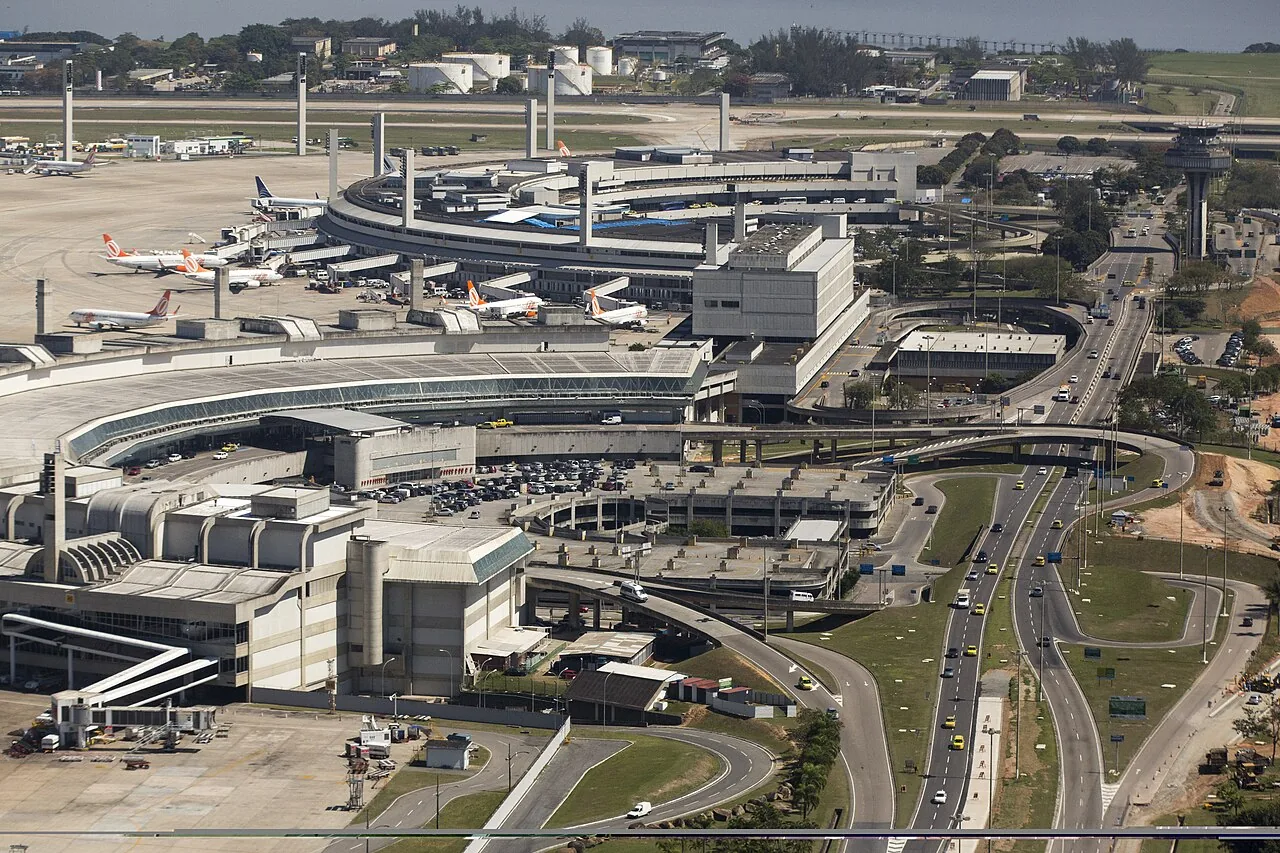
Galeão was Brazil's leading domestic and international hub through the early 1970s, but lost that status in 1985 when São Paulo's newly opened Guarulhos airport gained a runway able to handle intercontinental flights without weight restrictions.
Source: Wikipedia
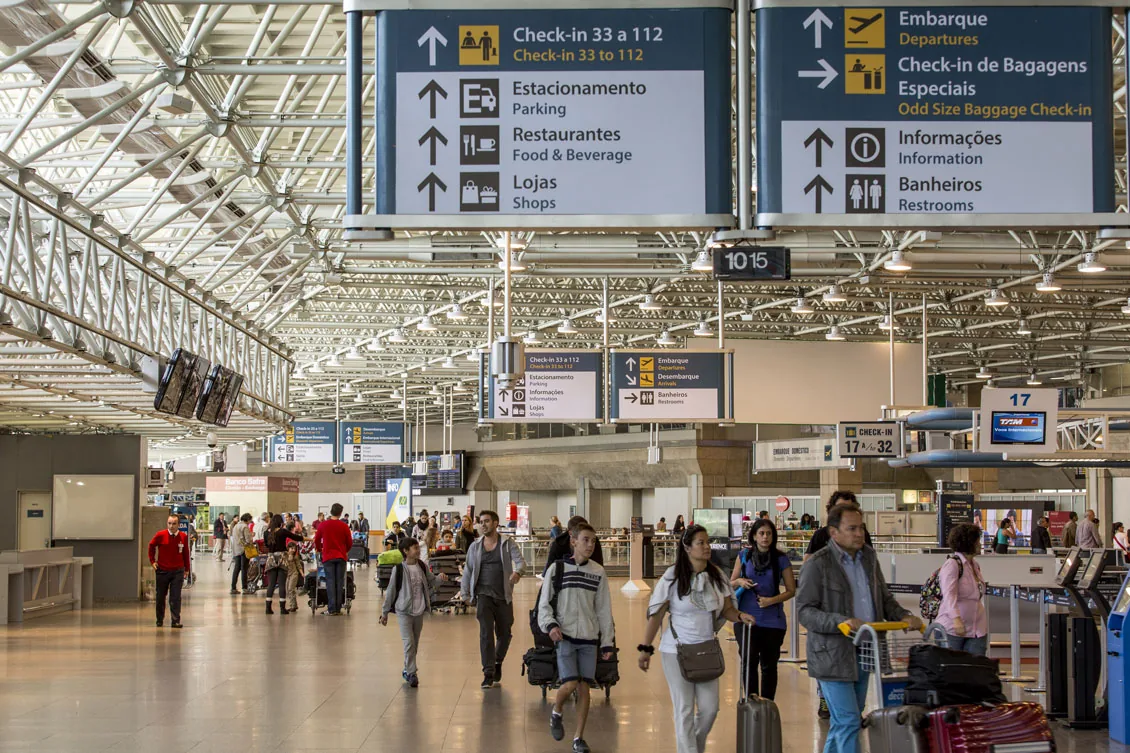
Passenger Terminal 1 opened on January 20, 1977 and Terminal 2 followed on July 20, 1999; both were built in an elliptical layout with twelve jetways apiece, each rated to handle 7.5 million passengers a year.
Source: Wikipedia