Düsseldorf Airport
Facts on DUS
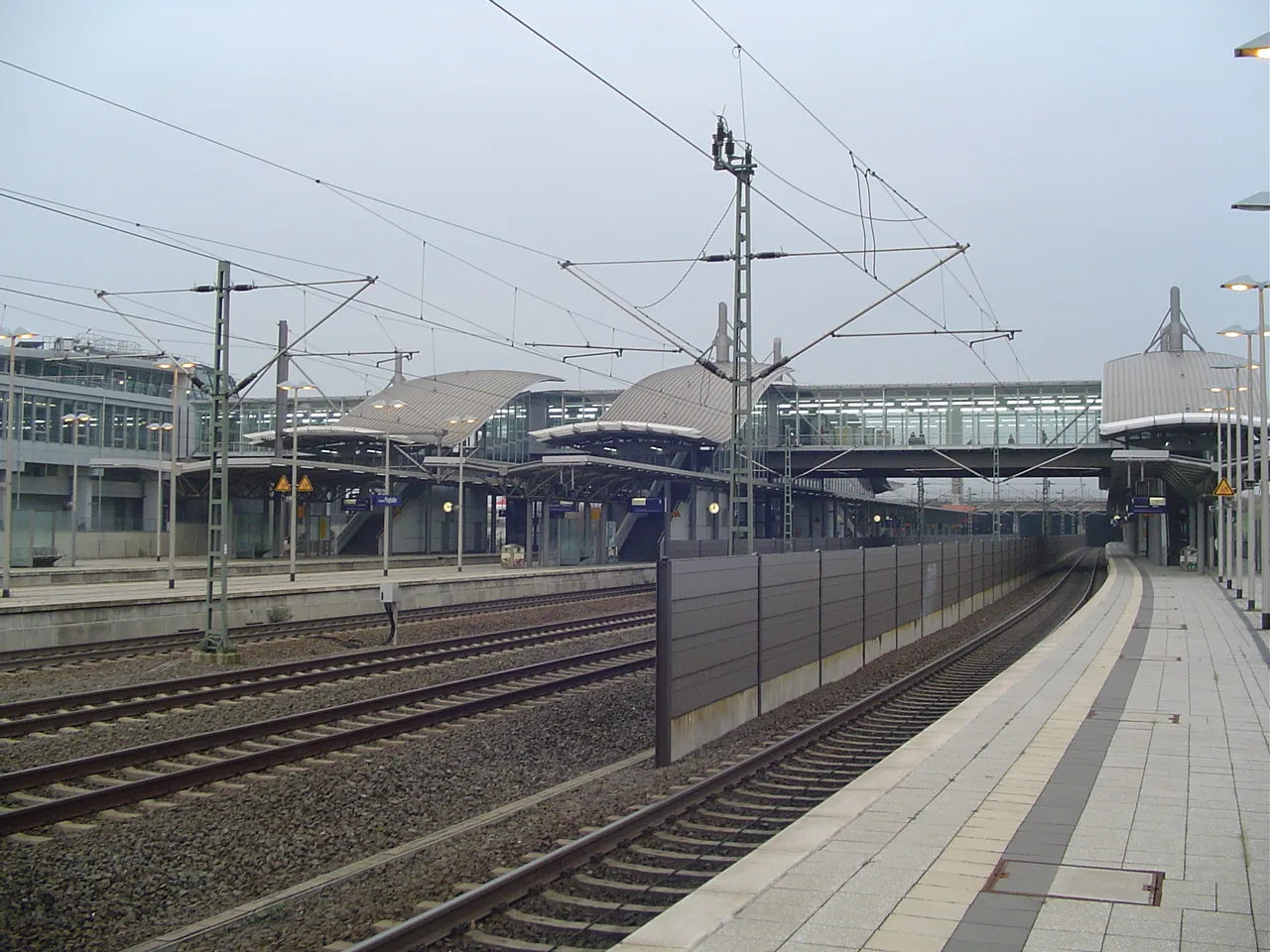
Düsseldorf Airport opened on 19 April 1927 after two years of construction, in the city district of Lohausen. Its first international route came in 1929, when SABENA linked Brussels, Antwerp, Düsseldorf and Hamburg.
Source: Wikipedia
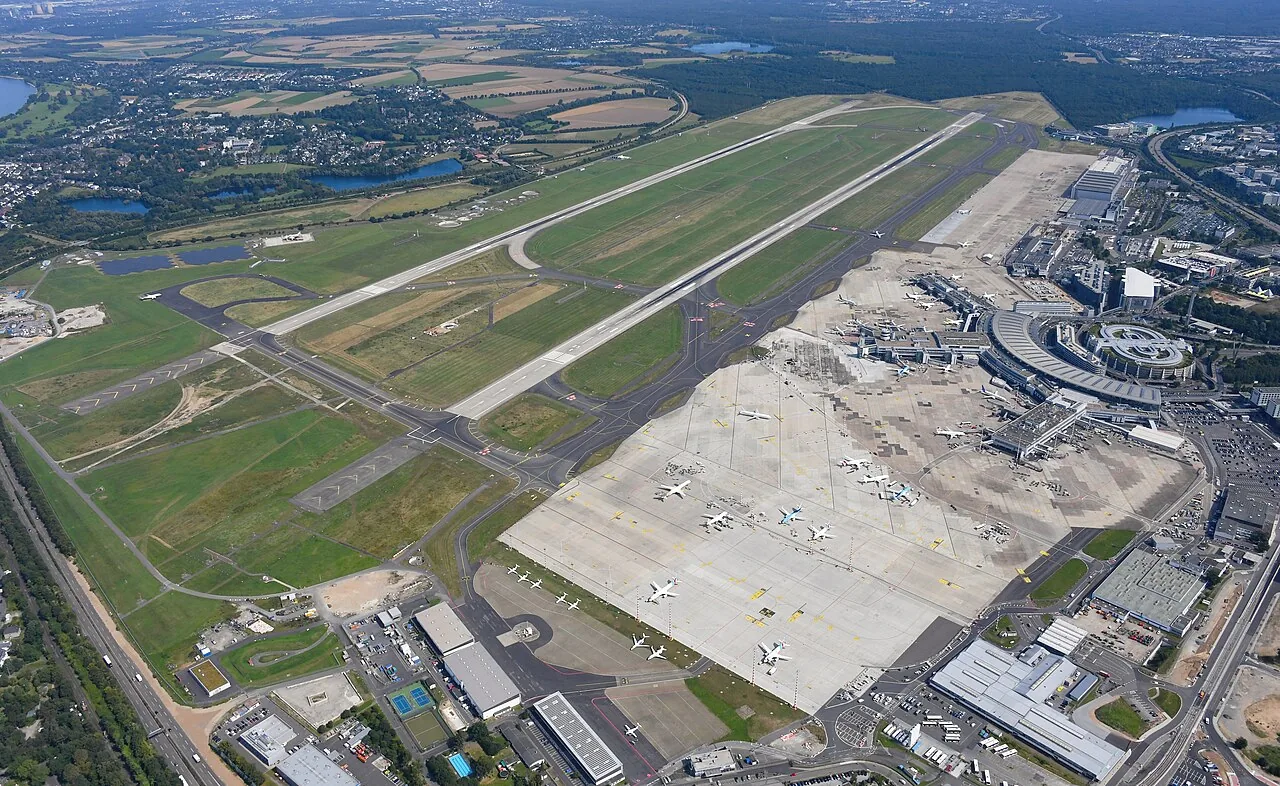
The city the code stands for takes its own name from a river: Düsseldorf grew from a small settlement at the mouth of the Düssel, and the ending -dorf simply means village. It won city rights in 1288 after the Battle of Worringen.
Source: Wikipedia
The airport has changed names twice in recent memory. It was branded Rhine Ruhr Airport until 1998, when it became Düsseldorf International, and in March 2013 it took a new corporate design and dropped the word International to become simply Düsseldorf Airport.
Source: Wikipedia
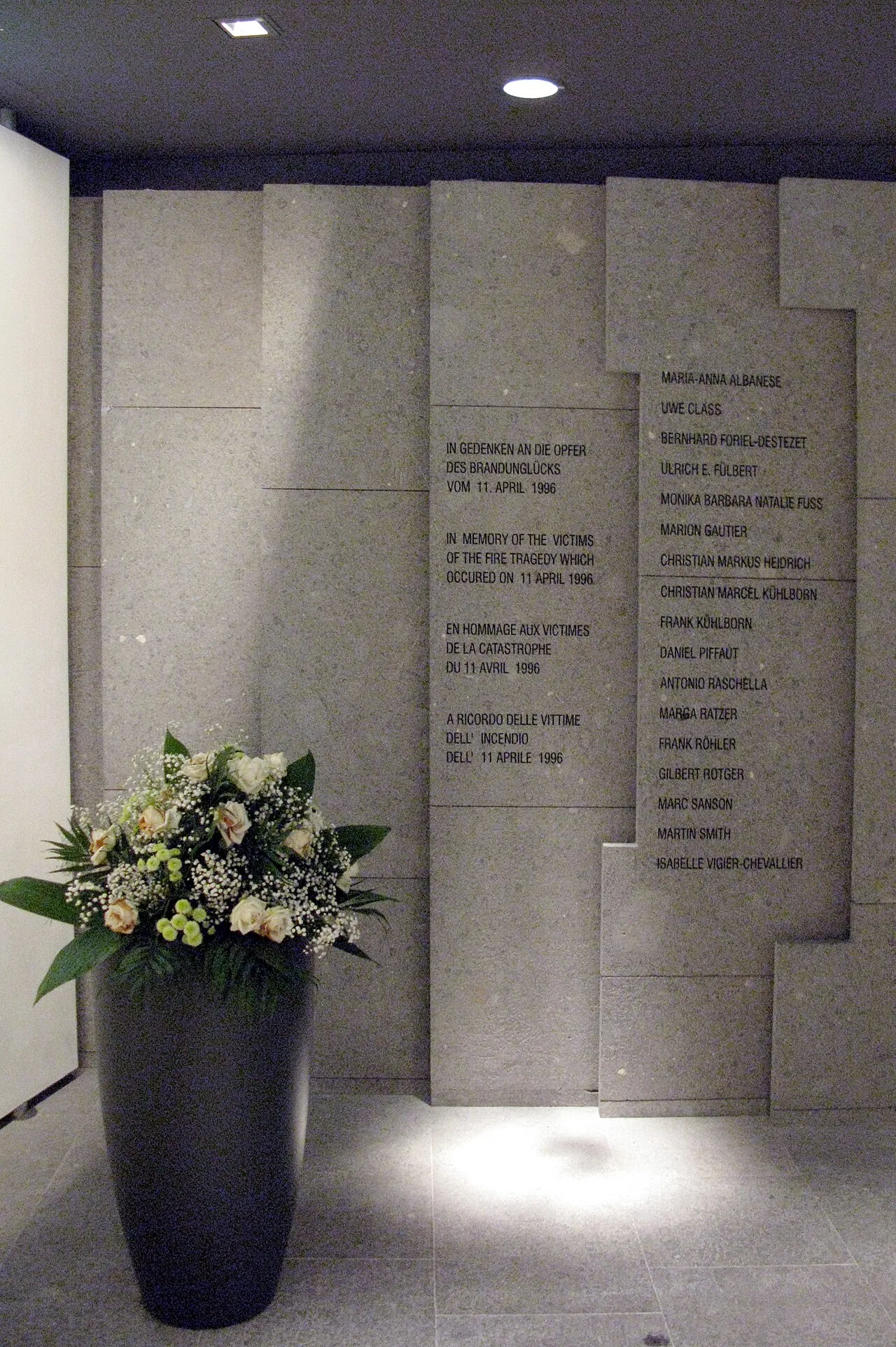
On 11 April 1996 welding work on an elevated road above the arrivals area started a fire that killed 17 people, most of them from smoke inhalation. It remains the worst structural fire in any commercial airport building, and is studied as a textbook polystyrene fire.
Source: Wikipedia
Roughly 1,000 firefighters fought the 1996 blaze, the largest fire response in North Rhine-Westphalia's history to that point. Damage ran to about one billion Deutsche Marks, Terminals A and B had to be rebuilt from scratch, and passengers were handled in big tents while work went on.
Source: Wikipedia
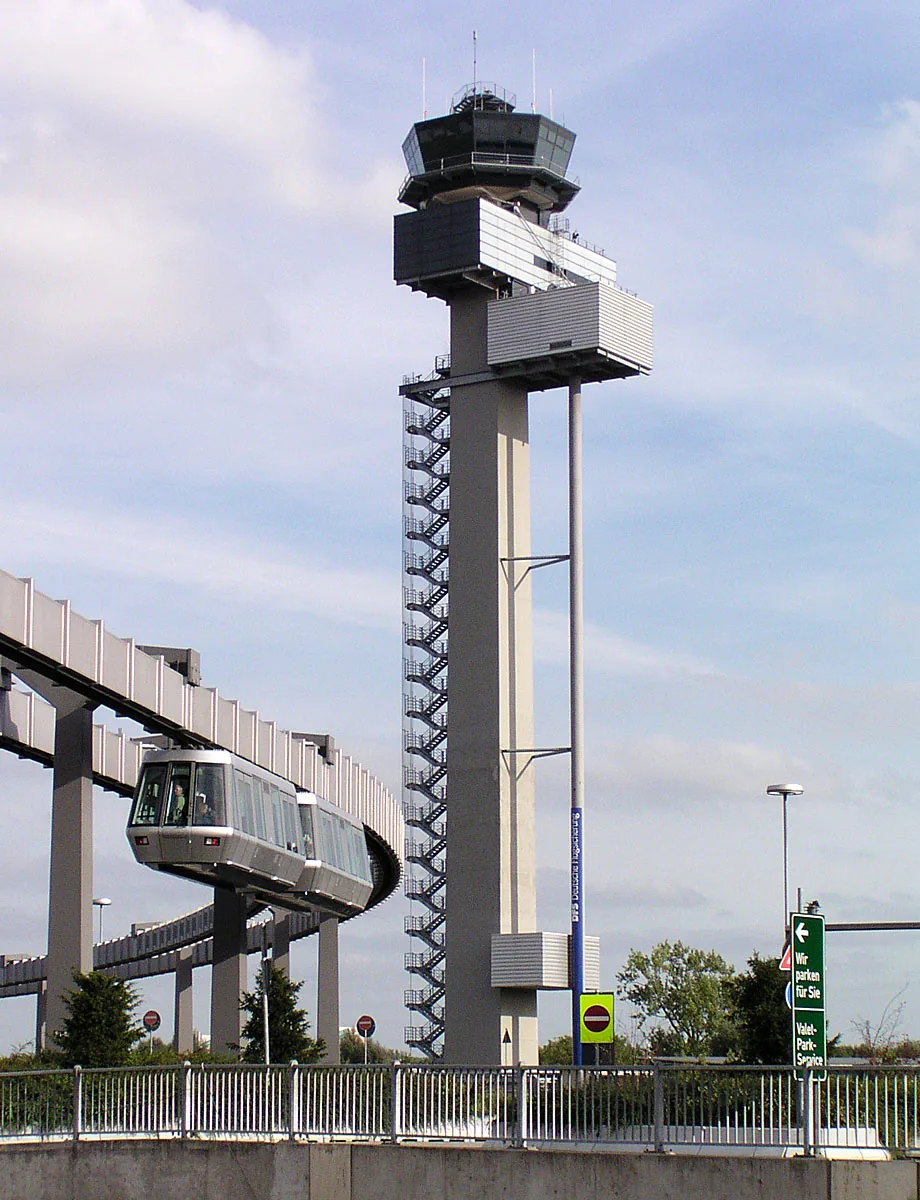
Since 2002 a suspended monorail called the SkyTrain has carried passengers the 2.5 km between the long-distance railway station and the terminals at up to 50 km/h. Siemens developed it from the H-Bahn that runs on the Dortmund university campus.
Source: Wikipedia
Düsseldorf squeezes a lot onto very little ground: the whole airport covers just 6.13 square kilometres, small compared with airports of similar capacity, yet it employs more than 18,200 people and handled 21,031,429 passengers in 2025.
Source: Wikipedia
The two runways are 3,000 metres and 2,700 metres long. Plans to stretch the longer one to 3,600 metres have been blocked by the neighbouring town of Ratingen, which lies under its approach path.
Source: Wikipedia
Weeze Airport, 80 km north-west, is advertised by low-cost airlines as "Düsseldorf-Weeze". A German court ruled that naming it after Düsseldorf would mislead passengers, though some carriers still use the label in advertising outside Germany.
Source: Wikipedia
Lufthansa began flying Düsseldorf–Frankfurt–Munich on 1 April 1955, a service that still runs today. The airport passed one million passengers for the first time in 1961, the same year LTU moved its home base there from Cologne Bonn.
Source: Wikipedia