Denpasar I Gusti Ngurah Rai International Airport
Facts on DPS
The code points at a city the airport is not in. DPS stands for Denpasar, but the field lies at Tuban in Kuta District, Badung Regency, about 13 km south of Denpasar. Its ICAO code, WADD, likewise keeps the D-for-Denpasar convention.
Source: Wikipedia
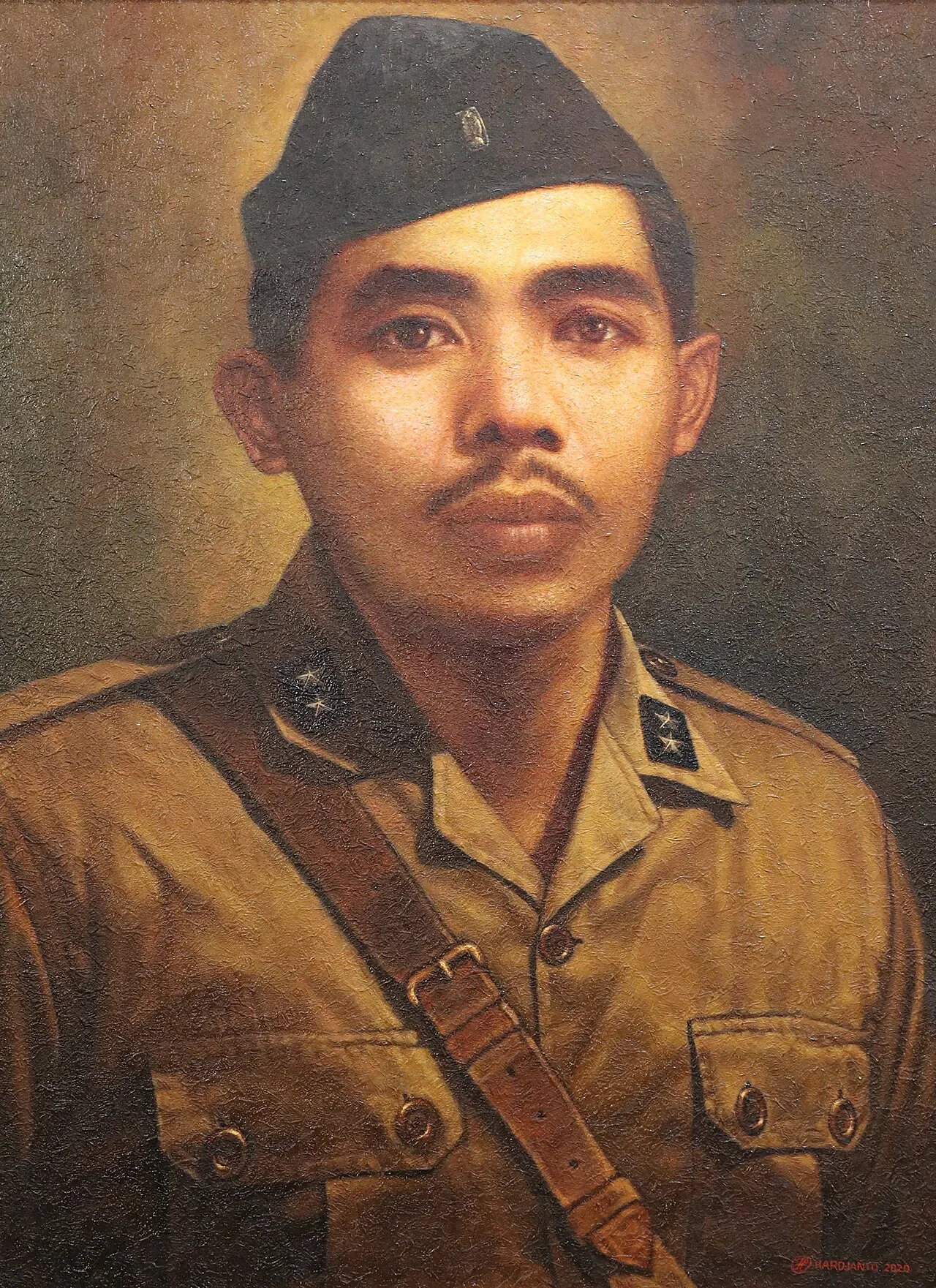
The airport is named for I Gusti Ngurah Rai (1917-1946), who was born into a noble family at Carangsari in Badung and trained as an officer in the Dutch-raised Prajoda corps. He later led armed Balinese resistance to the returning Dutch, and was posthumously promoted to brigadier general and named a National Hero of Indonesia.
Source: Wikipedia
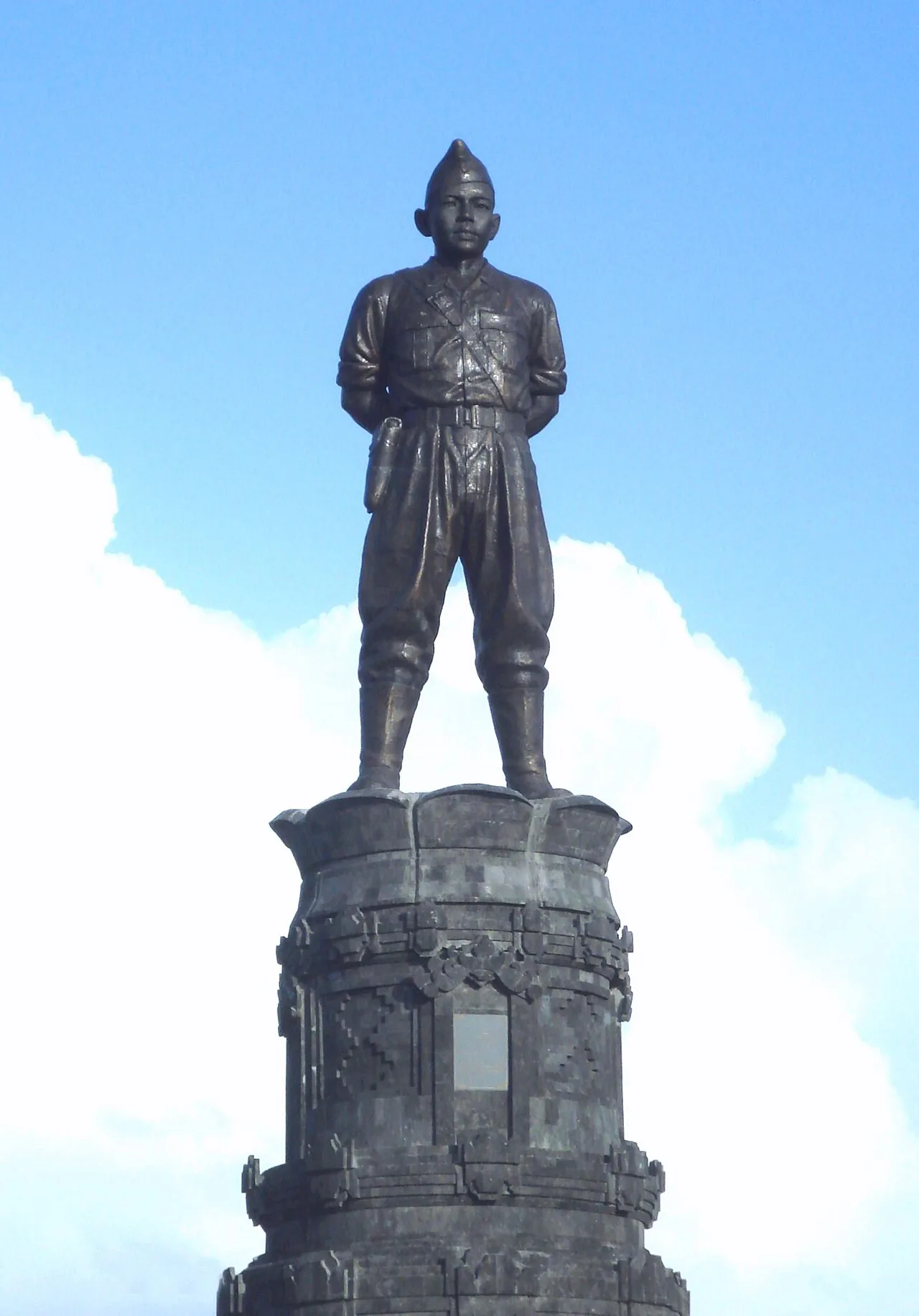
Ngurah Rai, the airport's namesake, died on 20 November 1946 near the village of Marga, where his 95-strong "Ciung Wanara" unit was surrounded and wiped out after refusing surrender — the Battle of Margarana. The airport, then called Tuban, took his name when President Soeharto inaugurated its rebuilt facilities on 1 August 1968.
Source: Wikipedia
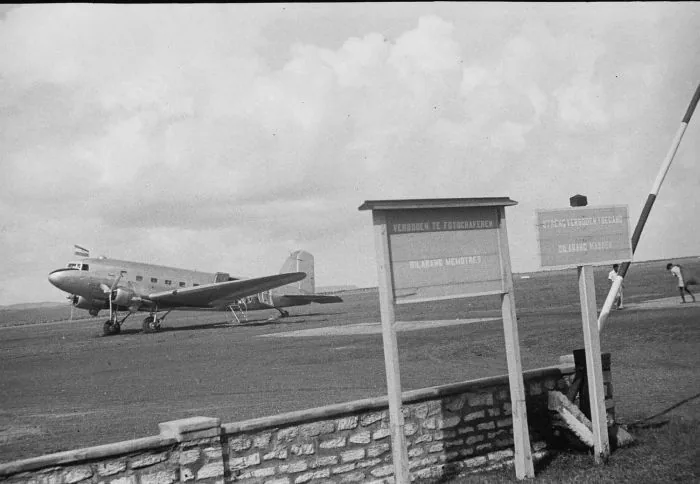
Bali's airport started as a 700-metre grass strip built by the Dutch colonial public works department at Tuban in the early 1930s, with a few huts alongside. In early 1935 an Imperial Airways de Havilland Express tried to land there when only 250 metres of it had been paved.
Source: Wikipedia
The Dutch meant to destroy the airfield in 1942 rather than let Japan have it, but the demolition order was misread as an instruction to postpone. Japanese forces captured Tuban intact on 19 February, and A6M Zeros of the Imperial Japanese Naval Air Service were landing there the next day.
Source: Wikipedia
The modern runway was built on made land. The Tuban Airport Projects of 1963-69 laid a new 2,700-metre runway, turning the old strip into a parallel taxiway, and extended it and its overruns 1,500 metres into the sea using limestone quarried at Ungasan and river sand from Antosari-Tabanan.
Source: Wikipedia
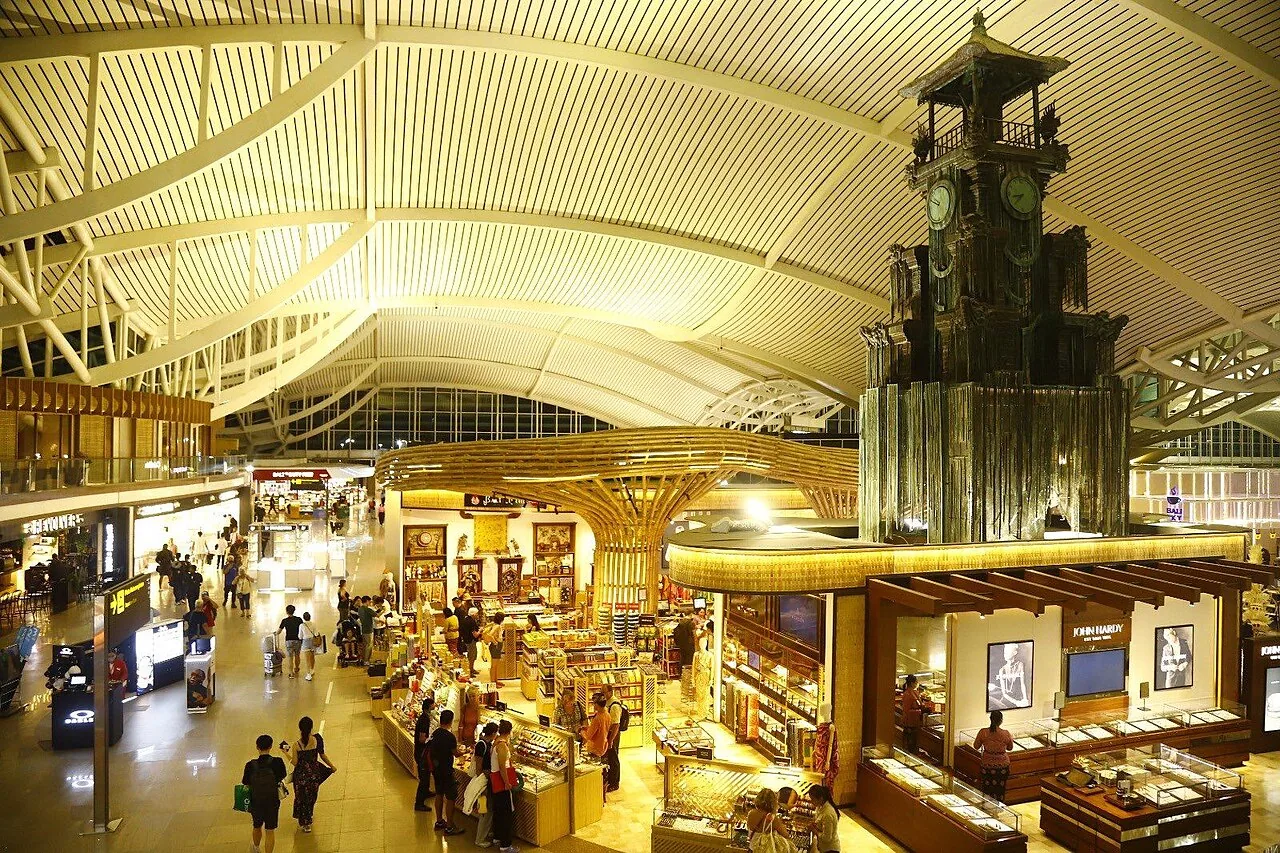
The international terminal that opened in stages in September 2013 covers 120,000 m² and has 96 check-in counters, 20 visa-on-arrival desks and 11 aerobridges, with capacity for 16 million passengers a year. Its architecture is modern but threaded with traditional Balinese decorative elements.
Source: Wikipedia
All of Bali's scheduled traffic runs off one 3,000 m runway, 09/27, at an elevation of 4 m. The airport handled 23,931,016 passengers in 2024. A double-deck aerobridge was fitted in 2015, and on 1 June 2023 an Emirates A380 flew Indonesia's first scheduled A380 service into it.
Source: Wikipedia