Hazrat Shahjalal International Airport
Facts on DAC
DAC is a fossil of an older spelling. The code comes from "Dacca", the transliteration used for Dhaka before the city's name was respelled, and the airport itself opened carrying that spelling too, as Dacca International Airport.
Source: Wikipedia
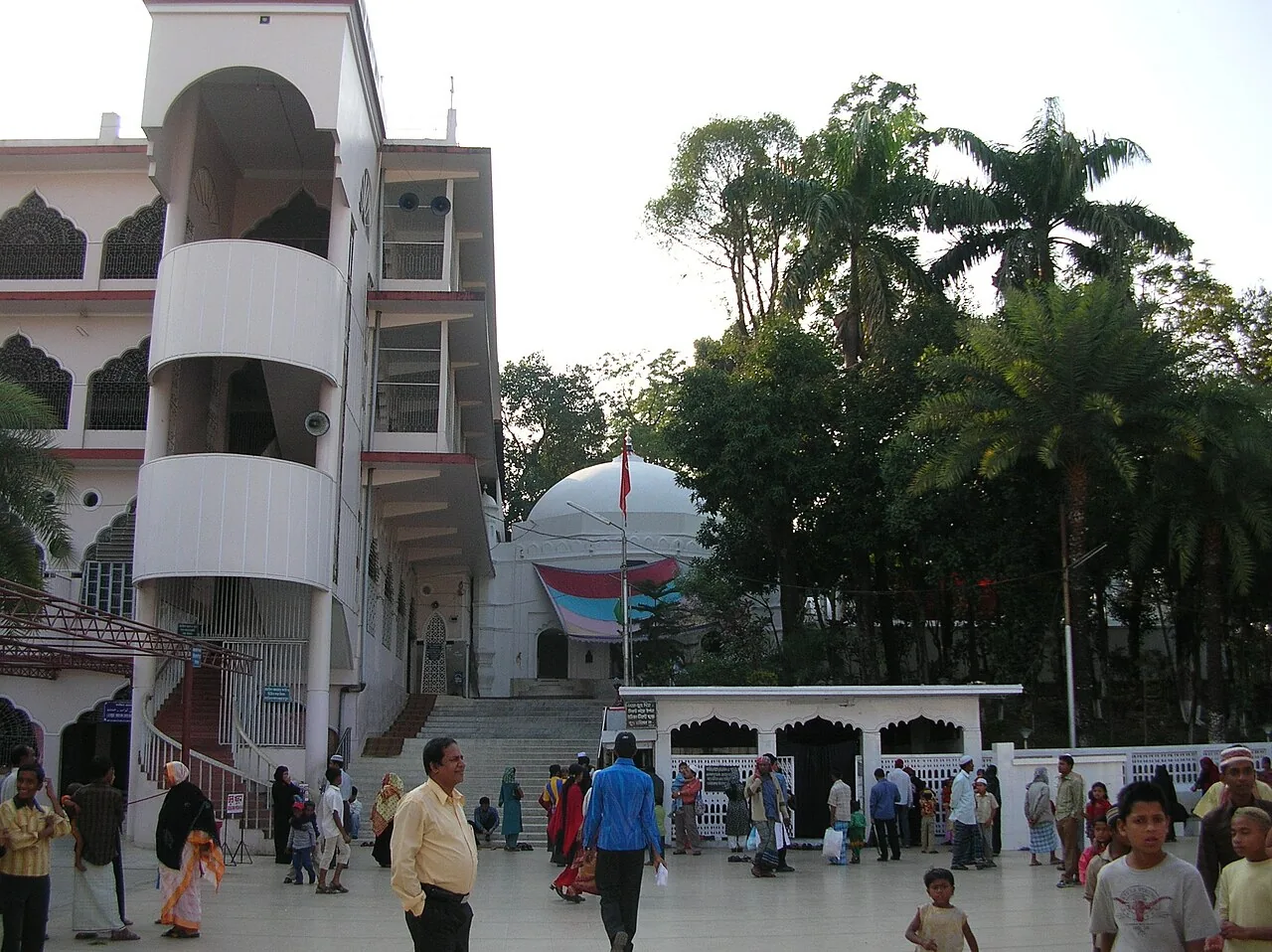
The airport is named for Shah Jalal, who was a Sufi saint and military figure of medieval Bengal, said to have been born on 25 May 1271. Sources disagree sharply on where — Turkestan, the Hadhramaut in Yemen and Konya have all been argued. He settled in Sylhet after the Muslim victory over Gour Govinda in 1303.
Source: Wikipedia
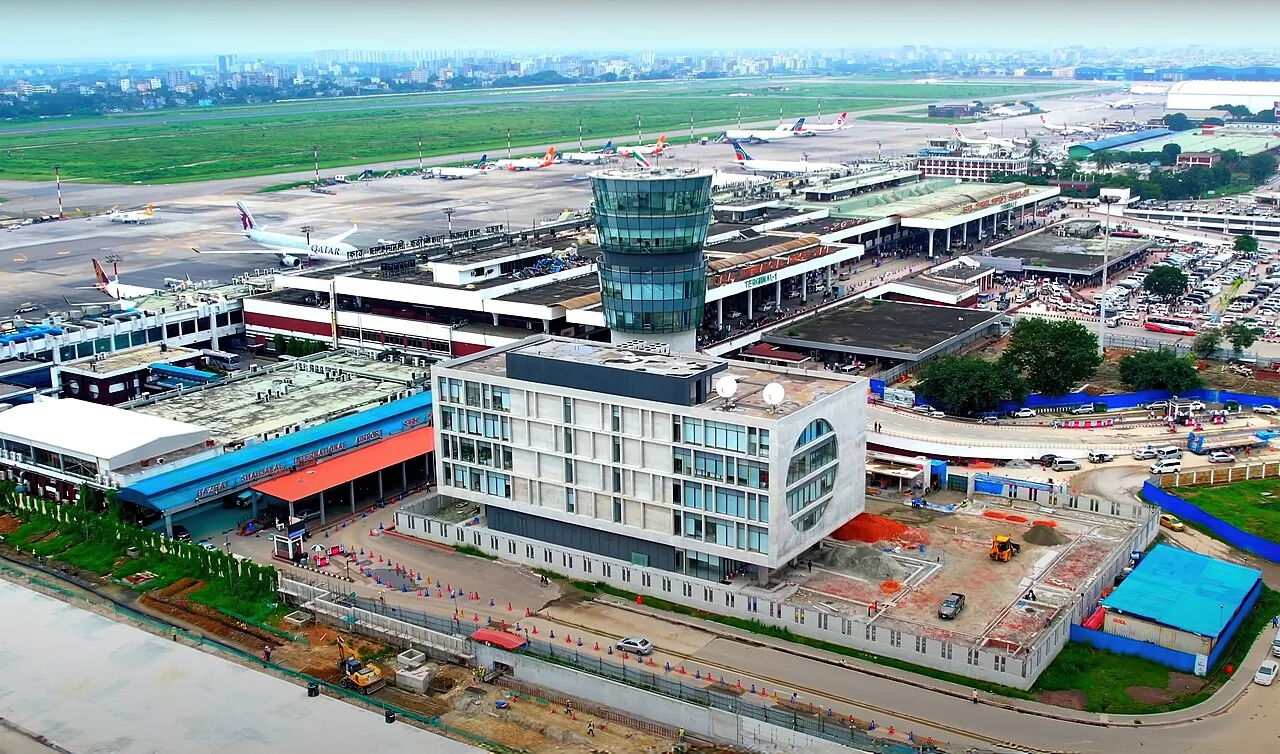
Dhaka's airport has carried three names. It opened in 1980 as Dacca International, was re-inaugurated as Zia International after President Ziaur Rahman, and in 2010 the government renamed it for Shah Jalal. The change ran deep enough that the ICAO code moved from VGZR to VGHS.
Source: Wikipedia
The site began as wartime spare capacity. In 1941 the British laid a landing strip at Kurmitola as a backup for Tejgaon, several kilometres to the south. During the 1965 Indo-Pakistani war the Indian Air Force bombed the abandoned strip by mistake, believing it was Tejgaon.
Source: Wikipedia
Construction of today's airport started in 1966 and was still only half done when the Bangladesh Liberation War broke out in 1971, leaving the airstrip severely damaged. After independence the government brought in Aéroports de Paris as consultants, and the airport began operations in 1980.
Source: Wikipedia
The airport covers 802 hectares (1,981 acres) at Kurmitola, 17 km north of central Dhaka, and works a single 3,505 m runway (14/32) at just 8 m above sea level. It handled 12.72 million passengers and 517,940 tonnes of cargo in 2025.
Source: Wikipedia
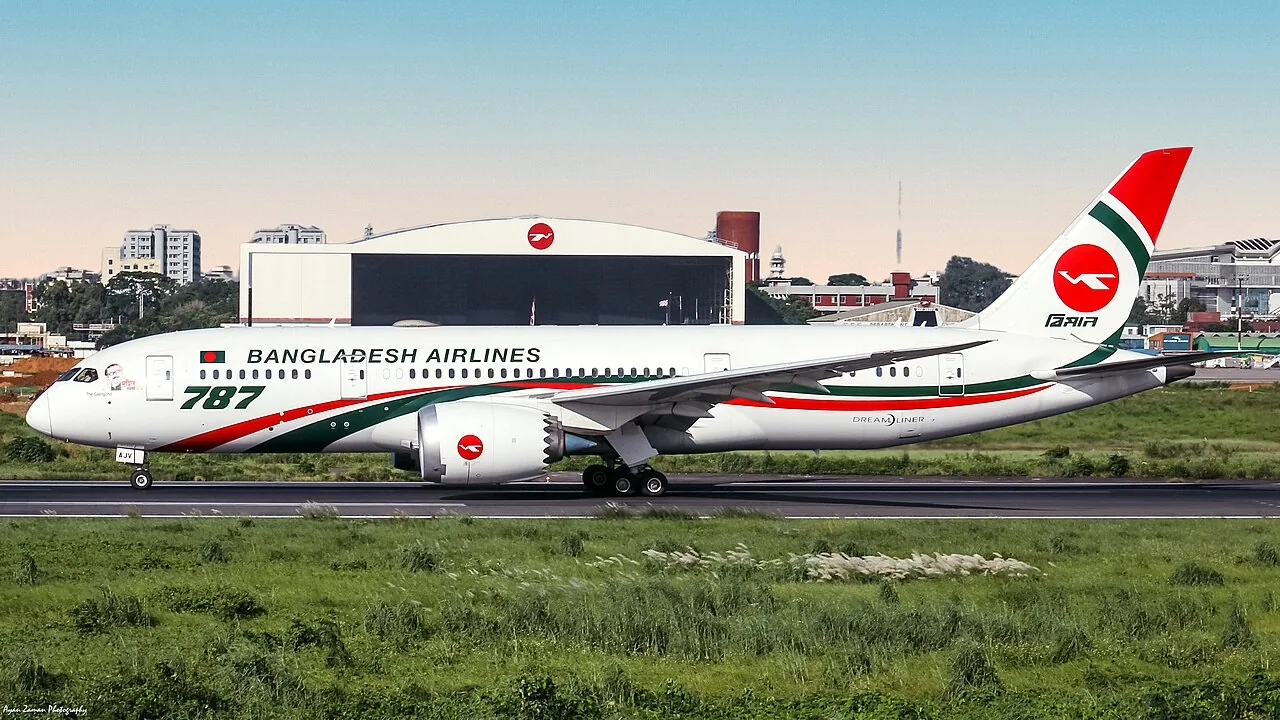
On 6 December 2011 a Boeing 787-9 stopped at Dhaka after flying 10,710 nautical miles (19,830 km) nonstop from Boeing Field in Seattle — a world distance record for its weight class. It then continued eastward home, setting a round-the-world speed record of 42 hours 27 minutes.
Source: Wikipedia
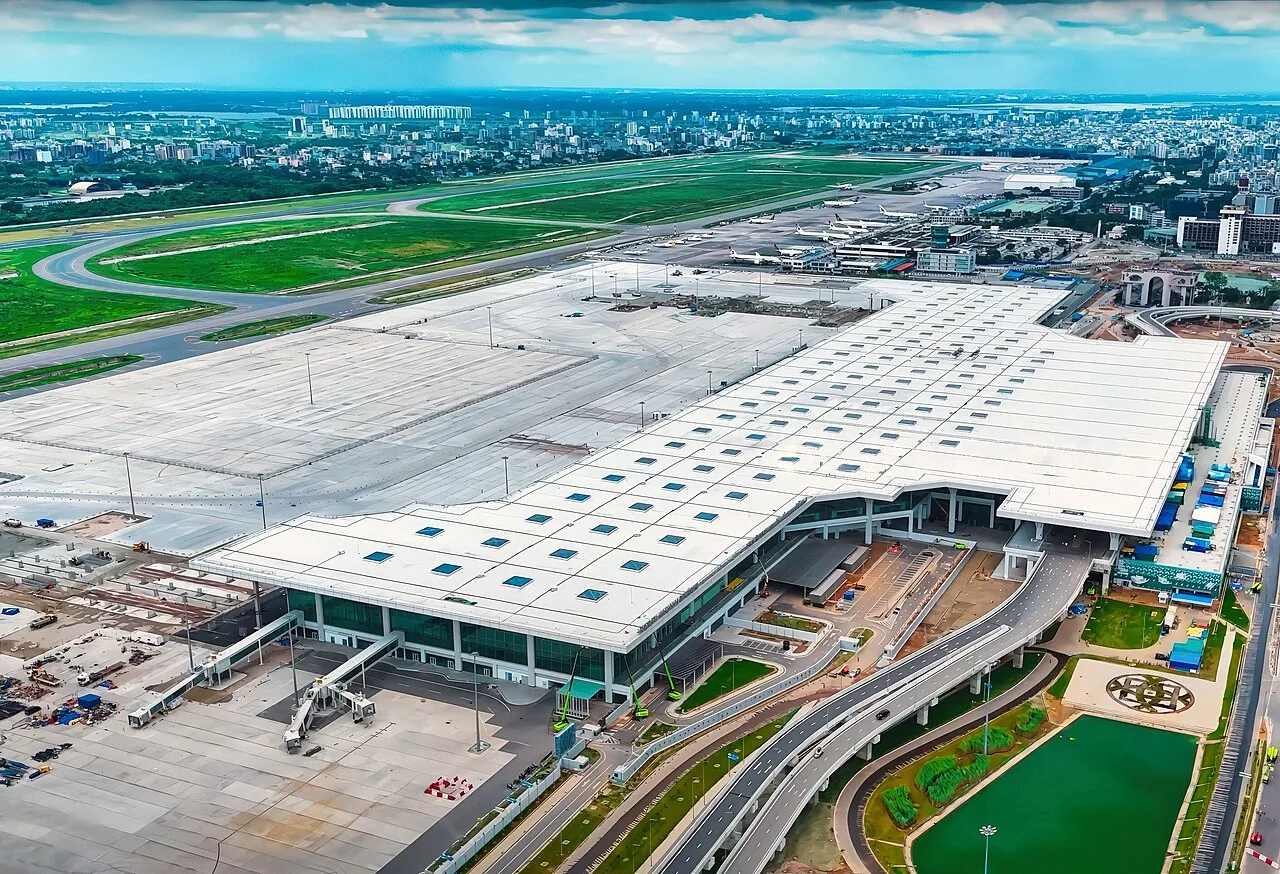
Terminal 3 was designed by Singaporean architect Rohani Baharin and built by a consortium of Mitsubishi, Fujita and Samsung C&T, largely on Japanese JICA loans. Its passenger building covers roughly 230,000 m², and it is intended to raise the airport's capacity to 24 million passengers a year.
Source: Wikipedia
The traveller Ibn Battuta made a month-long journey through the mountains of Kamarupa, north-east of Sylhet, simply to meet Shah Jalal — one of the reasons the saint is among the most revered figures in Bangladesh, with a university and mosques as far away as Britain named for him.
Source: Wikipedia