Boston Logan International Airport
Facts on BOS
Boston's Logan Airport opened on September 8, 1923 as simply 'Boston Airport,' first serving military aviators. It wasn't renamed until 1943, when the Commonwealth of Massachusetts honored Maj. Gen. Edward Lawrence Logan, a South Boston native and Spanish-American War officer.
Much of Logan Airport sits on reclaimed land: roughly 1,800 acres of landfill in Boston Harbor were created using fill taken from three islands that used to exist there — Governors, Noddle's, and Apple.
Logan set a passenger record of 43.5 million travelers in 2024 — even though one of its runways, 15L/33R at just 2,557 feet, is the shortest of any of the 30 busiest U.S. airports.
Logan's first scheduled commercial passenger flights began in 1927, when Colonial Air Transport started service between Boston and New York City.
Source: Wikipedia
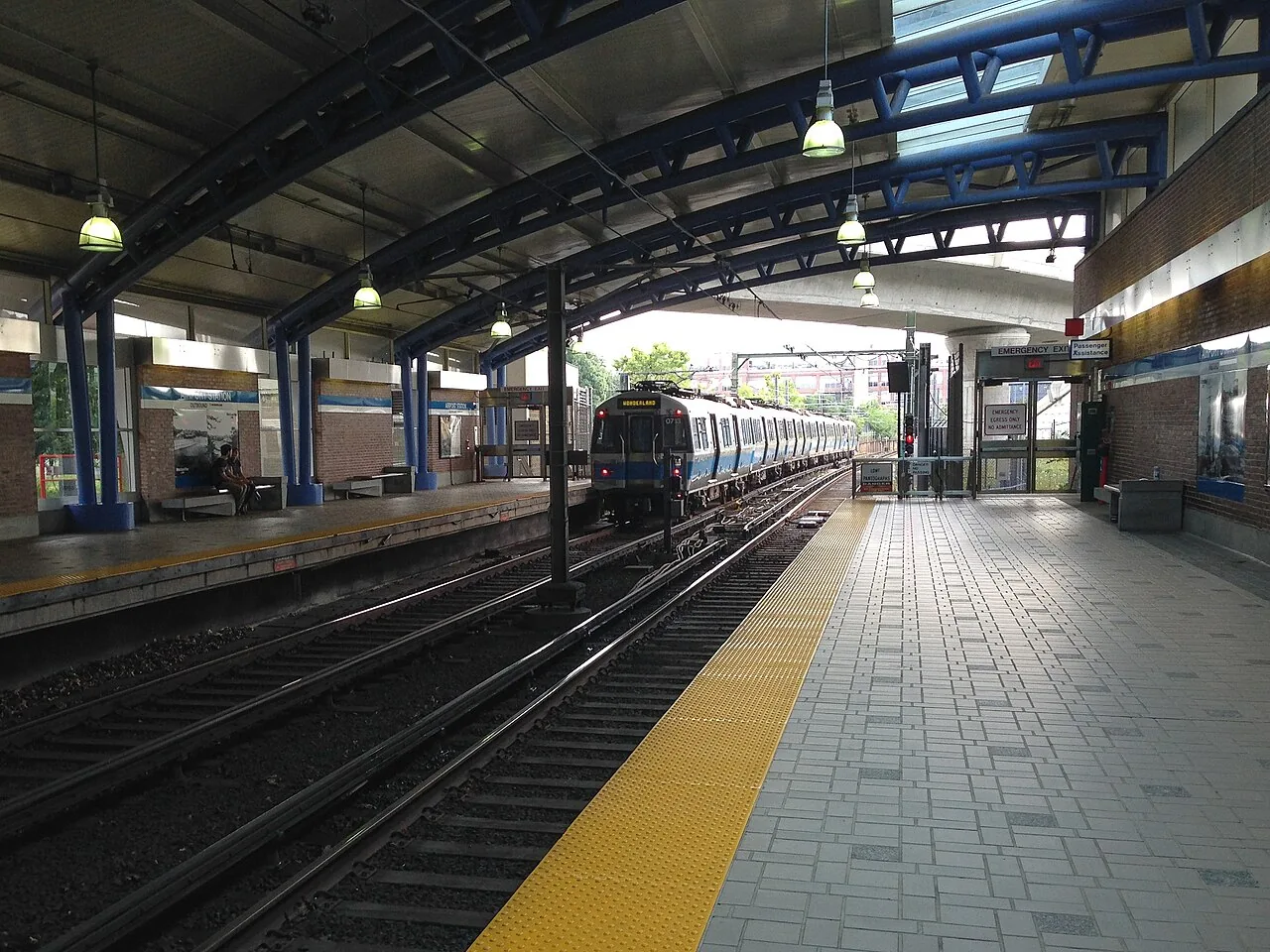
In 1952, Logan became the first airport in the United States with an indirect rapid-transit connection, when the MBTA's Blue Line opened an Airport station linking the terminals to downtown Boston.
Source: Wikipedia
A statue of Maj. Gen. Edward Lawrence Logan, sculpted by Joseph Coletti, was unveiled and dedicated at the airport on 20 May 1956, thirteen years after the field was renamed in his honor.
Source: Wikipedia
Logan became a transatlantic gateway after World War II. By the early 1950s BOAC was flying nonstop from London Heathrow to Boston on the de Havilland Comet, the world's first commercial jetliner.
Source: Wikipedia
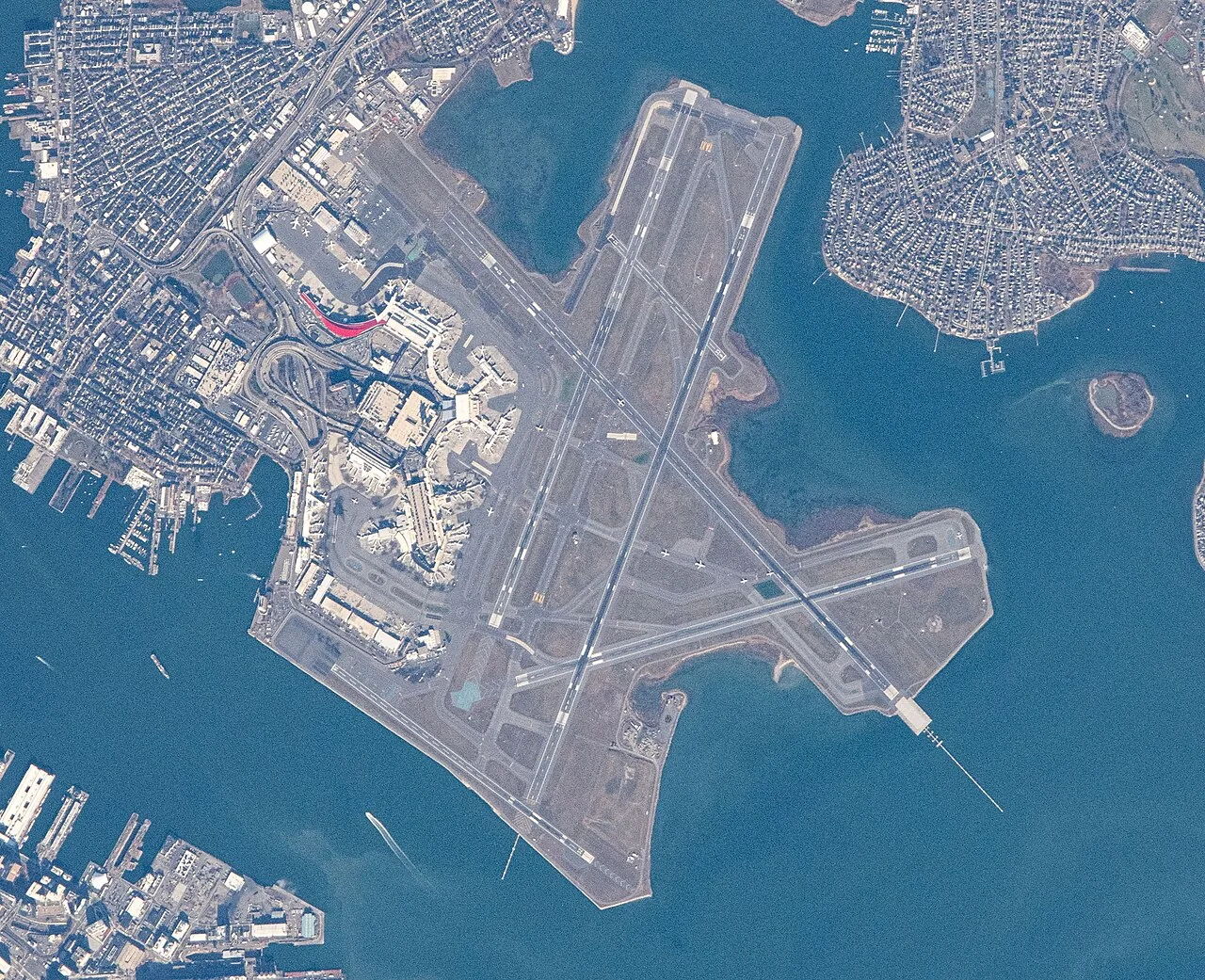
Boston Logan covers 2,384 acres with six runways and four passenger terminals, and employs an estimated 16,000 people; the FAA categorizes it as a large-hub primary commercial service facility.
Source: Wikipedia