Chhatrapati Shivaji Maharaj International Airport
Facts on BOM
Mumbai's airport code BOM is a fossil of history: it comes from Bombay, the city's official name under British rule until it was renamed Mumbai in 1995 — the three-letter code never changed, even though the airport itself was renamed Chhatrapati Shivaji (Maharaj) International in 1999, honoring the 17th-century Maratha ruler.
Source: Wikipedia
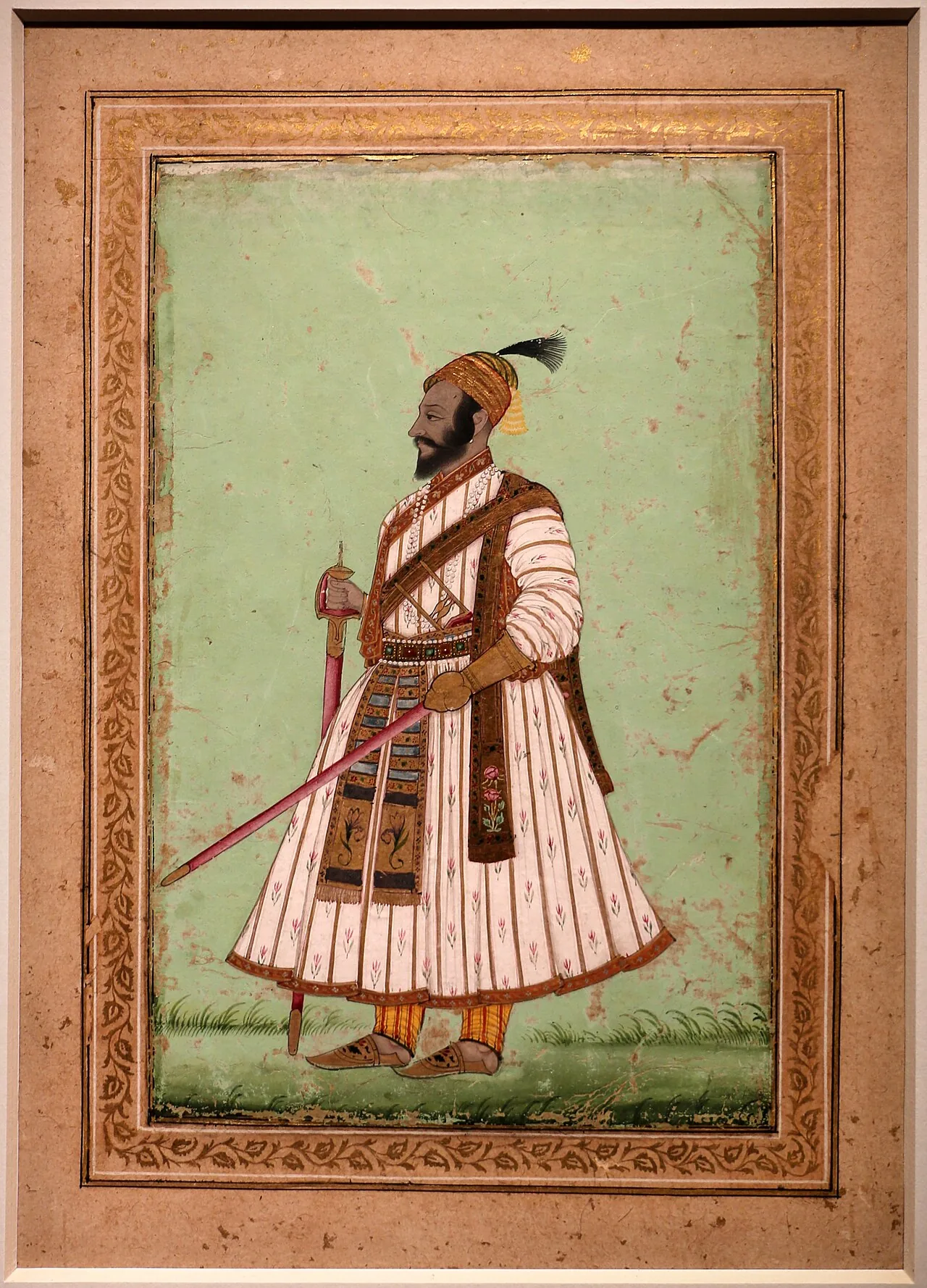
The airport is named for Shivaji (c. 1630-1680), who was born in the hill-fort of Shivneri and inherited a fiefdom from his father, a general for the Deccan sultanates. He carved a Maratha kingdom out of Bijapur and Mughal territory, built forts and a navy, and was crowned Chhatrapati at Raigad Fort in 1674.
Source: Wikipedia
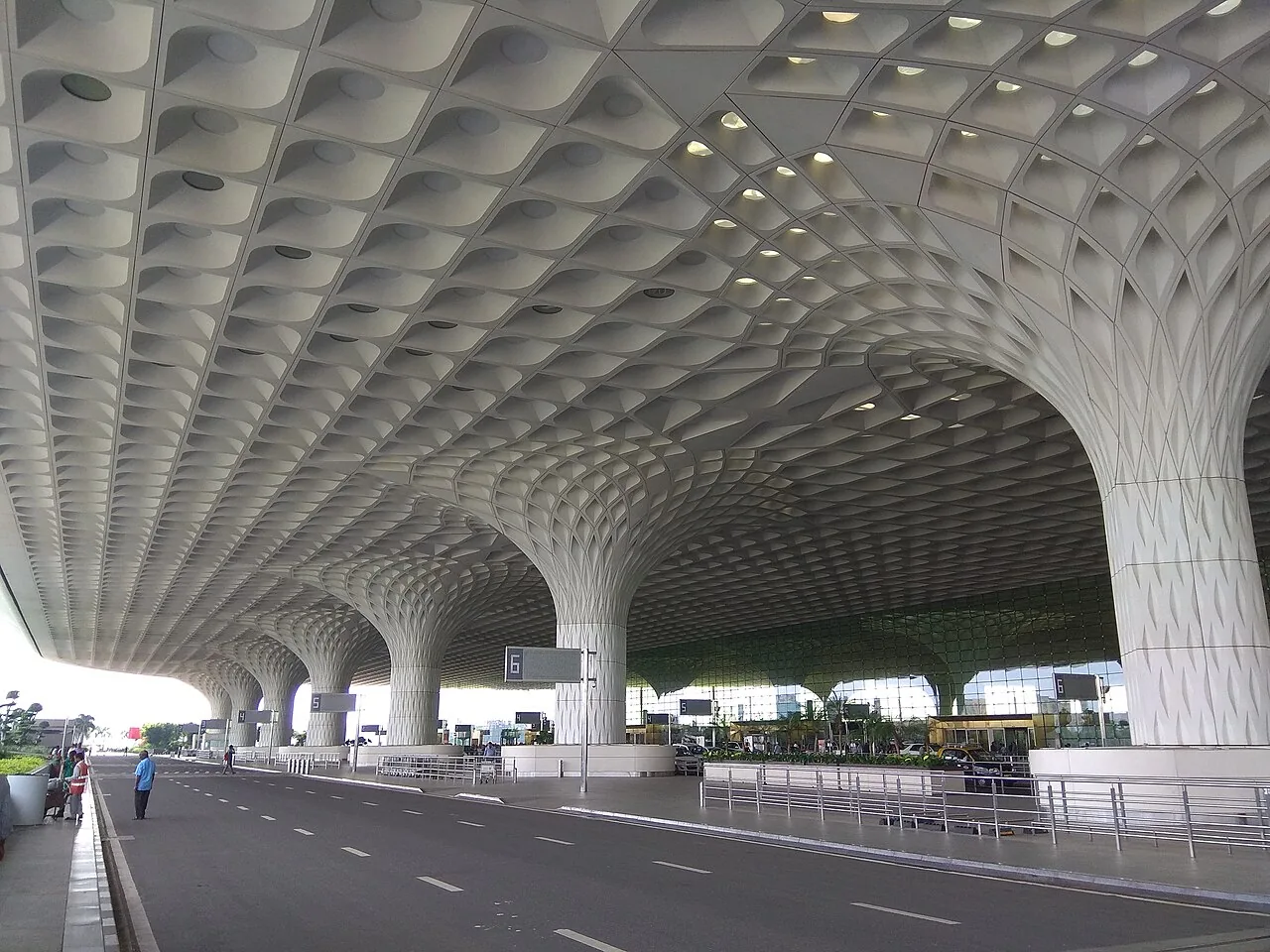
The honour arrived in two instalments: the airport, previously called Sahar Airport, was renamed for Shivaji in 1999, and the title "Maharaj" was inserted on 30 August 2018. The old place names survive on the terminals — T1 at Santacruz, T2 at Sahar Village in Vile Parle East.
Source: Wikipedia
Despite operating with effectively a single main runway, Mumbai's airport became the world's busiest single-runway airport in March 2017, overtaking London Gatwick, before Gatwick reclaimed the title in 2019.
Source: Wikipedia
The airfield began as RAF Santa Cruz, built in the 1930s and home to several RAF squadrons from 1942 to 1947. When civil flying took over, two abandoned RAF hangars became the terminal — one for domestic traffic, one for international — handling six services a day in the first year.
Source: Wikipedia
Traffic surged after Partition put Karachi in Pakistan, reaching 40 daily services by 1949. By the late 1970s a terminal designed for 600 passengers was holding 1,200, and Time magazine called it a "black hole". A fire gutted the international section on 21 September 1979, killing three passengers.
Source: Wikipedia
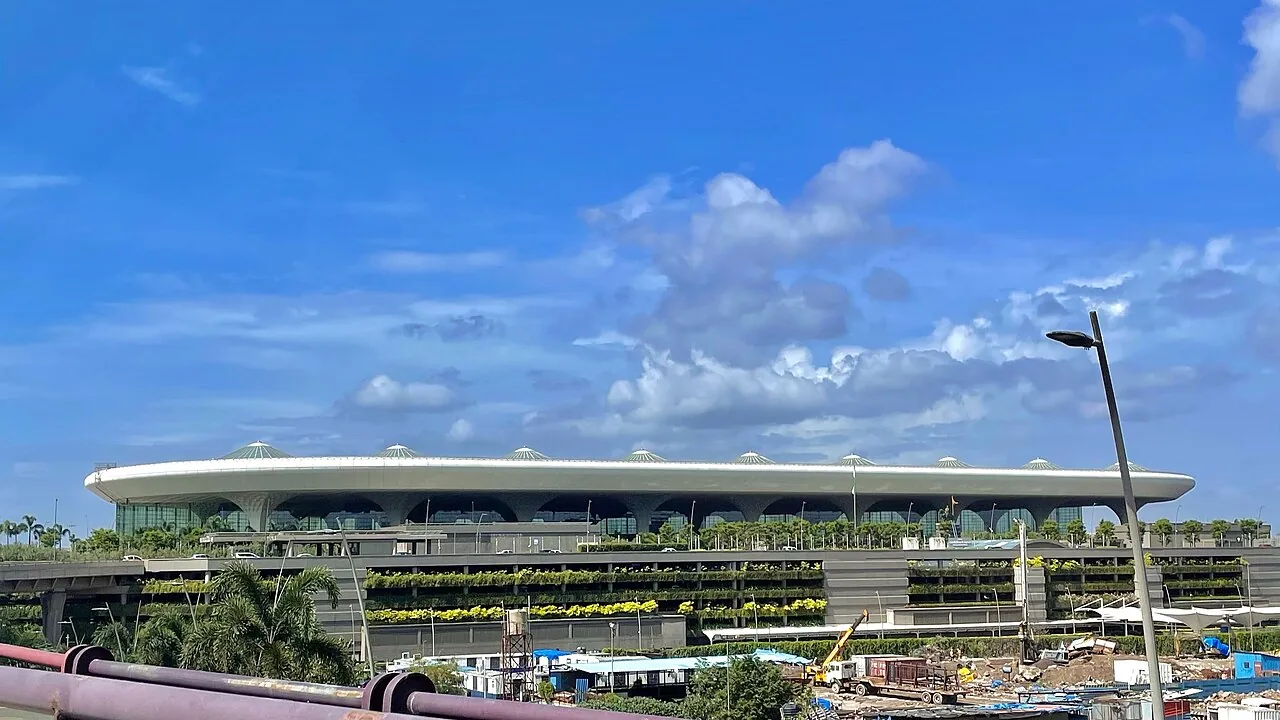
Terminal 2, designed by Skidmore, Owings & Merrill and opened on 12 February 2014, is X-shaped with 450,000 square metres of floor space over four floors. Its 42-metre-high roof uses more than 20,000 tonnes of fabricated steel and covers 30 acres.
Source: Wikipedia
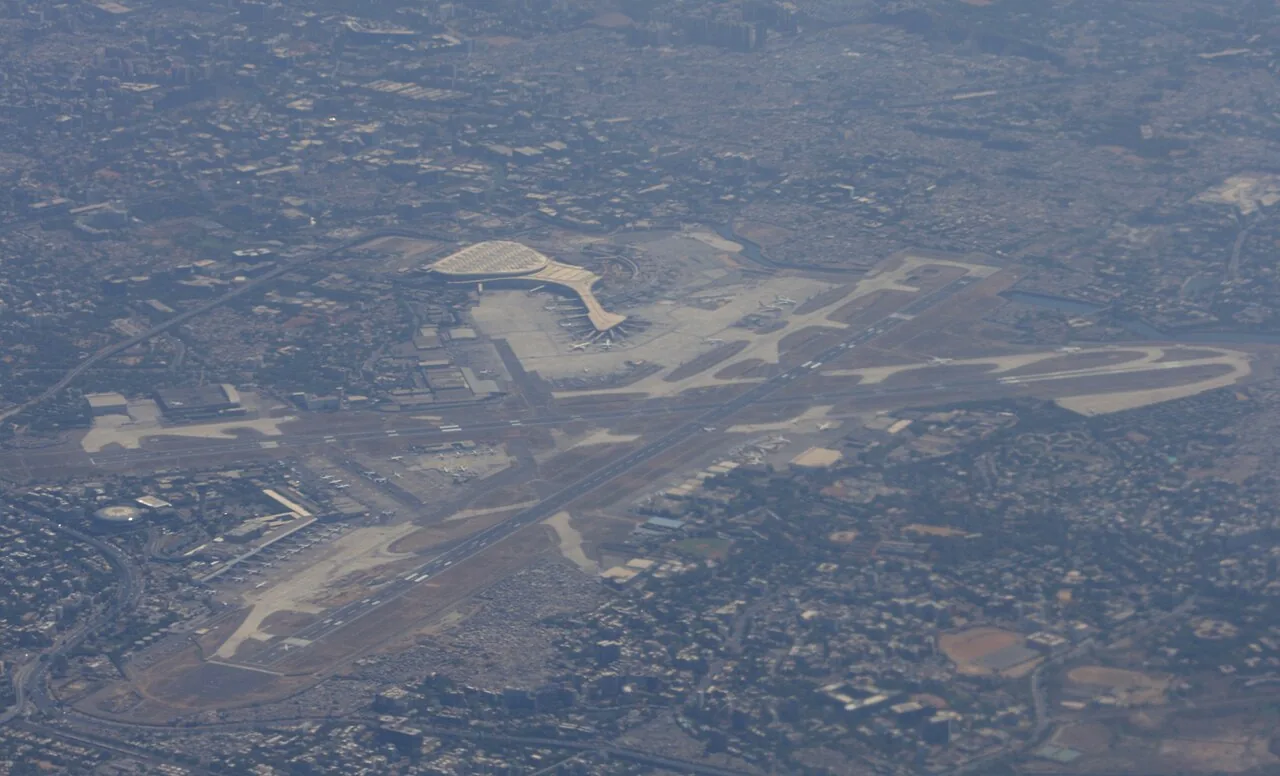
Terminal 2's eastern pier stops short of its intended length because the adjoining plot of slum housing was never cleared. Seen from above, the building is noticeably asymmetrical as a result.
Source: Wikipedia
Mumbai set a record of 1,007 aircraft movements in a single day on 9 December 2018, beating its own mark of 1,003 from June that year, and had already handled 51 movements in one hour on 16 September 2014.
Source: Wikipedia
The secondary runway 14/32 is hemmed in by geography: Trombay Hill sits 4.5 nautical miles off the 32 threshold, the Bhabha Atomic Research Centre lies under the approach, and at 2,871 metres the strip is far shorter than the 09/27 main runway.
Source: Wikipedia
India's second-tallest control tower, 87.5 m (287 ft), was inaugurated on 18 October 2013 and took over operations on 1 January 2014. Its predecessor had to go: it stood so close to runway 14/32 that it broke the obstacle limitation surfaces, and several airlines refused to land when that runway was in use.
Source: Wikipedia