Berlin Brandenburg Airport
Facts on BER
Through most of its construction the project was called Berlin Brandenburg International, abbreviated BBI — until it emerged that IATA had already given BBI to Biju Patnaik Airport in Bhubaneswar, India. The marketing campaign was relaunched around BER, the code the airport actually holds.
Source: Wikipedia
BER's second name honours Willy Brandt (1913–1992), born Herbert Frahm in Lübeck. He fled to Norway in 1933 and took the pseudonym to hide from Nazi agents. He was governing mayor of West Berlin, became chancellor in 1969, and won the 1971 Nobel Peace Prize for his Ostpolitik.
Source: Wikipedia
In 2007 the airport company decided the new airport should carry a second name honouring someone with a distinctive link to Berlin. On 11 December 2009 it chose Brandt, over suggestions that included Albert Einstein, Marlene Dietrich, Claus Schenk Graf von Stauffenberg and the aviation pioneer Otto Lilienthal.
Source: Wikipedia
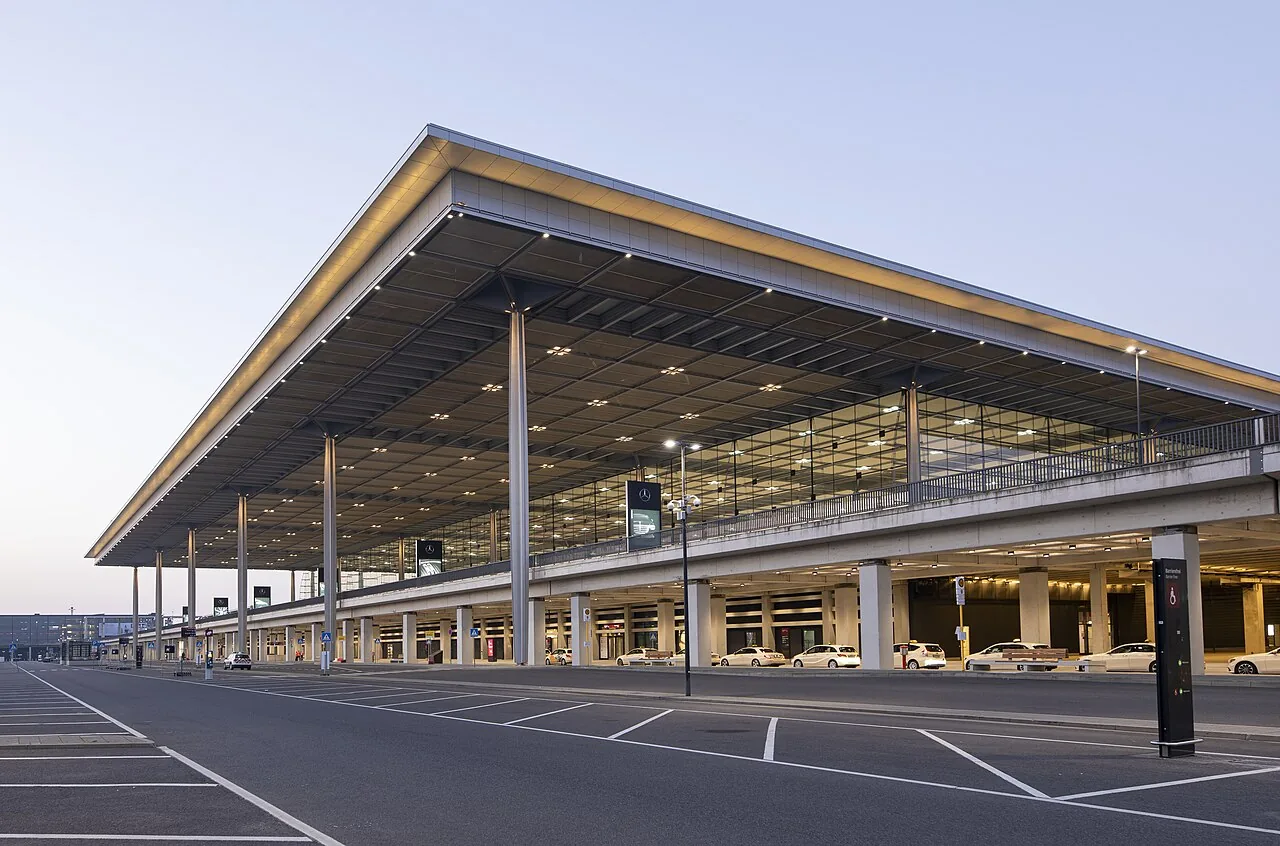
The airport was meant to open in October 2011. It finally took commercial flights on 31 October 2020 — 14 years after construction began and 29 years after planning started — with the delays blamed on poor construction planning, execution, management and corruption.
Source: Wikipedia
The central obstacle was the smoke extraction system. For aesthetic reasons the designers routed smoke down a shaft into the basement instead of venting it through the roof, reversing the natural rise of hot air. The man who designed it turned out to be qualified as an engineering draughtsman, not an engineer.
Source: Wikipedia
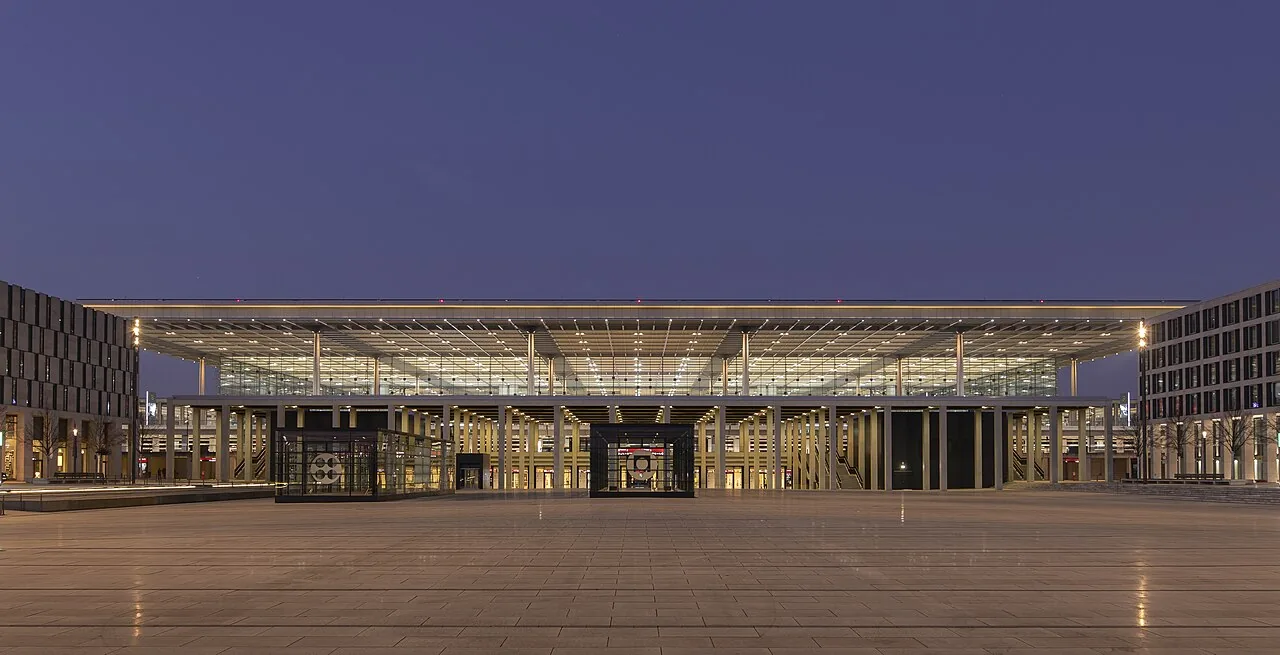
Budgeted at €2.83 billion in 2009, the airport had cost €4.3 billion by late 2012 and €5.4 billion by 2015. A request in January 2018 for another €2.8 billion of extensions through 2030 pushed the running total past €9 billion.
Source: Wikipedia
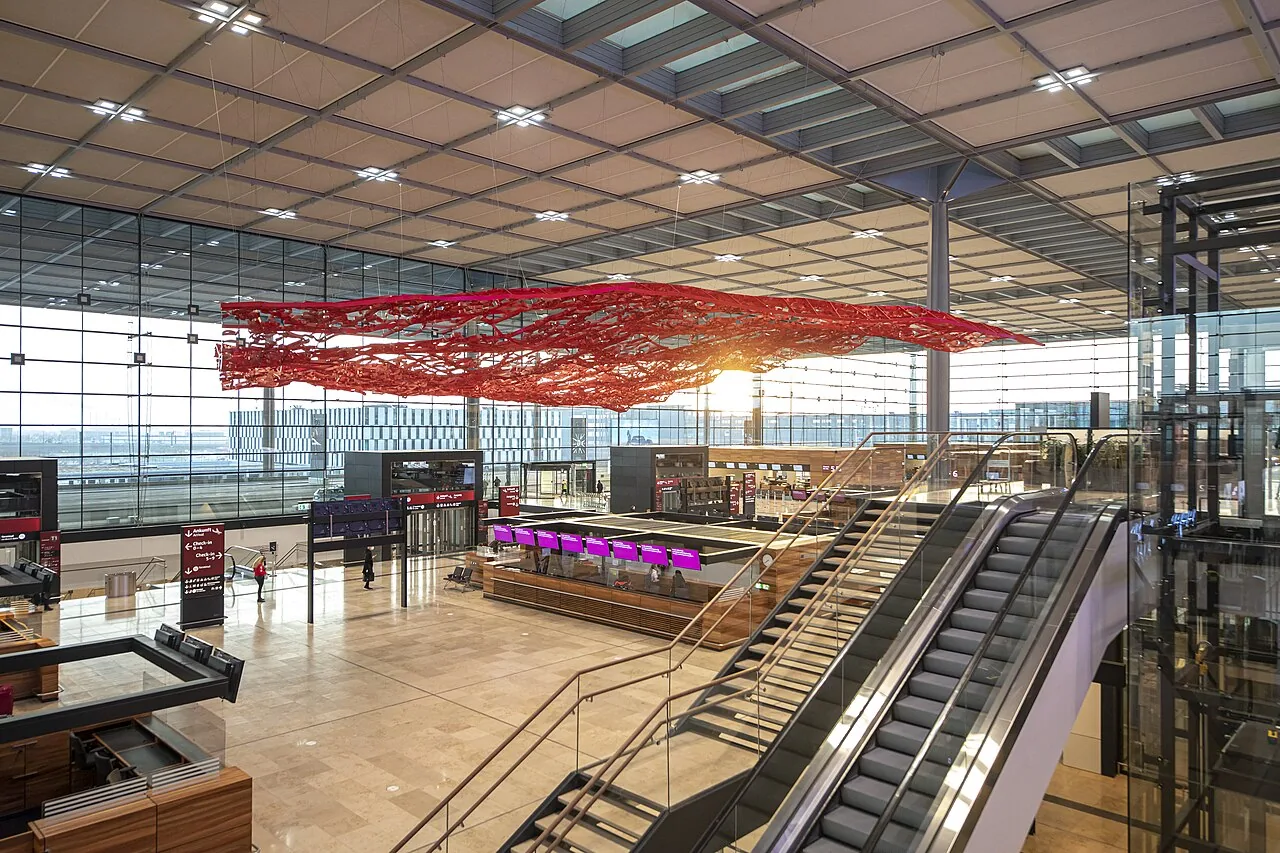
Terminal 1 is a U-shaped midfield building by gmp, the practice that also designed Tegel's hexagonal Terminal A. It sits between the two runways and directly above the railway station, with a main pier 715 m (2,350 ft) long and north and south piers of 350 m each.
Source: Wikipedia
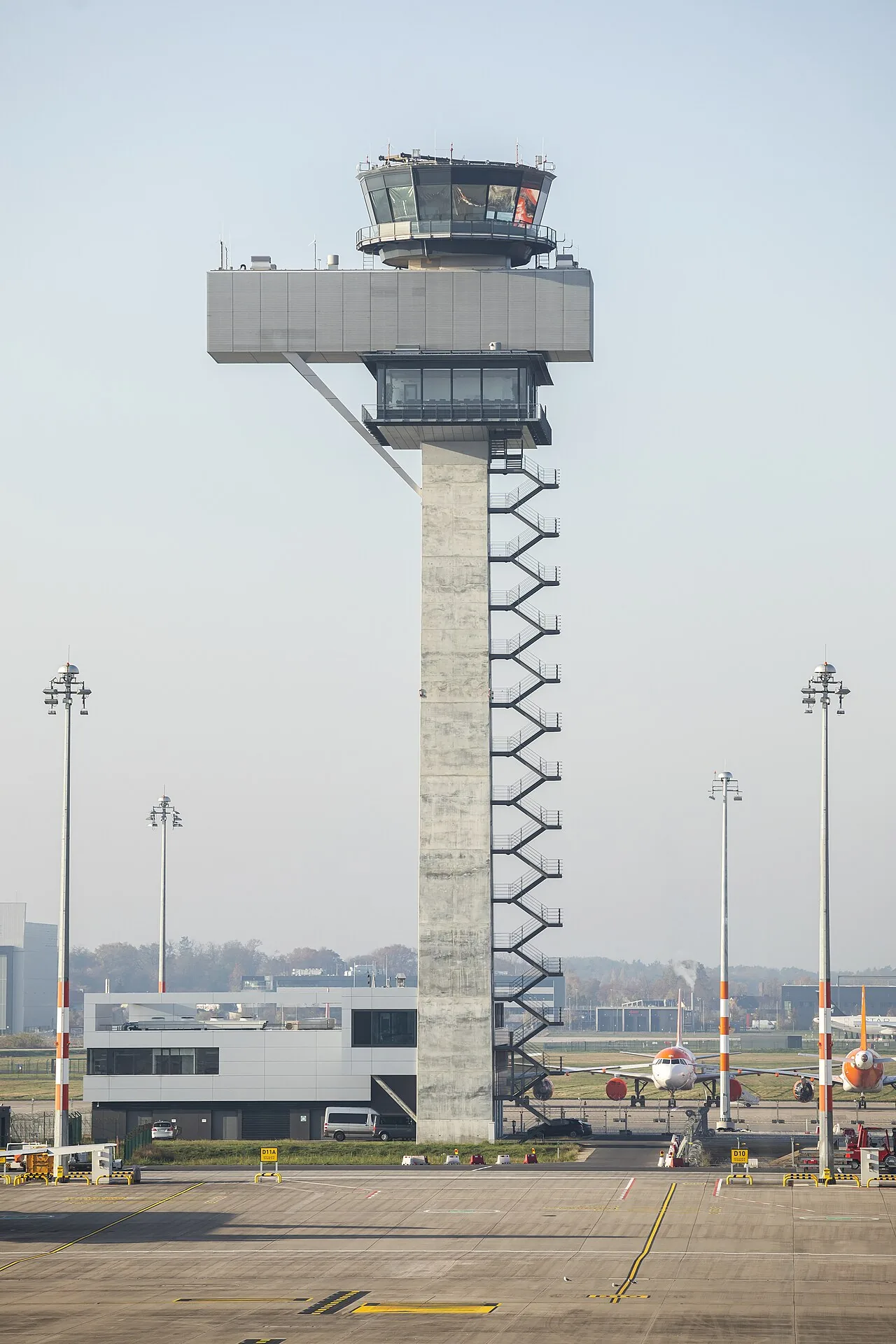
BER's two parallel runways are 1,900 m apart, enough for simultaneous instrument approaches. The northern one is old Schönefeld's runway, in use since the 1960s and lengthened from 3,000 to 3,600 m; the newly built southern runway is 4,000 m long. The whole site covers 1,470 hectares.
Source: Wikipedia
The terminal stands over a 3.1 km east-west rail tunnel whose nine sections were the first structures built on site. BER Airport station has six tracks — two for terminating S-Bahn services and four for regional and long-distance trains — and Deutsche Bahn sued in 2012 over the years it stood unused.
Source: Wikipedia