Amsterdam Airport Schiphol
Facts on AMS
Schiphol's name literally translates from Middle Dutch to something like 'ship hole' or 'ship grave', a nod to the old legend that many vessels sank in storms on the Haarlemmermeer lake that once covered the site (though no shipwrecks were actually found when the lake was later drained).
Source: Wikipedia
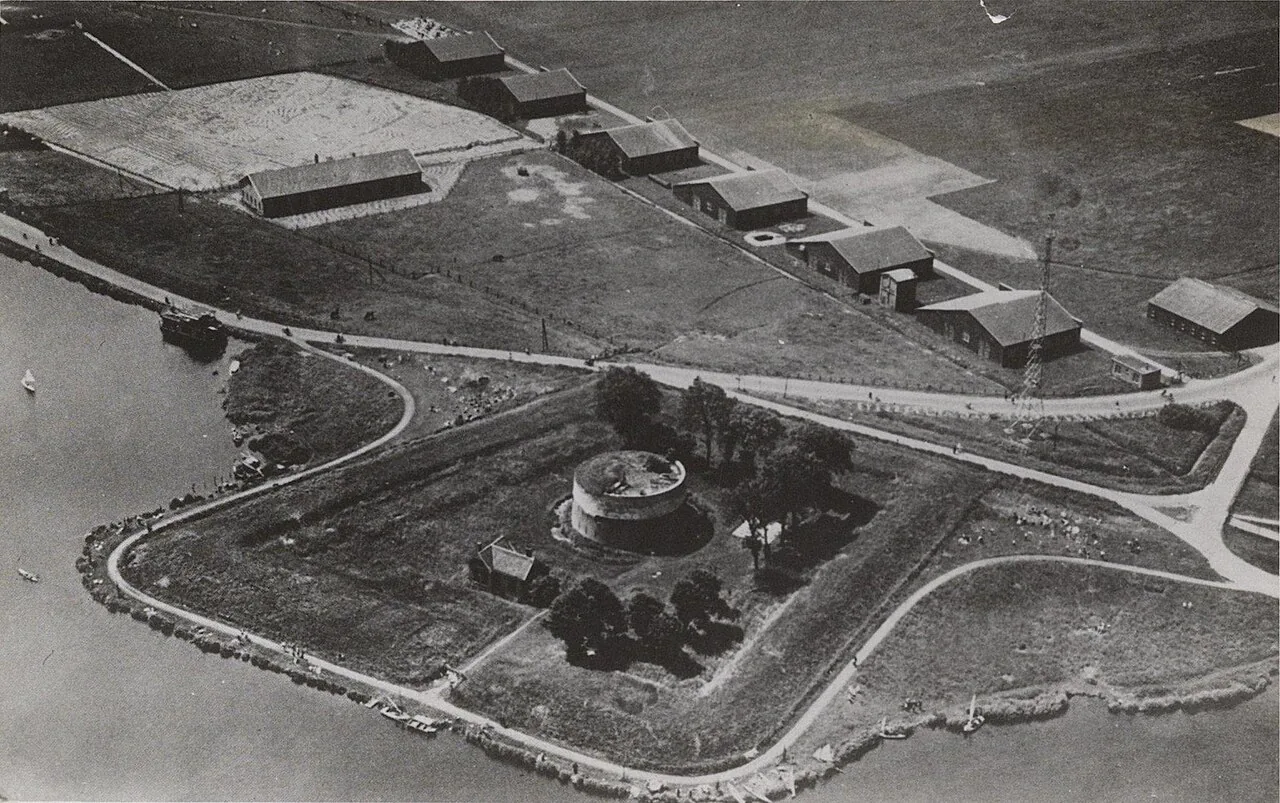
The airport's name, Schiphol, is far older than the airport: "Sciphol" appears in an official document from 1447, when the Haarlemmermeer was still open water. After the lake was drained, Fort Schiphol was built on the new polder as part of the Stelling van Amsterdam defence ring, and the 1916 airfield inherited the name.
Source: Wikipedia
The shipwreck explanation for the name Schiphol is only one of three contested readings. A second derives Schiphol from scheepshaal, a ditch or narrow canal along which boats were hauled from one lake to the next; a third from schip hol, low-lying wooded ground where timber for shipbuilding was cut.
Source: Wikipedia
Schiphol is one of the lowest-lying major airports on Earth, built on reclaimed lakebed with its lowest point sitting 3.4 meters below sea level.
Source: Wikipedia
Schiphol opened on 16 September 1916 as a military airbase — a few barracks and a field. Civil aircraft arrived on 17 December 1920, when it was often called "Schiphol-les-bains", and Fokker had already opened an aircraft factory next door in 1919.
Source: Wikipedia
Captured in 1940 and renamed Fliegerhorst Schiphol, the field was ringed with decoy airfields at Bennebroek, Vijfhuizen and Vogelenzang to mislead Allied bombers. A raid on 13 December 1943 wrecked it anyway; the first postwar aircraft, a DC-3, landed on 8 July 1945.
Source: Wikipedia
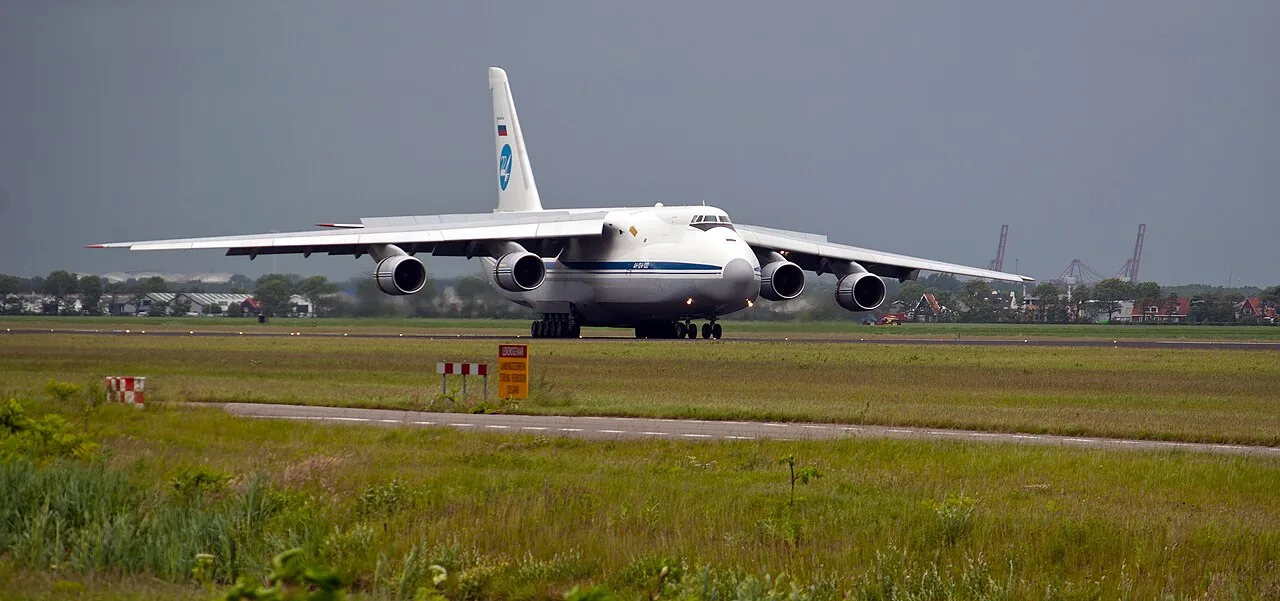
Schiphol's runways are named for their neighbours: the Kaagbaan after the village of Kaag beyond its southwest end, the Buitenveldertbaan after the Amsterdam district under its approach. The newest, the 3,800-metre Polderbaan of 2003, got its name from a public contest.
Source: Wikipedia
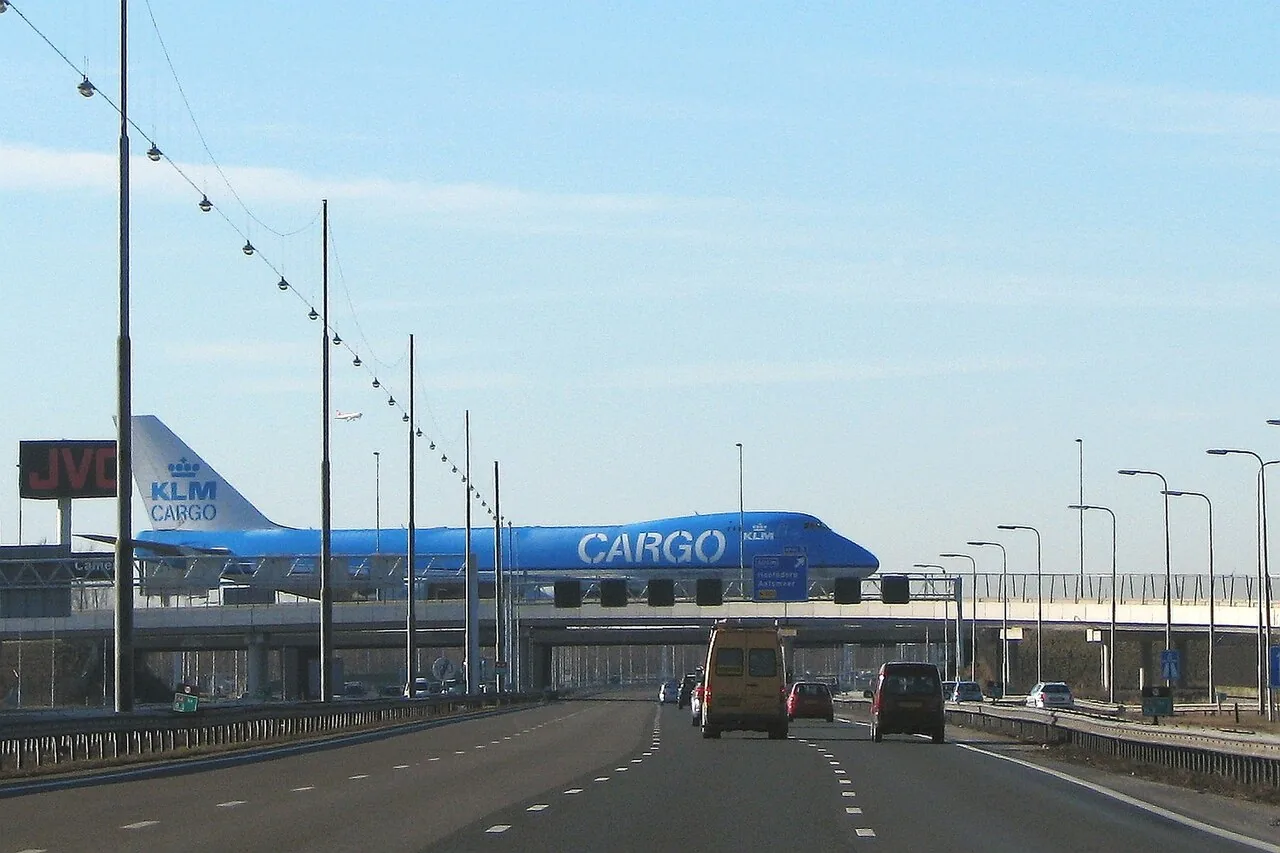
The Polderbaan was pushed far west to spare nearby towns the noise, and the airport pays for it in taxi time: the nearest end is 5 km from the terminal, a 10 to 20 minute crawl each way, and the runway needed its own control tower because the main one cannot see it.
Source: Wikipedia
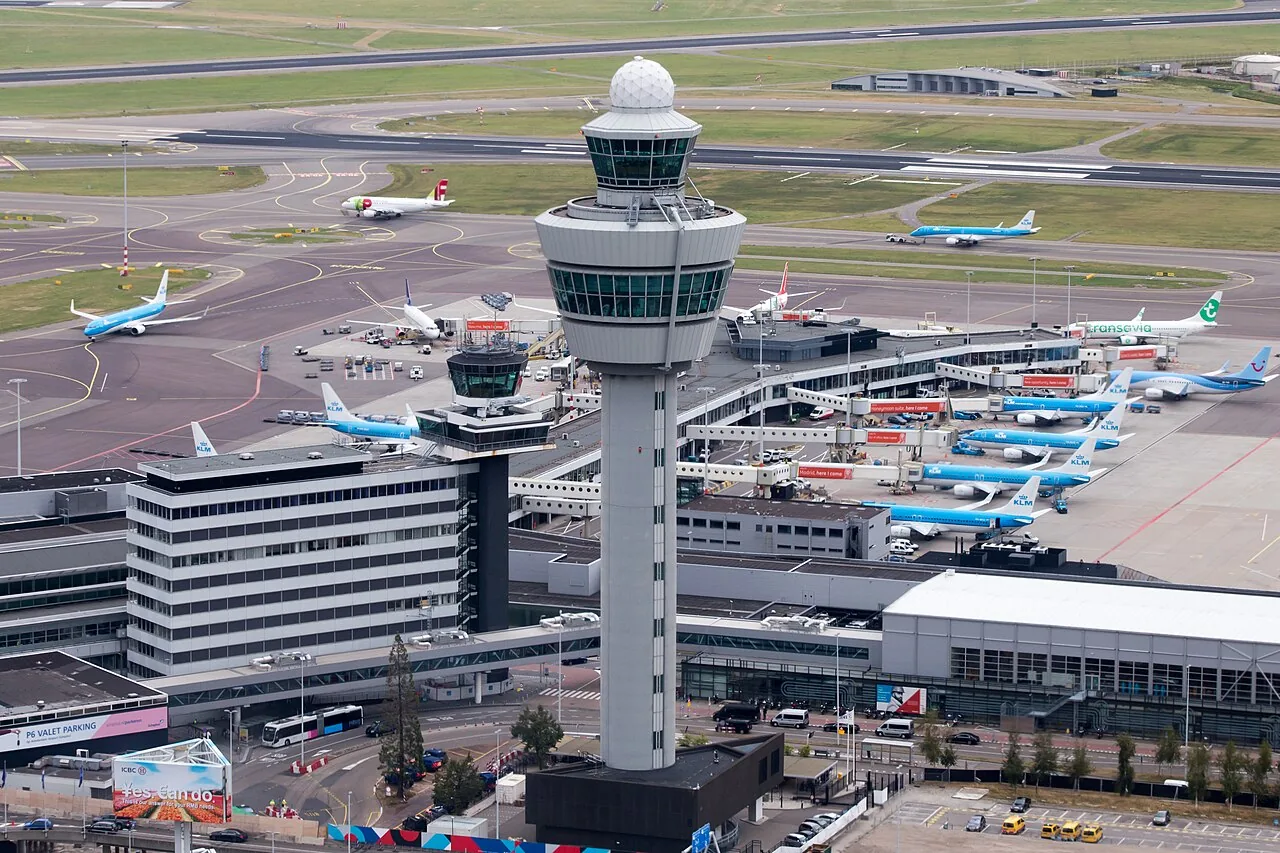
Schiphol runs on a one-terminal concept: a single building split into three departure halls whose piers all reconnect airside, with roughly 223 boarding gates. Its control tower, 101 metres tall, was the tallest in the world when it was finished in 1991.
Source: Wikipedia
The Rijksmuseum keeps a free annex airside — you need a boarding pass to see it — and since 2010 an airport library has offered 1,200 books by Dutch authors in 29 languages. Maarten Baas's clock shows a man behind a screen apparently repainting each minute by hand.
Source: Wikipedia
Growing the airport cost a village. When Schiphol was made the country's primary airport after a new terminal opened in 1949, the small town of Rijk was demolished to clear ground; the name survives only in the Schiphol-Rijk industrial estate.
Source: Wikipedia