Queen Alia International Airport
Facts on AMM
At its 1983 opening, the airport cost about 84 million Jordanian dinars to build (roughly $120 million in 2023 terms) and was designed to handle 3.5 million passengers a year, a capacity Jordan would outgrow within a couple of decades.
Source: Wikipedia

The airport is named for Queen Alia (born Alia Toukan, 1948-1977), the third wife of King Hussein of Jordan. Before marrying into the royal family she studied political science in the US and worked for Royal Jordanian Airlines; as queen she founded the Office of the Queen of Jordan and championed education and social services for the poor.
Source: Wikipedia
Queen Alia, the airport's namesake, died in a military helicopter crash near Amman in 1977 during a violent rainstorm, returning from a hospital inspection trip. Jordan's new airport, built in 1983 to replace the aging Amman Marka airport, was named in her memory.
Source: Wikipedia
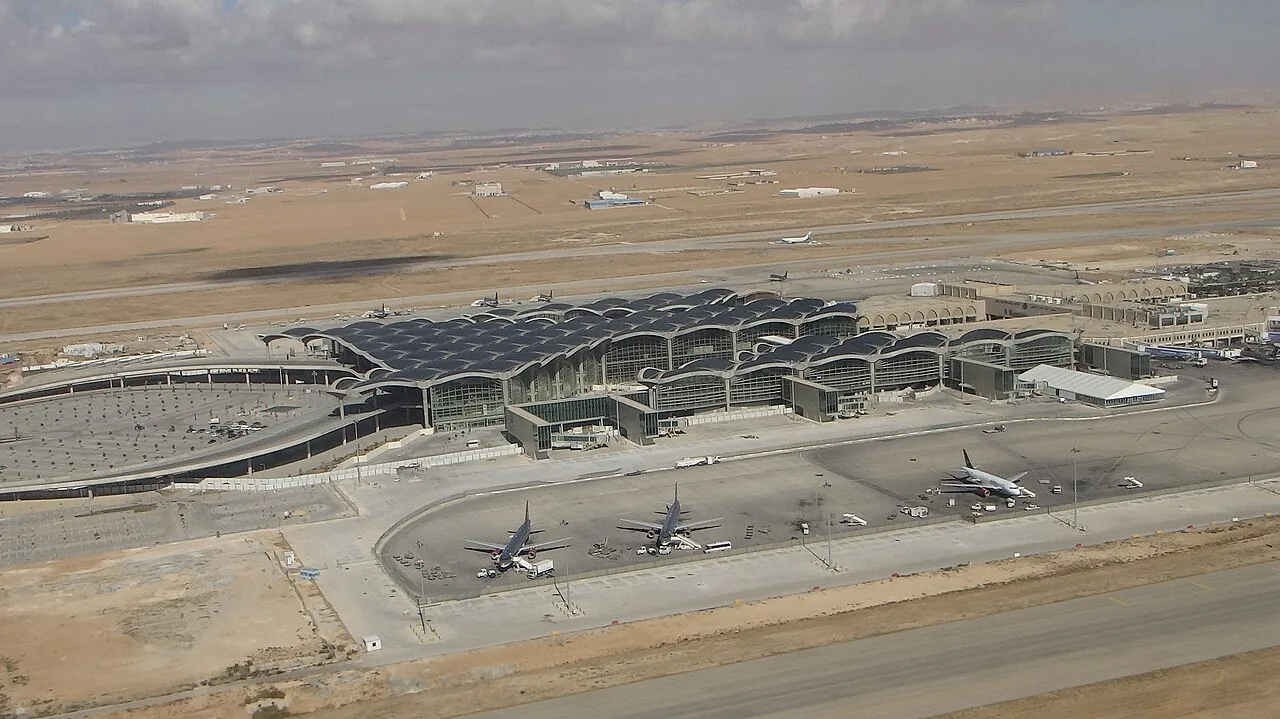
The terminal that opened in March 2013, designed by Foster + Partners, has a roof inspired by Bedouin tents made of 127 concrete domes, each weighing up to 600 metric tonnes — a $750 million project that lifted capacity from 3.5 million to 7.5 million passengers a year.
Source: Wikipedia
A second expansion phase completed in 2016, costing $1 billion, raised the airport's annual capacity to 12 million passengers, with a further target of 16 million by 2032 under operator Airport International Group's concession.
Source: Wikipedia
On 25 September 2016, Emirates flew a one-off Airbus A380 service to Amman to mark 30 years of operating to Jordan — the first-ever A380 flight to the Levant — and has flown the superjumbo to Amman daily ever since.
Source: Wikipedia
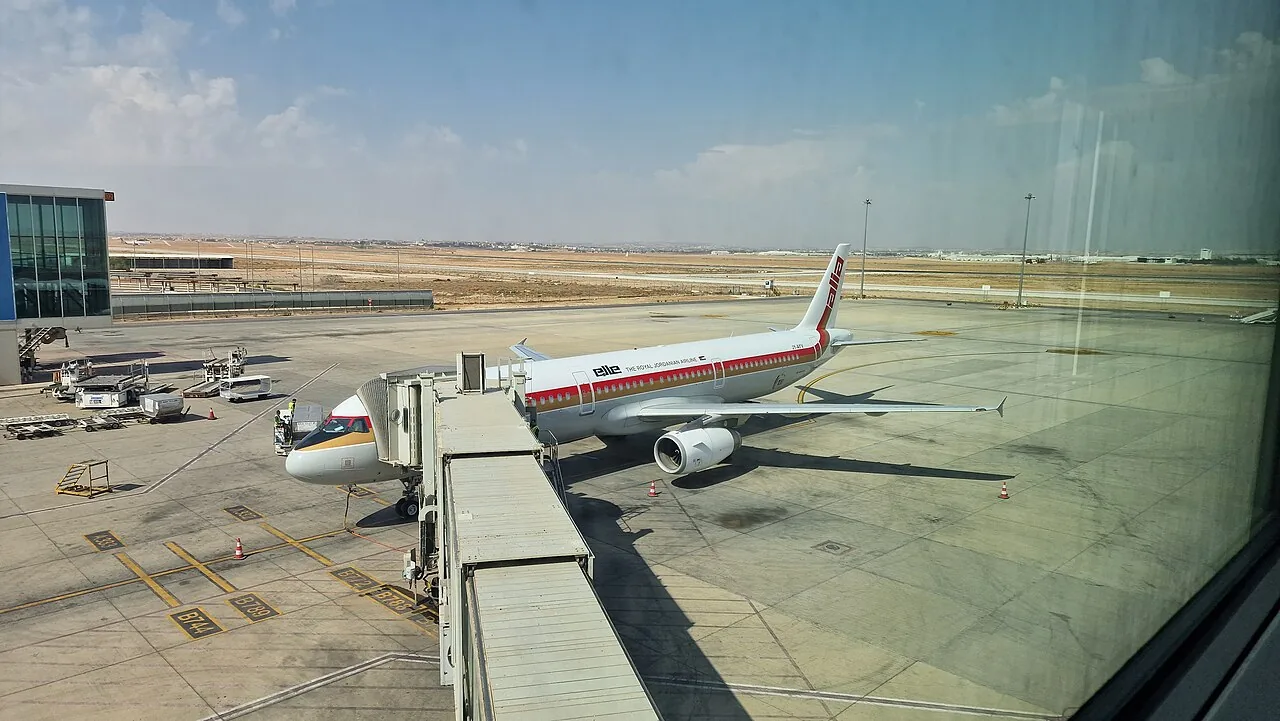
The airport is the hub of Jordan's flag carrier Royal Jordanian and also serves as a base for Jordan Aviation; it sits in Zizya, about 30 kilometers south of central Amman.
Source: Wikipedia