Addis Ababa Bole International Airport
Facts on ADD
Addis Ababa Bole International Airport sits 2,334 meters (7,657 feet) above sea level, and its predecessor at Lideta had to be abandoned because its runway was too short for the jet age's new Boeing 720s.
Source: Wikipedia
The city the airport serves got its name in 1886, when Empress Taytu Betul chose a spot on the plain below Mount Entoto for its hot mineral springs, and Emperor Menelik II — persuaded by her to move the capital down from the cold, windy mountain — named the new settlement Addis Ababa, Amharic for 'new flower'.
Source: Wikipedia
Bole is the main hub of Ethiopian Airlines, whose route network stitches together connections across Africa as well as onward links to Asia, Europe, and the Americas.
Source: Wikipedia

Bole's airport carried a different name for decades — Haile Selassie I International Airport, after Ethiopia's last emperor — before adopting the geographic name Addis Ababa Bole International Airport used today.
Source: Wikipedia
A 1997 three-phase expansion added a parallel runway, an entirely new terminal with shops and restaurants, and a 38-meter control tower — double the height of the one it replaced — built between the two terminals.
Source: Wikipedia
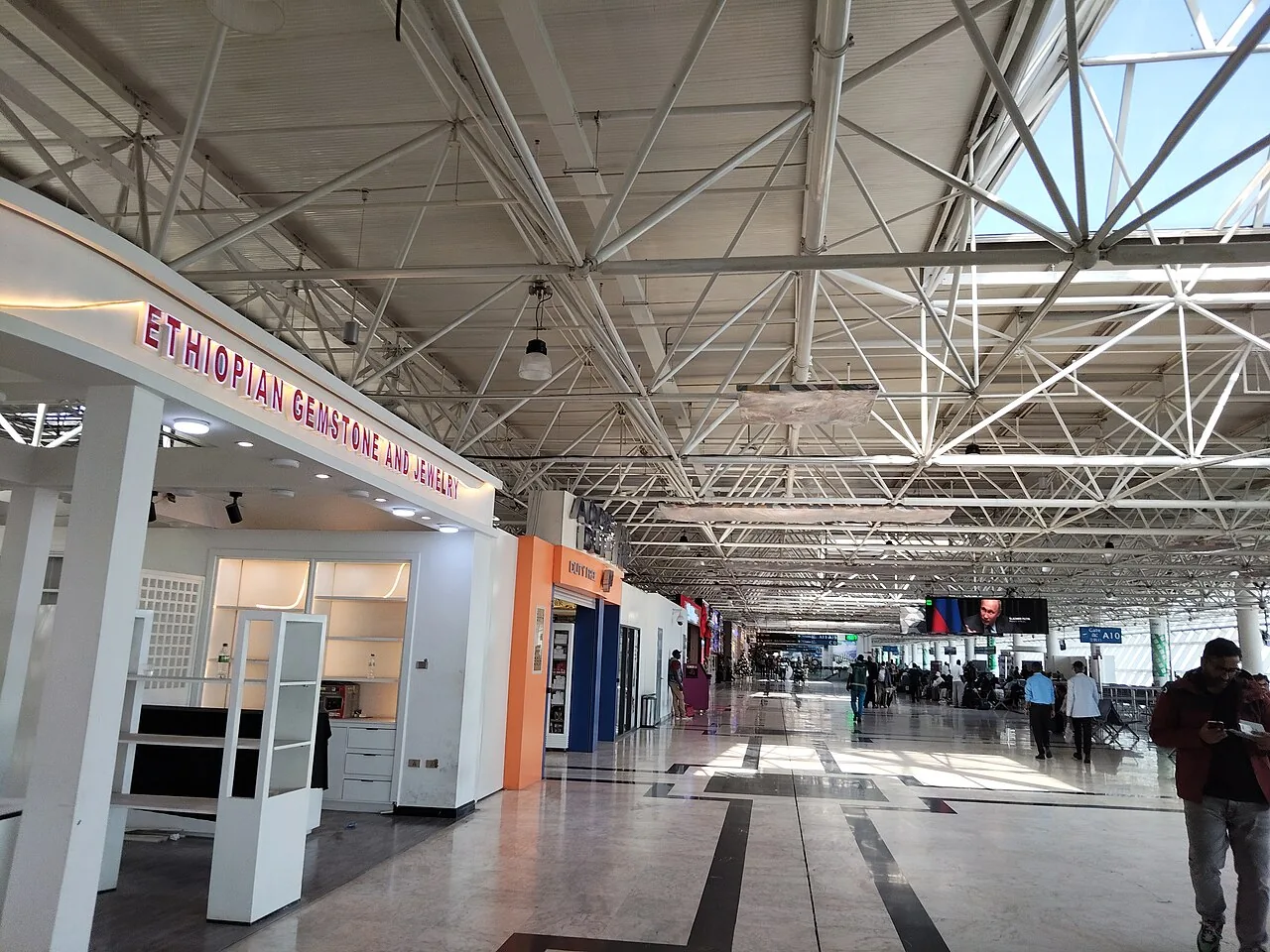
The international terminal that opened in 2003 cost about 1.05 billion birr ($130 million), was built on more than 43,000 square meters, and could process roughly 3,000 passengers an hour, making it one of Africa's largest airport terminals at the time.
Source: Wikipedia
In 2006 the first Airbus A380 to visit the airport used it to test its Engine Alliance GP7200 engines' performance at high altitude — a deliberate choice, since Bole's elevation makes takeoff performance harder to validate than at sea-level airports.
Source: Wikipedia
A cargo terminal and maintenance hangar completed in 2006, worth 340 million birr, can accommodate three to four aircraft at once, supporting Ethiopian Airlines' freight and maintenance operations.
Source: Wikipedia
As of June 2018 nearly 380 flights a day were using the airport, a volume that has driven successive rounds of apron and taxiway expansion to relieve chronic aircraft-parking congestion, especially during major international conferences hosted in Addis Ababa.
Source: Wikipedia
Ethiopia plans to eventually retire Bole as its main hub in favor of a new airport at Bishoftu, with a projected completion date of 2030.
Source: Wikipedia